
Coding & Development
Browsing page 10 of AI tools for Testing & QA in Coding & Development. Sorted by confidence score — our independent quality rating.

Traceloop
Traceloop is an LLM reliability platform designed to help developers ship AI applications 10x faster. It addresses quality blind spots and LLM drift by monitoring model responses, speed, and performance, catching failures before they impact production. The platform turns noisy LLM logs into clear insights, allowing users to start tracking prompts, responses, and latency in seconds with just one line of code. Traceloop offers built-in quality checks for faithfulness, relevance, and safety, applied automatically to real data. Users can also define custom evaluators for specific use cases and integrate evaluations into their CI/CD pipelines. Built on OpenTelemetry and OpenLLMetry, it supports various LLM providers, vector databases, and frameworks, and is enterprise-ready with SOC 2 & HIPAA compliance.
test.ai
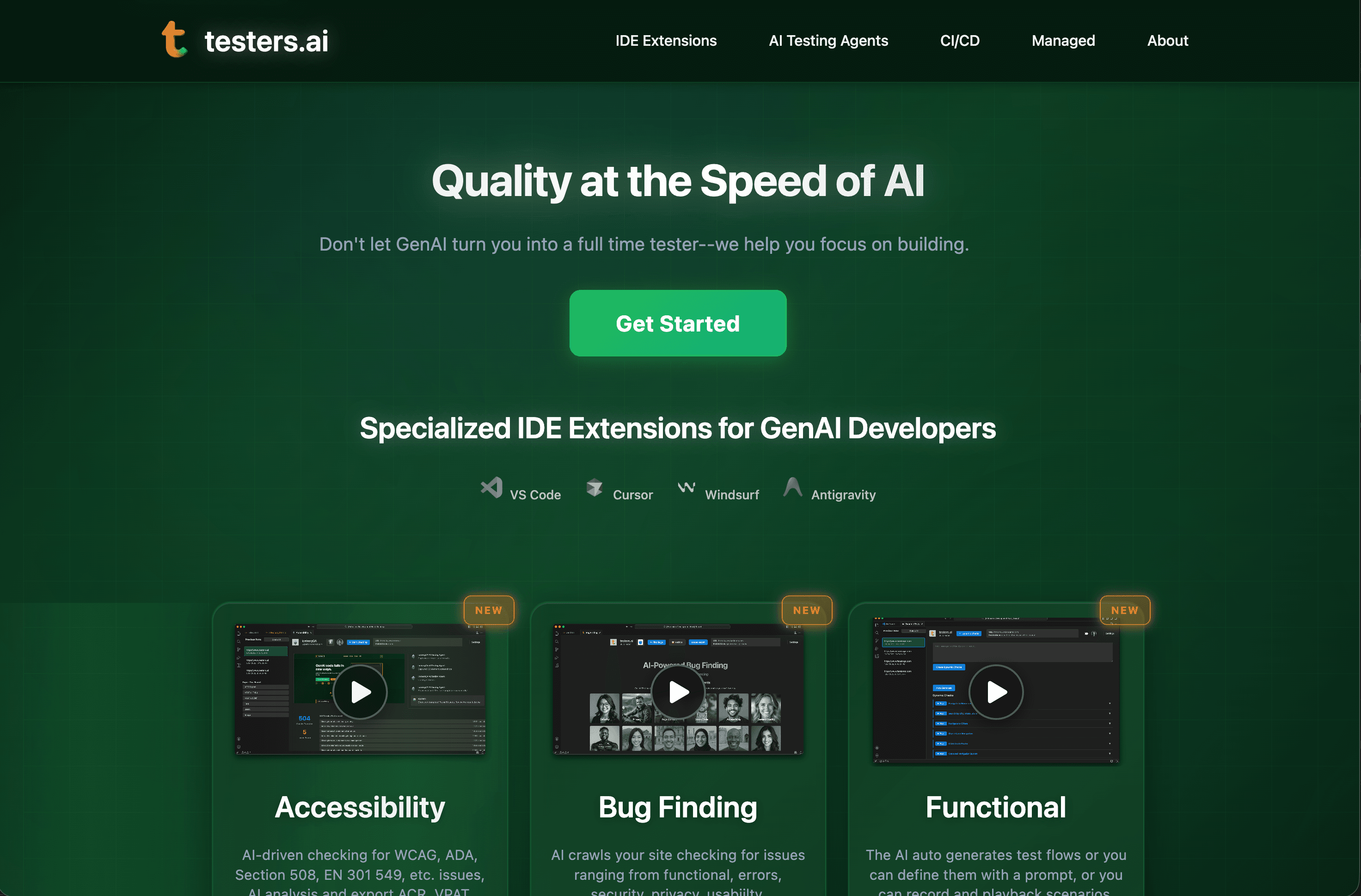
test.ai provides a comprehensive quality intelligence platform, leveraging AI to enhance software testing. It offers tools like coTestPilot for AI-assisted testing, accessibility audits, and exploratory testing. The platform helps teams understand their application's quality through metrics like Quality Score, issues found, and category ranking, comparing performance against peers. Users can tailor AI responses to their role, whether developer, test automation engineer, manual tester, or executive. It also supports integrations with popular tools like Jira, TestRail, and Xray for seamless workflow management, allowing for automated bug filing and context pulling.

Screenwriter
Momentic is an AI-powered automated testing platform designed to help engineering teams scale test coverage, eliminate flaky tests, and ship products with confidence. It features a low-code editor that allows users to describe test flows in natural language, with Momentic's AI handling the automation. The platform supports web, iOS, and Android applications, converting plain English into automated coverage. Key capabilities include self-healing locators that adapt to UI changes, an autonomous testing agent that explores apps and generates tests, and AI-powered assertions for validating screenshots, content, and behavior. Momentic aims to reduce test maintenance, increase release cadence, and filter out false positives, allowing engineers to focus on true regressions.
QualGent
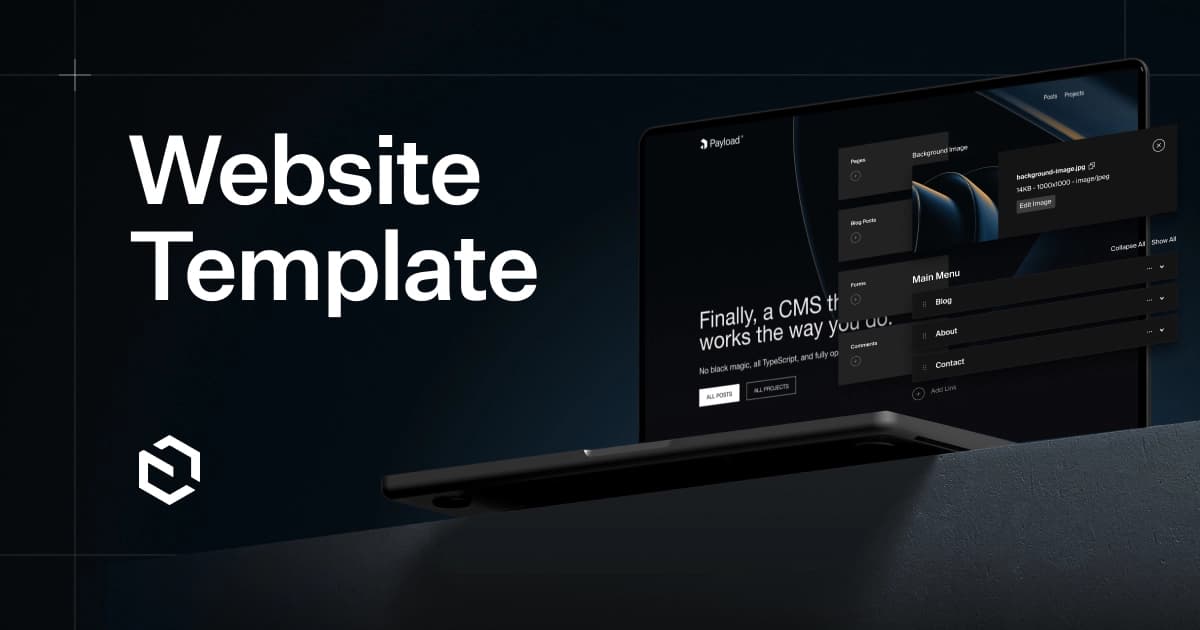
QualGent is an autonomous AI test automation platform designed for iOS and Android mobile applications. It leverages computer vision to eliminate flaky tests, ensuring deterministic regression execution without relying on brittle DOM locators like XPaths or Appium. The platform generates comprehensive test plans from existing documentation such as PRDs or Figma files, or from plain English descriptions. QualGent's AI agents execute tests 24/7, covering more scenarios than human teams and intelligently navigating apps to find bugs. It provides detailed reports, videos, and logs, integrating directly into CI/CD pipelines. The tool supports multi-lingual testing, systems integration testing, and true end-to-end testing, including OTP, payments, and multi-device flows. It also offers on-demand scaling for parallel test execution across thousands of AI agents on emulators and real devices.
EvalMy.AI
EvalMy.AI is an automated AI answer verification service designed to help developers test Large Language Model (LLM) applications. It utilizes a C3-score for assessing the accuracy and efficiency of LLM outputs, streamlining the evaluation process. This tool is crucial for ensuring the quality and reliability of AI applications by providing automated testing capabilities. Developers can leverage EvalMy.AI to catch potential issues early, maintain high performance standards, and deliver robust LLM-powered solutions.
Codag
Codag is the first AI talent agency, offering AI employees that operate with shared organizational memory. Unlike other AI agents, Codag's employees retain context, learn from corrections, and avoid starting from scratch with each task. They operate through real browsers, mice, and keyboards, enabling them to perform any computer task a human can. Managers can delegate tasks conversationally via Slack, and the AI employees draw from a unified organizational context including team structure, conventions, and decision history. This approach aims to eliminate the $2 trillion lost annually to misalignment in U.S. businesses, providing a workforce that continuously learns and adapts to specific company workflows.
Nullgaze
Nullgaze is an AI-powered security scanner designed to identify vulnerabilities and leaked secrets in web applications and GitHub repositories. It uniquely employs an FSRS-6 spaced repetition memory system to learn your codebase, significantly reducing false positives with each scan. This means that initial scans might show many findings, but subsequent scans will suppress known false positives and boost confirmed threats, surfacing only genuinely new vulnerabilities. Built with Rust and Axum, Nullgaze is particularly adept at securing AI-generated code, catching over 60 vulnerability patterns, including secret detection for major services like AWS, Stripe, and Supabase, as well as 11 AI anti-patterns. It offers fast results, often within 30 seconds, and provides multi-layer protection by fetching HTML, JavaScript bundles, sourcemaps, and environment files.

CodeChat
CodeChat is an AI-powered chatbot designed to help users understand complex codebases, specifically focusing on the GitHub source for Twitter's Recommendation Algorithm. Users can ask a wide range of questions about the algorithm's functionality, tweet scoring, and specific terminology like 'trusted circle'. This tool aims to simplify the process of code comprehension, making it easier for developers and researchers to navigate and analyze the intricacies of the recommendation system. Its chat-based interface provides immediate answers, facilitating quick learning and exploration of the codebase.

Octomiro
Octomiro offers vision-enabled AI agents specifically designed for industrial and logistics applications. This platform allows businesses to identify, count, and control their operational flows in real-time, significantly enhancing efficiency and accuracy. A key differentiator is its ability to integrate into existing infrastructures without requiring extensive changes, making adoption straightforward. By leveraging computer vision and deep learning, Octomiro provides proactive and informed management capabilities, transforming how resources are utilized for growth and success. It focuses on automating tasks like quality control, inventory management, and object counting within industrial settings.
Breeze Intelligence
Breeze Intelligence, also known as BreezeML, offers an enterprise AI testing and evaluation platform designed to accelerate AI rollouts and reduce production failures. The platform automatically generates targeted test sets for various AI use cases, including RAG pipelines, agents, and chatbots, identifying unique failure modes. Its adaptive testing agent learns from specific services and failure patterns, scaling coverage and focusing on problematic areas for cost-efficient evaluation. BreezeML provides detailed root cause analysis, flexible metrics support for accuracy, hallucination rates, and relevance, and seamless CI/CD integration. It also supports A/B testing to detect data drift and performance degradation, making it suitable for mission-critical AI deployments in financial services, healthcare, and enterprise technology.

Tonalitix
Tonalitix is an AI-powered analytics tool designed to help users analyze mobile app reviews efficiently. It allows you to gain instant insights into user emotions, identify top complaints, and understand market trends for both your own app and competitors' apps. The platform sorts reviews into categories such as bugs, feature requests, and general complaints, providing a comprehensive overview of user feedback. With Tonalitix, product managers and developers can quickly pinpoint areas for improvement, track sentiment over time, and make data-driven decisions to enhance their mobile applications. The tool offers a free tier for analyzing up to 2,000 reviews, making it accessible for initial exploration.

VR.dev
VR.dev is an open-source verification layer for AI agents, designed to ensure their actions align with expected outcomes and prevent reward hacking. It offers three tiers of verification: HARD (deterministic state checks against databases, APIs, and file systems), SOFT (LLM-based rubric scoring), and AGENTIC (agent-driven probing for complex workflows). The platform allows users to compose these checks into trust pipelines for continuous integration, evaluation, and reinforcement learning training. It provides ground-truth reward signals for training models like TRL, VERL, or OpenClaw, and generates structured evidence records with audit trails. VR.dev integrates with popular agent frameworks like LangChain and LangGraph, and can be run locally for free or via a hosted API for advanced features like evidence anchoring and team dashboards.

Interviewforce
Interviewforce AI Copilot is an AI-powered assistant designed to help job seekers succeed in software engineering interviews, including those for FAANG companies. It offers real-time support for various interview formats, such as solving coding challenges, designing systems, and reviewing code. A key feature is its invisibility during screen sharing on platforms like Google Meet, Teams, and Zoom, ensuring discretion. The tool eliminates the need for manual typing by seamlessly capturing screen input and solving technical questions. It is fine-tuned with proprietary datasets to handle Leetcode problems, object-oriented design, code review tasks, and system design challenges. Interviewforce also includes a practice mode with detailed guidance and personalized recommendations, and prioritizes user privacy by not storing or tracking data.

Imagium
Imagium is a leading visual testing tool designed to accelerate QA processes and ensure high-quality visual outputs. It leverages advanced computer vision and proprietary AI algorithms to identify visual differences, significantly reducing false positives compared to traditional pixel-based comparisons. This allows for more efficient defect detection and minimizes the need for human intervention. Imagium integrates seamlessly with popular automation tools like Selenium, Appium, Playwright, and Jenkins, and supports programming languages such as C#, Java, Python, and JavaScript via REST APIs. A key differentiator is its free on-premise community version, which ensures data security by keeping it behind your own firewalls, making it suitable for both personal and commercial use. It also offers features like side-by-side comparison, dynamic region exclusion, automated baseline establishment, and comprehensive baseline history.
Noctuai
Noctuai offers an AI Vision platform that extends the capabilities of any camera, integrating scalable AI video analytics for real-time insights, enhanced safety, and operational efficiency. The platform is camera-agnostic, allowing deployment on the cloud, edge, or on-premise using Docker. Users can connect any camera and assign AI models to video streams based on their needs, with advanced analytics solutions for fire and smoke detection, intruder detection, fall detection, PPE inspection, and more. Noctuai also provides custom computer vision solutions and synthetic data generation. The system is designed for efficiency and scalability, powered by NVidia GPUs, supporting up to 120 streams on an RTX4000, and features a robust, secure architecture leveraging Linux-Docker synergy.
Spacebackend
Spacebackend develops engineering tools to accelerate hardware integration, testing, and remote operations across the aerospace industry, collapsing timelines from years to days. Founded in 2024, the company focuses on building software for integrations and autonomous operations of mission-critical hardware on Earth, the Moon, and in Space. Their flagship product, Lynapse™ Studio, is an AI-powered system integration platform that converts hardware documentation into Digital Models and generates flight-ready, platform-agnostic source code. This process significantly reduces the time required for mission-critical integration, ensuring systems stay on schedule. Spacebackend also provides infrastructure for vendor-agnostic autonomous operations and uses deterministic AI for virtual validation and Software-in-the-Loop (SiL) testing, exposing failures early and ensuring interface reliability.
Ragas
Ragas is an open-source evaluation toolkit specifically designed for Retrieval Augmented Generation (RAG) pipelines, crucial for assessing Large Language Model (LLM) applications. It offers a robust framework to evaluate the performance and reliability of RAG systems, focusing on key metrics such as faithfulness and relevance. The tool provides objective metrics to quantify the quality of generated responses, intelligent test generation capabilities to create comprehensive evaluation datasets, and data-driven insights to help developers understand and improve their LLM applications. By offering a systematic approach to evaluation, Ragas enables developers to ensure their RAG pipelines produce accurate and contextually appropriate outputs, making it an essential resource for anyone building and deploying LLM-powered solutions.

Devra
Devra is an AI-powered software development agent designed to run directly on your desktop, offering a unique approach to coding assistance. It deeply explores your project, learning its context to intelligently add and enhance code, create new modules, and generate comprehensive unit tests. Devra excels at identifying and resolving runtime errors, logic issues, and library incompatibilities, providing immediate solutions for smooth application performance. It supports a wide range of use cases from game development and data processing to web development with technologies like Django, React, JavaScript, HTML, and CSS. A standout feature is its voice dictation capability, allowing users to code without typing. Devra is available for Mac, Windows, and Linux, making it accessible across major platforms.
ByteMorph Demo
ByteMorph Demo is an online demonstration of the ByteMorph tool, hosted on Hugging Face Spaces. This application enables users to upload an image and then provide a text prompt to guide its modification. The app processes the input and generates a new, edited version of the image according to the user's prompt. It serves as an accessible platform to explore and test the capabilities of ByteMorph's image manipulation technology. Built using Gradio, the demo is available for free, making it easy for anyone to experiment with AI-powered image editing without any cost.
Check my SD-XL Custom Model
Check my SD-XL Custom Model is an AI tool designed for developers and researchers working with Stable Diffusion XL (SD-XL) models. It provides a platform to upload and test custom SD-XL models, allowing users to generate images and evaluate their model's performance and output quality. Built using Gradio, the tool offers an accessible interface for interacting with the models. This space is particularly useful for iterating on model development, fine-tuning, and ensuring the desired visual outcomes before deployment. While currently sleeping due to inactivity, its core function is to facilitate the assessment of custom SD-XL model capabilities through practical image generation.
Compare Llms
Compare Llms is a Hugging Face Space designed for evaluating and contrasting the performance of various language models. Users can input a prompt and select from a range of available language models to generate text. The tool provides options to fine-tune the output by adjusting parameters such as temperature and maximum tokens, offering flexibility in controlling the generated content. This platform is particularly useful for educational purposes, research analysis, and anyone interested in understanding the nuances and capabilities of different AI chatbots. It offers a straightforward interface for direct comparison, making it accessible for both technical and non-technical users to experiment with AI text generation.
EagleX 1.7T Demo Gradio
EagleX 1.7T Demo Gradio is an AI chatbot demonstration built on the Gradio platform, designed to showcase the capabilities of the EagleX 1.7T language model. While the tool aims to provide an interactive experience with a large language model, the current live website indicates a runtime error, preventing the application from functioning as intended. The project is hosted on Hugging Face Spaces by recursal and is licensed under Apache-2.0, suggesting an open-source approach to its development and distribution. Despite the current technical issues, the underlying intention is to offer users a free and accessible way to interact with a powerful AI model.
Flex.2 Preview
Flex.2 Preview is an AI image generation tool hosted on Hugging Face Spaces, designed for creating detailed images from text descriptions. Beyond basic generation, it offers advanced capabilities to modify specific sections of existing images, providing users with fine-grained control over their creative output. This tool is built with Gradio, making it accessible for prototyping and experimenting with various image generation techniques. It is licensed under the Apache-2.0 license, indicating its open-source nature and potential for community contributions. While the current live version shows a runtime error, its intended functionality focuses on empowering users with flexible image creation and editing options.
GradientCuff-Jailbreak-Defense
GradientCuff-Jailbreak-Defense is a specialized AI Agents & Automation tool designed to enhance the safety and security of large language models (LLMs). It functions by analyzing the 'Refusal Loss' landscape, a sophisticated method to detect and identify malicious queries that attempt to bypass an LLM's inherent safety measures. This tool is crucial for developers and organizations deploying LLMs, providing a robust defense mechanism against prompt injection and other jailbreak techniques. By identifying these attempts, GradientCuff helps maintain the integrity and ethical operation of AI chatbots, ensuring they adhere to their intended safety guidelines and prevent the generation of harmful or inappropriate content. It serves as a demonstration of advanced AI defense strategies.