
Coding & Development
Browsing page 3 of AI tools for Testing & QA in Coding & Development. Sorted by confidence score — our independent quality rating.
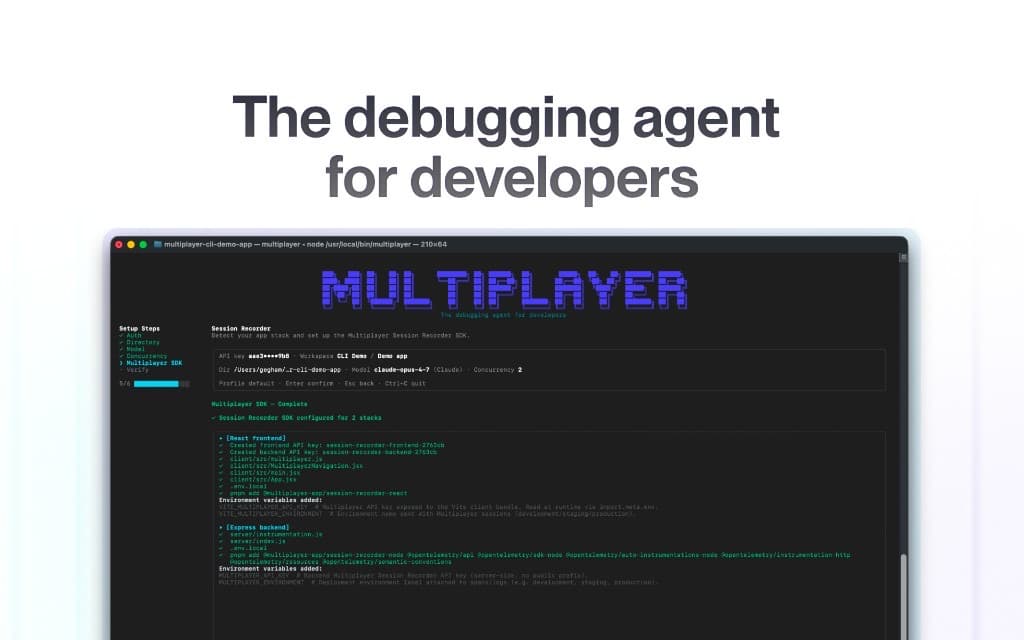
Multiplayer.app
Multiplayer.app offers full-stack session recordings to streamline debugging and technical support workflows. It captures complete frontend data alongside deep backend traces, logs, and full request/response content for both internal services and external APIs, automatically correlating everything without sampling. The tool allows for on-demand, continuous, and conditional recording, ensuring that even intermittent failures and hard-to-reproduce bugs are captured. Multiplayer.app also integrates with AI coding tools, providing them with precise runtime context to generate accurate fixes and features. It aims to reduce the time from bug discovery to resolution, offering benefits like no-repro steps required and complete visibility into system behavior.

Allyable
Allyable is an AI-powered platform designed by industry experts to help enterprise teams create and maintain accessible digital experiences across the entire customer journey. It's not a widget, overlay, or service, but a comprehensive platform offering custom-built accessibility tools, an expansive online knowledge center, and on-demand AI-powered accessibility answers and code suggestions. Key features include a 24/7 accessibility audit, media accessibility tools for transcripts and captions, development tools for debugging, and a code assistant to ensure accessibility before production. Allyable helps organizations comply with WCAG, ADA, AODA, EAA, and Section 508 standards, reducing complexity and cost while improving team efficiency.
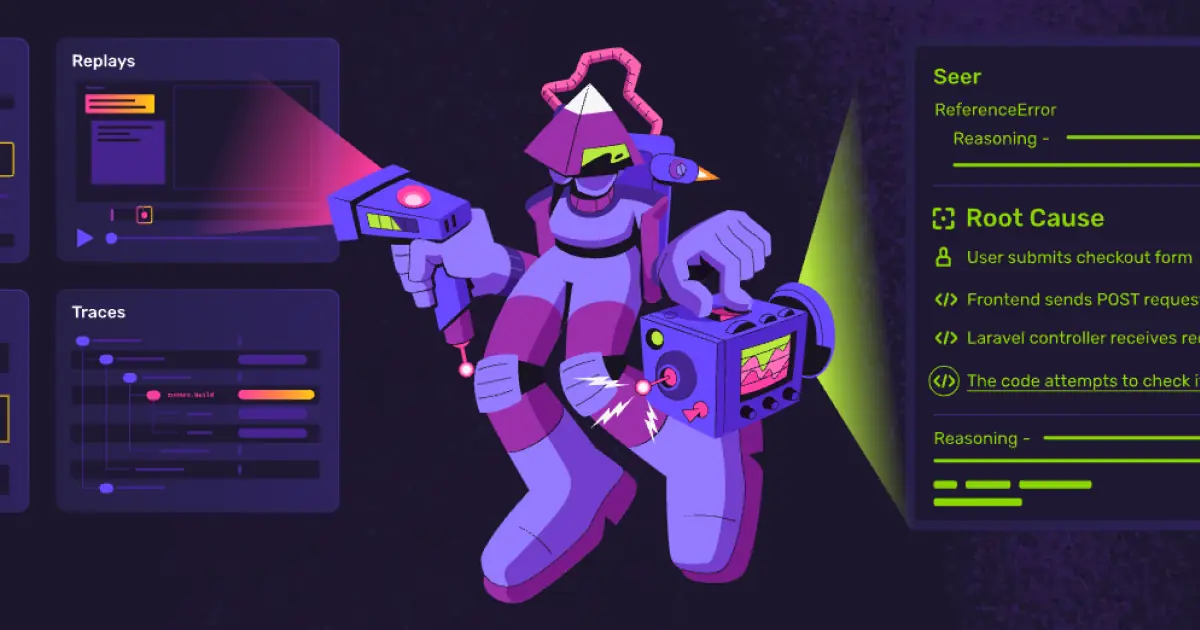
Sentry
Sentry is an application performance monitoring and error tracking software designed for developers and software teams. It enables users to see errors clearer, solve issues faster, and continuously learn from their applications. Key features include error monitoring, structured logs, session replay, tracing, and AI debugging with Seer, which analyzes signals to explain code failures and generate merge-ready patches. Sentry also offers AI code review to predict and prevent errors before they reach production. It integrates seamlessly with popular developer tools like GitHub, Slack, and Jira, providing full context for every fix from development to production. The platform supports a wide range of SDKs and frameworks, allowing for quick setup with just a few lines of code.

SuperAnnotate
SuperAnnotate is a comprehensive platform designed to accelerate AI development by providing robust data annotation, evaluation, and management capabilities. It enables users to build feedback-driven annotation and evaluation pipelines for various AI applications, including agentic, multimodal, and frontier AI. The platform offers a fully customizable multimodal editor supporting image, video, NLP, and audio data types, allowing users to transform proprietary domain data into AI-ready datasets. Key features include custom, multi-layer annotation workflows, expert review cycles to ensure data quality, and integrations with critical AI infrastructure like Databricks, NVIDIA, GCP, Snowflake, AWS, and IBM. SuperAnnotate also provides AI Data Services and an Expert Talent Network, offering vetted and professionally-managed annotation teams to support projects from SFT to RLHF and RAG.
Mendral
Mendral is an AI DevOps team that automates critical aspects of software delivery, including CI reliability, build performance, vulnerability triage, and code reviews. It operates without human intervention, ensuring that shipping is no longer gated on CI issues. Mendral diagnoses CI failures, fixes flaky tests, speeds up builds, and ships pull requests. The platform offers specialized AI agents for reliability, performance optimization, vulnerability analysis, and code review, with the option to build custom agents. It integrates with GitHub Actions, with support for Buildkite, CircleCI, and GitLab CI coming soon, and connects to various delivery stack components like Sentry, Datadog, and GCP. Mendral aims to reduce time to green, decrease change failure rates, and increase ship velocity.
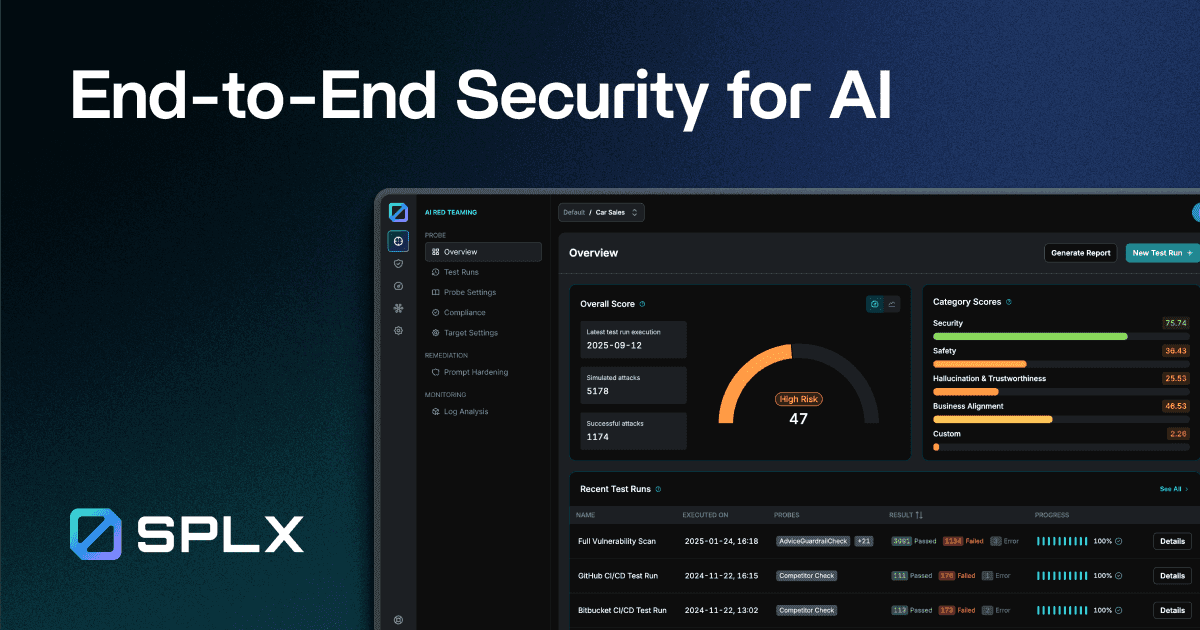
SPLX, a Zscaler Company
SPLX, a Zscaler Company, provides an end-to-end security platform specifically designed for AI systems. It offers comprehensive capabilities for AI Security Testing and Red Teaming, ensuring AI Assistants and Agents are secure and reliable from build to runtime. The platform includes AI Asset Management to discover models and workflows, Automated AI Red Teaming with an extensive attack database, and AI Runtime Protection to enforce guardrails and prevent prompt injections or data leakage. Additionally, SPLX supports AI Governance & Compliance by mapping systems to security standards and offers Dynamic Remediation to minimize attack surfaces. It also features AI Model Security for stress-testing LLMs and an open-source tool, Agentic Radar, for agentic AI security scanning.

Rigour Run
Rigour Run, developed by Rigour Labs, offers comprehensive AI agent governance for coding environments. It implements a three-layer protection system including Input DLP with 29 credential patterns and entropy detection to prevent credential leaks, real-time Quality Gates that enforce standards on every file write, and Memory Governance to control what AI agents remember by blocking writes to native memory files. The tool supports major AI coding agents such as Claude, Cursor, Cline, Windsurf, and Copilot, integrating via real-time hooks and the Model Context Protocol (MCP). Rigour Run is 100% local-first with zero telemetry, ensuring code never leaves the user's machine, and is open-source under an MIT license.
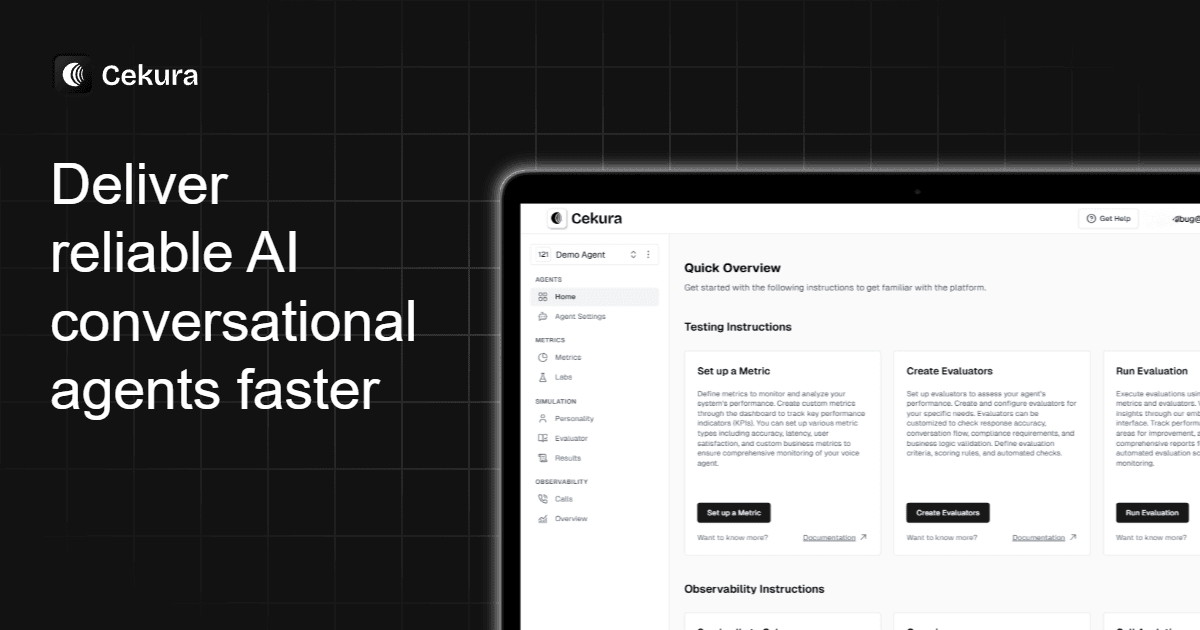
Cekura
Cekura is an advanced platform designed for automated end-to-end testing and observability of Conversational AI, including Voice AI and Chat AI agents. It enables users to run pre-production simulations across diverse personas and monitor production conversations in real-time. Key capabilities include testing instruction-following, tool calls, and overall conversational quality. Cekura integrates with popular platforms like Retell, VAPI, and ElevenLabs, offering a library of thousands of scenarios and the ability to create custom ones. The platform provides detailed evaluations, detects voice quality issues, and allows for tuning LLM judges against real call recordings. It also features real-time alerting, custom rules, and in-depth conversation analytics to identify bottlenecks and optimize agent performance.

Future AGI
Future AGI is an open-source, end-to-end AI agent engineering platform designed to cover the full lifecycle of AI agent development, from simulation and evaluation to optimization, monitoring, protection, and guardrailing. It helps teams build self-improving agents, detect hallucinations with purpose-trained evaluation models, and monitor performance in real-time. The platform offers sub-100ms guardrails to block unsafe outputs and provides continuous production monitoring to catch accuracy drift. It integrates with popular agent frameworks like LangChain and LlamaIndex, offering both Python and TypeScript SDKs. Future AGI aims to provide a comprehensive solution, eliminating the need to stitch together multiple vendors for different stages of AI development.

A.I. Tech srl
A.I. Tech srl specializes in advanced intelligent video analysis solutions, leveraging continuously updated artificial intelligence and generative AI technologies. Their offerings deliver reliable analysis that can be integrated on any hardware platform, including edge, server, or cloud, ensuring maximum flexibility and performance. The company develops high-performance, low-cost embedded solutions, optimized for deep neural networks with integrated GPUs. A.I. Tech also provides custom solutions tailored to specific client needs and develops high-performance AI solutions for the Internet of Medical Things (IoMT). Their applications span smart surveillance, smart cities, retail & business intelligence, automatic incident detection, smart parking, smart airports, smart rails, smart ports, digital signage, smart banking, and smart hospitals.

Quell
Quell is an intelligent AI-powered platform designed to automate User Acceptance Testing (UAT) cycles, aiming to cut them by 80%. It deploys AI-powered UAT agents to detect critical bugs efficiently and ensure software meets acceptance criteria. The platform is audit-ready and no-code, liberating Fintech product builders from launch anxiety. Quell integrates seamlessly with popular development tools like GitHub, Linear, Jira, Vercel, Slack, Figma, and Netlify, allowing for automated testing based on ticket or issue status and acceptance criteria. It features AI-driven test case auto-generation, automated test triggers, and provides audit-ready documentation with video and screenshot attachments for each test, streamlining collaboration across product, design, QA, and compliance teams.
Coderabbit
CodeRabbit is an AI-first pull request reviewer designed to significantly reduce code review time and bugs. It offers context-aware feedback, line-by-line code suggestions, and real-time chat with the CodeRabbit bot. The tool integrates with GitHub and GitLab, and is also available in CLI and IDE, providing flexibility for developers. Key features include 1-click AI fixes, summaries with visual diagrams, agentic reviews that find bugs humans miss, and automated reports. CodeRabbit emphasizes security with SSL encrypted data, zero data retention post-review, and SOC 2 Type II certification. It learns from user feedback to continuously improve reviews, supporting custom guidelines and pre-merge checks.

Verex
Verex is an AI-powered QA automation tool designed to streamline web application testing by leveraging AI agents. It automates tedious QA processes, significantly reducing the need for manual scripting and freeing up engineering hours. Users can define test suites in natural language, eliminating the need for coding, and trigger tests via UI, CI/CD pipelines, or chat tools like Slack and Teams. Verex provides instant, detailed reports with screenshots and automatically generates bug tickets in platforms like Jira or Trello for rapid debugging. This approach helps teams save over 150 engineering hours monthly, reduce QA costs by 70%, and achieve 3x faster bug resolution, making it ideal for enterprise DevOps teams, tech startups, and QA professionals.

BotGauge
BotGauge delivers Autonomous QA as a Solution (AQaaS) by combining AI-native testing agents with forward-deployed QA pods. This approach continuously creates, runs, and maintains end-to-end tests, ensuring owned quality outcomes. The platform aims to help engineering teams achieve 5x faster releases and 80% test coverage in as little as two weeks. BotGauge offers AI-powered E2E testing with zero setup and no extra headcount, operating as a fully managed QA partner. It integrates seamlessly with CI/CD and DevOps pipelines, supporting tools like Jira, GitHub, and Slack. The service is SOC 2 Type II compliant, ensuring enterprise-grade security, and offers 24/7 technical support.
AI Monitor
GetCito, previously known as AI Monitor, is an award-winning digital marketing agency and the creator of a leading open-source AI search optimization tool. It helps brands track, analyze, and optimize their presence across various AI-powered search engines, including ChatGPT, Google AI Overviews, Perplexity, and Claude. The platform offers real-time monitoring of brand mentions, sentiment analysis, and competitor benchmarking to ensure visibility in the evolving AI-driven search landscape. Unlike traditional SEO tools that focus on website rankings, GetCito specializes in Generative Engine Optimization (GEO) and Answer Engine Optimization (AEO), addressing the shift where users increasingly get answers directly from AI. It provides actionable insights to boost brand inclusion rates and offers services for B2B SaaS, eCommerce, finance, healthcare, and media industries.
BrowsingBee
BrowsingBee transforms any application into an AI-usable workflow by enabling the creation of 'skills' that AI agents can execute. Users can map API endpoints and internal workflows into structured skills, then validate how AI agents interact with these workflows through testing. The platform instantly generates CLI commands, allowing teams or users to run skills via CLI, API, or Claude. This makes it easier to integrate existing applications with AI agents, turning any product into an agent-ready platform without extensive coding.
Gru AI
GBOX offers comprehensive environments designed for AI agents to interact with and operate various digital interfaces. This includes sandboxed environments for browsers, Android, and Linux, enabling agents to train, evaluate, and execute tasks in a controlled setting. The platform also features a Reinforcement Learning (RL) environment specifically tailored for agent development and a Grounding Model for precise UI operations. GBOX aims to provide the necessary infrastructure for AI developers to build, test, and deploy intelligent automation solutions, supporting the creation of autonomous and virtual assistants.
Vocera
Cekura offers automated QA for Voice AI and Chat AI agents, providing end-to-end testing and observability for conversational AI. Users can run pre-production simulations across diverse personas to test instruction-following, tool calls, and conversational quality. The platform also monitors production conversations in real-time, tracking voice-specific quality signals like gibberish detection, interruption tracking, and latency. Cekura integrates with popular platforms such as Synthflow, Bland, Vapi, Retell, Cisco, LiveKit, and ElevenLabs, allowing for rapid integration and custom testing flows. It supports multi-language testing and offers features like LLM judge tuning, custom plot layouts for metrics, and real-time alerting via Slack, email, or webhooks.

The Oracle By Release0
Release0 is a no-code platform designed to create conversational AI agents without technical expertise. It enables businesses to automate customer support, streamline onboarding processes, and efficiently collect data through AI-driven chat experiences. The platform offers real-time data analytics, powerful dashboards, and instant global deployment with multi-region support and custom domain branding. Users can integrate their AI agents with popular services like OpenAI, Supabase, Google Sheets, and Zapier, enhancing workflow automation and maximizing business growth. Release0 aims to reduce response times, scale operations, and improve customer engagement for various business sizes, from solo entrepreneurs to large enterprises.
Coval
Coval is a leading simulation and evaluation platform designed for AI voice and chat agents, enabling teams to test, monitor, and optimize their conversational AI at scale. It addresses the challenge of AI agents failing in real-world scenarios despite working in demos by providing a single lens on agent performance. Users can simulate thousands of realistic conversations across various scenarios and workflows, including edge cases and load testing, with voice realism. The platform allows for validation of results using built-in and custom metrics, tool call validations, and workflows. Coval also brings test rigor to production calls by running metrics on live interactions to quickly catch performance drift and offers intelligent queues to review only critical issues, focusing human effort on failures and edge cases. This comprehensive approach helps engineers debug, QA teams systematically evaluate, and product teams measure performance with confidence.
Processica
Processica specializes in providing advanced Generative AI solutions, offering custom development, Generative AI app development, and Generative AI chatbot development. Their services are designed to help mid-size to enterprise clients harness the power of AI to improve productivity, drive innovation, and bolster growth. They leverage advanced AI and ML technologies, including GANs, VAEs, and Transformer-based models, to build sophisticated AI systems for data generation, pattern discovery, and data-driven decision-making. Processica emphasizes a collaborative development process, ensuring tailored solutions that align with unique business needs across various industries like banking, healthcare, retail, and marketing.
PostQode
PostQode offers AI-powered software engineering agents designed to automate and streamline the entire Software Development Life Cycle (SDLC). These agents integrate directly into popular IDEs such as VS Code, Cursor, and Windsurf, assisting with planning, code generation, testing, and deployment. The platform supports over 40 model providers and features a multi-agent architecture for comprehensive automation. Key capabilities include AI code generation, automated API testing, web application testing, and mobile app testing. PostQode is enterprise-ready, offering features like MCP support, CLI & API automation, SOC 2 compliance, and on-premise deployment options, making it suitable for organizations seeking to enhance software quality and developer productivity.
TestDriver v6.0.15
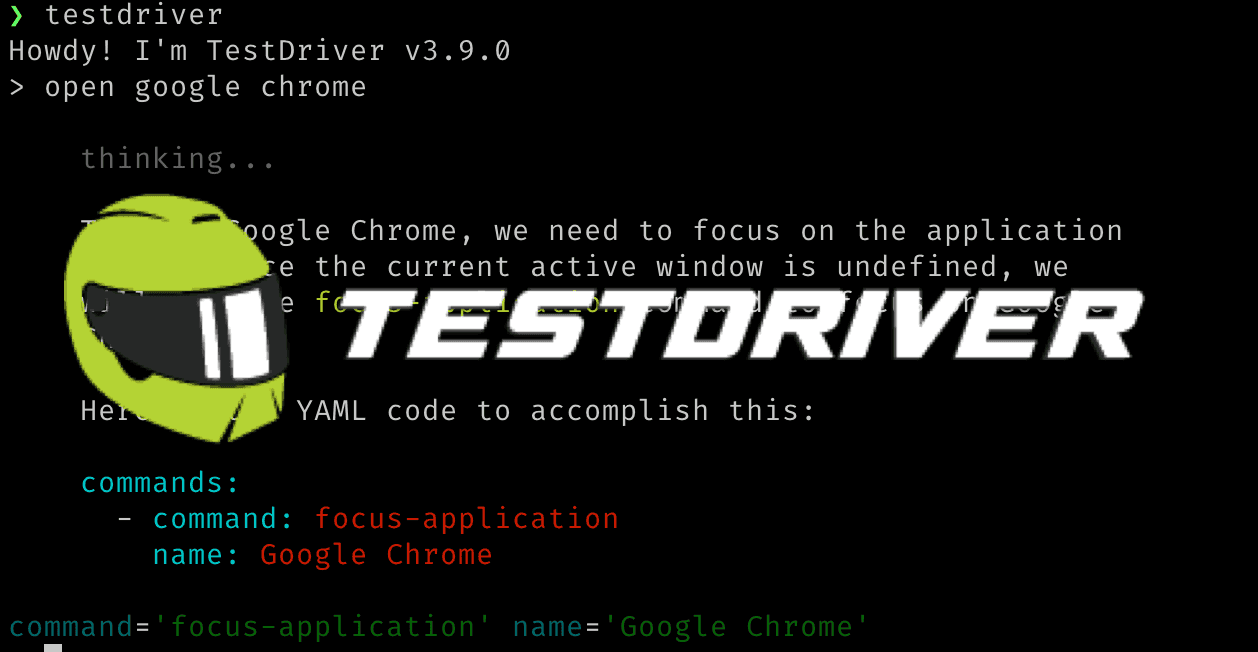
TestDriver is an AI-powered end-to-end testing platform designed to automate and scale manual testing across web, desktop, and mobile applications. It leverages computer vision and natural language processing, allowing users to write tests in natural language without needing selectors. The platform interacts with software visually, making it effective for testing third-party web apps, Chrome extensions, desktop applications (Windows, macOS, Linux), VS Code extensions, and rich media content that often breaks selector-based tools. TestDriver generates tests using MCP, adapts to UI changes, and provides a console for monitoring test runs, replaying executions, managing cached assets, and tracking performance trends. It integrates with CI/CD pipelines by exporting results as JUnit XML, offering deep visibility into network calls, CPU/memory usage, and action logs for debugging.
PromptFix
PromptFix is an AI prompt reliability and engineering platform designed to optimize and debug prompts for large language models like ChatGPT, Claude, and Gemini. It allows users to score, verify, and version their AI prompts, ensuring consistent and reliable outputs. The platform provides over 300 templates, multi-model comparison capabilities, and A/B testing features to refine prompt performance. PromptFix also supports reverse prompt engineering, preference profiles, and team collaboration, making it suitable for individual developers and engineering teams. With a REST API, it integrates into existing workflows, and daily challenges gamify the learning process for prompt improvement.