
Coding & Development
Browsing page 100 of AI tools for Coding & Development. Sorted by confidence score — our independent quality rating.

gpt-fast
gpt-fast is a highly efficient PyTorch-native transformer text generation tool, designed for minimal latency and a compact codebase of under 1000 lines of Python. It supports advanced features like int8/int4 quantization, speculative decoding, and tensor parallelism, making it suitable for high-performance applications. The tool is compatible with both Nvidia and AMD GPUs and is intended to showcase optimal performance achievable with native PyTorch, rather than serving as a comprehensive framework. Developers are encouraged to copy, paste, and fork the codebase for their specific needs, leveraging its efficiency for various LLM inference tasks.
ImgGenSD2
ImgGenSD2 is a minimal iOS application designed for generating images using Stable Diffusion v2. Users can create images by providing text prompts, such as "a photo of an astronaut riding a horse on mars." The app also features image-to-image generation, allowing users to specify a strength value to transform an existing image. It is compatible with macOS 13.1+, Xcode 14.2+, iPhone Pro 12+, and iPad Pro with M1/M2. The project utilizes Apple's ml-stable-diffusion Swift Package, but requires users to convert PyTorch SD2 models to CoreML models using Apple converter tools, as these models are not bundled with the app due to their large size.
inference
Xinference, also known as Xorbits Inference, is a powerful and versatile library designed to serve language, speech recognition, and multimodal models. It simplifies the deployment and serving of both custom and state-of-the-art built-in models with a single command, making it accessible for researchers, developers, and data scientists. Key features include agent-native serving, automatic request batching for improved throughput, and distributed inference across workers. Xinference supports a wide range of models, including MiniMax-M2.7, GLM-5.1, Qwen3.6, and Gemma-4, and integrates seamlessly with popular third-party libraries like LangChain, LlamaIndex, Dify, and Chatbox. It offers flexible APIs, including OpenAI-compatible RESTful API, RPC, CLI, and WebUI, and intelligently utilizes heterogeneous hardware like GPUs and CPUs for accelerated inference.
keras-transformer
Keras-transformer is a Python library designed to facilitate the construction of (Universal) Transformer models within the Keras framework. It offers essential building blocks such as positional encoding, embeddings, attention masking, and memory-compressed attention. The library also supports Adaptive Computation Time (ACT) and provides a general implementation for BERT models, making it highly relevant for Natural Language Processing (NLP) tasks. Developers can flexibly piece together multi-step Transformer models using its Keras layers, or customize existing components like self-attention and activation functions. The repository includes practical examples demonstrating its application in language modeling with BERT and GPT on datasets like WikiText-2.
KaJ Labs
KaJ Labs is a research organization founded in 2017 by J. King Kasr, dedicated to supporting teams building next-generation internet technologies. The foundation focuses on early Web3 projects, prioritizing innovation in areas like AI and Deep Learning. Key initiatives include Lithosphere (LITHO), a cross-chain network powered by AI; Imagen Network (IMAGE), the first decentralized social network with AI-generated content management; and Colle AI (COLLE), a multi-chain AI NFT platform for creating unique NFTs from prompts. KaJ Labs also develops Lithic, a smart-contract language for AI workflows, and LAX, an adaptive digital currency for the Lithosphere ecosystem.

UpReport
UpReport is an AI-first platform designed for status pages, uptime monitoring, and incident communication, aiming to reduce chaos and increase clarity during service disruptions. It offers both public and internal status pages, allowing teams to build trust through transparency by providing audience-aware updates and performance metrics. The platform features AI-powered incident communication, where AI drafts professional customer updates from internal notes and translates them for a global audience. UpReport also includes external monitoring with native checks and integrations with popular tools like Pingdom and Datadog, ensuring instant status updates. It provides instant notifications across multiple channels like Email, SMS, WhatsApp, Slack, and PagerDuty, and offers an Oops Widget for proactive transparency directly on websites or apps. The tool streamlines the entire incident lifecycle from detection to resolution, helping teams manage incidents efficiently and communicate effectively.
Sage Towers
Sage Towers is an innovative AI-driven massively multiplayer online (MMO) game that redefines the gaming experience through the integration of cutting-edge technologies like generative artificial intelligence and blockchain. Players can explore a dynamic universe populated by 'Living NPCs' with unique personalities and behaviors, ensuring every interaction feels genuine. The platform strongly emphasizes User Generated Content, empowering its community to shape their own adventures and foster an ecosystem built by players. With dynamically generated quests and evolving game worlds that respond to player actions, every playthrough offers a new adventure. Sage Towers also incorporates a player-influenced economy through its unique tokens and governance via a decentralized autonomous organization (DAO), allowing players to actively shape the game's future.
Instructgpt-prompts
Instructgpt-prompts is an open-source project offering a comprehensive collection of instruction-based prompts and strategies specifically designed for GPT-instruct and GPT-3.5 models. It focuses on leveraging the instruction-following capabilities of these language models for various text generation and classification tasks. The project highlights the sensitivity of models to phrasing and position within prompts, providing guidance on how to structure prompts effectively using useful verbs and directional words. It covers common use cases such as classification, generation, transformation, and comparison, offering specific instruction verbs for each. This resource is particularly valuable for understanding prompt engineering principles for base and SFT-only models, aiming to align large language models with human intent.
Kiln
Kiln is a comprehensive platform designed to build, evaluate, and optimize AI systems, offering a suite of tools for developers and AI practitioners. It provides intuitive desktop applications for Windows, MacOS, and Linux, making advanced AI development accessible. Key functionalities include state-of-the-art evaluators for model quality, optimizers for prompts and models, and zero-code fine-tuning for various LLMs like Qwen, GPT, and Gemini. Kiln also supports Retrieval-Augmented Generation (RAG) for knowledge integration, agentic system building, synthetic data generation for datasets, and custom reasoning model training. Its open-source Python library and OpenAPI REST API facilitate integration into existing workflows, while its privacy-first design ensures local operation and data control.
LLM-PowerHouse-A-Curated-Guide-for-Large-Language-Models-with-Custom-Training-and-Inferencing
LLM-PowerHouse is a comprehensive GitHub repository designed as an ultimate resource for developers, researchers, and enthusiasts looking to leverage Large Language Models (LLMs). It provides a curated guide with tutorials, best practices, and ready-to-use code for custom training and inferencing of LLMs. The resource covers foundational concepts in mathematics, Python, neural networks, and natural language processing, progressing to advanced topics like LLM architecture, instruction dataset building, pretraining, fine-tuning, RLHF, and evaluation. It also includes sections on model compression, inference optimization, open LLMs, and resources for cost analysis. LLM-PowerHouse aims to empower users to build intelligent applications and push the boundaries of natural language understanding.

Morph beta
Morph beta, now evolving into Squadbase, is a robust platform designed for building and deploying AI-powered data applications rapidly. It provides a Python framework for development, allowing users to connect to various business data sources like BigQuery and Snowflake. The platform supports building data processing workflows using the OpenAI API and other ML models in Python, and creating interactive screens with Markdown. Morph emphasizes secure deployment with built-in authentication, data connectors, CI/CD, and role-based access control (RBAC). It offers extensibility with Python and React packages, pre-made components, and features like Git management, scheduled execution, and data lineage visualization. Morph is SOC2 Type 1 compliant, ensuring data security.
Globify
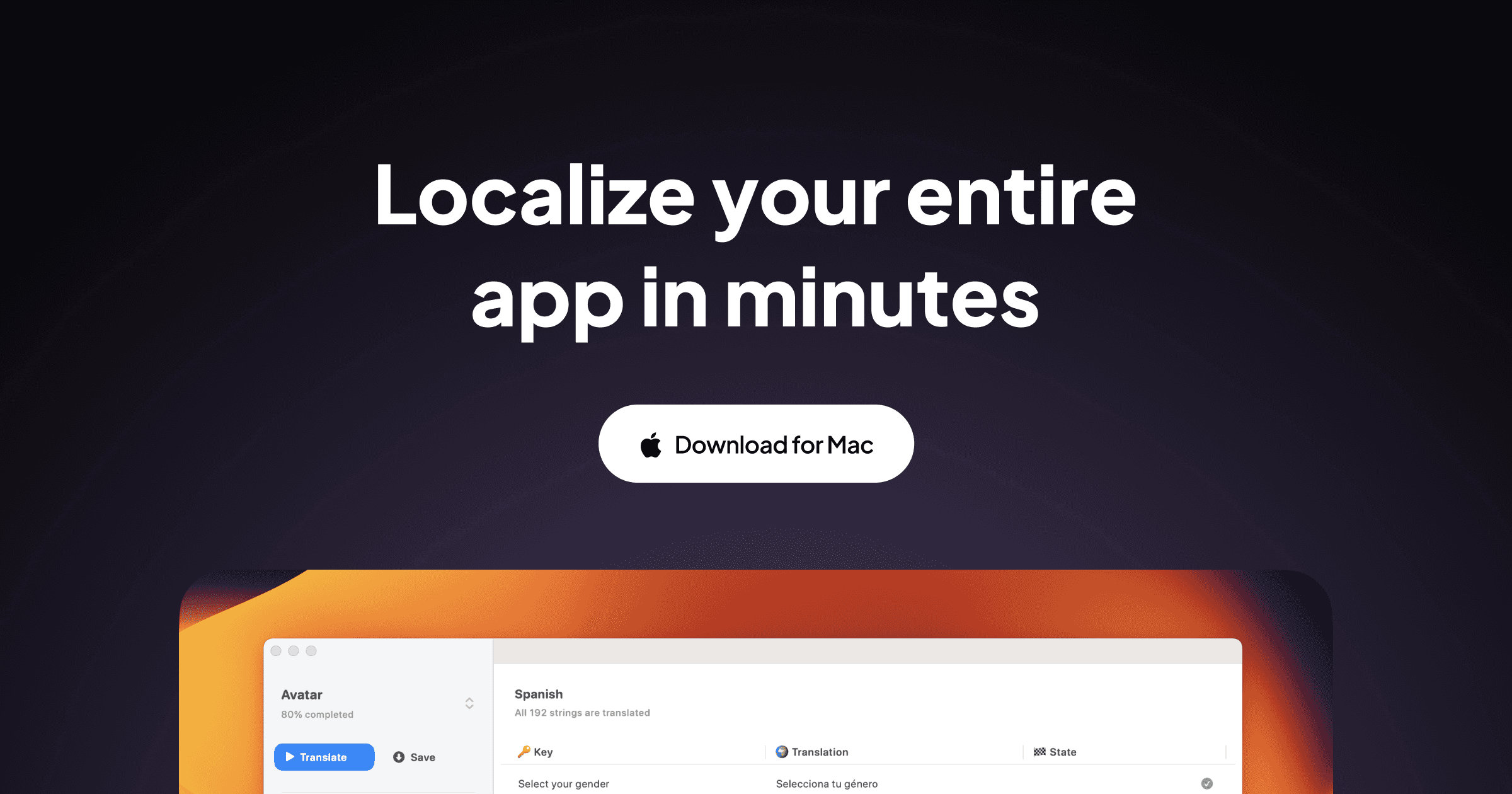
Globify is an AI-powered tool designed to streamline the localization process for iOS applications. Leveraging GPT-4 technology, it enables developers to quickly and efficiently localize their entire app. Users can manage multiple target languages, edit individual localizations, and work on various projects simultaneously. The tool offers customization options, allowing users to add custom tones and styles to their translations and create glossaries for consistent terminology. It also features seamless integration with string catalog files, making the localization process as simple as clicking a smart button. Globify aims to improve an app's global reach with minimal effort, making it an invaluable asset for iOS developers looking to expand their audience.

GPT4AllVerified
GPT4All is a free, open-source AI chatbot designed to run entirely on your local device, providing private and high-performance AI without requiring cloud connectivity. This means your data remains on your machine, ensuring privacy and security. It supports various operating systems including Windows, macOS, and Linux, and can run on CPU-only machines or systems with NVIDIA or AMD GPUs for faster inference. GPT4All is ideal for developers, teams, and AI power-users, offering full customization, local document chat (LocalDocs), and compatibility with thousands of open-source models. This empowers users to build assistants and workflows with maximum control, security, and speed, making it a robust solution for offline and privacy-sensitive AI applications.
LLMUnity
LLMUnity provides a comprehensive solution for integrating Large Language Models (LLMs) into the Unity game engine, allowing developers to create highly interactive and intelligent AI characters. This tool facilitates immersive player experiences by enabling characters to engage in dynamic conversations and respond intelligently. Key features include blazing-fast inference on various hardware (CPU, GPU, Nvidia, AMD, Apple Metal), local operation without internet access, and support for major LLM models. It also incorporates an advanced Retrieval-Augmented Generation (RAG) system for semantic search, enhancing character knowledge. LLMUnity is designed for ease of setup and use, offering a single line of code integration. It supports mobile app development for iOS and Android, with options for model download management and output restriction via grammar. The tool is free for both personal and commercial use, making it an accessible option for game developers.
loki-mode
loki-mode is an open-source, multi-agent autonomous system designed to transform product requirements into production-ready code. It operates by classifying complexity, assembling agent teams from 41 specialized types across 8 swarms, and running autonomous RARV (Reason - Act - Reflect - Verify) cycles with 9 quality gates. The system ensures code quality through blind 3-reviewer code review and anti-sycophancy checks, only delivering code that passes automated verification. It supports 5 AI providers (Claude, Codex, Gemini, Cline, Aider) with automatic failover and outputs full-stack solutions including source code, tests, Docker configs, CI/CD pipelines, and audit logs. The tool is self-hosted and private, ensuring data privacy and no vendor lock-in.
4oImageAPI.io
4oImageAPI.io provides an AI-powered image generation API, leveraging OpenAI’s GPT-image-1 model to deliver affordable, stable, and versatile visual content creation. It supports both text-to-image and image-to-image transformations, allowing users to generate visuals from detailed prompts or modify existing images. The API excels in precise text rendering within images, versatile style transformations from photorealistic to hand-drawn, and high-resolution outputs up to 4K in PNG, JPEG, and WebP formats. Designed for easy integration via a RESTful interface, it offers fast response times, 99.9% uptime, and robust high-concurrency support, making it suitable for real-time applications and high-volume production needs. The platform also provides flexible and transparent pricing, distinguishing itself from token-based models.
BioMap
BioMap is an AI company dedicated to advancing life sciences through the generation of novel proteins for therapeutic and industrial applications. The company leverages cutting-edge artificial intelligence to build sophisticated foundation models, powered by extensive computational resources and proprietary biological data. BioMap partners with pharmaceutical and biotechnology companies, offering flexible collaboration models to accelerate their discovery ambitions. By applying its AI technology platform, BioMap aims to enable breakthroughs in drug discovery and development, providing innovative solutions for complex biological challenges. The focus is on creating a new paradigm for protein design and engineering, moving beyond traditional methods to unlock new possibilities in medicine and industry.
OpenAlpha_Evolve
OpenAlpha_Evolve is an open-source Python framework designed for autonomous code generation and improvement, drawing inspiration from DeepMind's AlphaEvolve. It leverages Large Language Models (LLMs) via LiteLLM to iteratively write, test, and refine code, guided by evolutionary principles. The framework features a modular, agent-based architecture, including agents for prompt engineering, code generation, evaluation, and selection. It supports LLM-powered code generation, an evolutionary algorithm core for iterative improvement, and automated program evaluation with sandboxed execution using Docker. Researchers, developers, and enthusiasts can use it to explore AI, code generation, and automated problem-solving.
pandas-ai
PandasAI is a Python library designed to simplify data analysis by allowing users to interact with their data using natural language. It integrates Large Language Models (LLMs) and Retrieval Augmented Generation (RAG) to make data exploration conversational. Users can query various data sources like SQL databases, CSV files, and Parquet files, asking complex questions and receiving direct answers or even generating data visualizations. The library supports working with multiple DataFrames simultaneously and offers a Docker sandbox for secure code execution, making it a versatile tool for both technical and non-technical users looking to streamline their data workflows.
Prompt-Engineering-Guide
The Prompt-Engineering-Guide is a comprehensive, open-source resource dedicated to prompt engineering, context engineering, Retrieval-Augmented Generation (RAG), and AI Agents. It offers a wealth of information including guides, academic papers, lessons, and interactive notebooks, making it an invaluable tool for anyone looking to deepen their understanding of large language models (LLMs). The guide covers fundamental concepts, advanced techniques like Chain-of-Thought and Tree of Thoughts, and practical applications such as data generation, code generation, and image generation. It also addresses important considerations like risks, biases, and truthfulness in LLMs. The resource is continuously updated with the latest research and developments in the field, providing a dynamic learning environment for both researchers and developers.
prompt-forge
PromptForge is an AI prompt engineering workbench designed to bring engineering discipline to prompt development. It assists users in crafting effective prompts from scratch with AI-powered suggestions and provides advanced analysis to optimize prompts before testing. The tool systematically evaluates prompts by generating comprehensive test suites for robustness, safety, accuracy, and creativity. Users can execute tests with full parameter control, dynamic variable detection, and compare results across multiple models like Claude, GPT-4, Azure OpenAI, and Ollama. PromptForge also includes prompt management features with an organized library, search, tags, and execution history, making it a comprehensive solution for prompt engineers.
PromptEnhancer
PromptEnhancer is an open-source prompt-rewriting utility developed by Tencent Hunyuan, designed to enhance text-to-image models and image-to-image editing tasks. It takes an input prompt and restructures it while preserving the original intent, producing clearer, more structured prompts for downstream image generation. Key features include dual-mode support for both text-to-image prompt enhancement and image-to-image editing instruction refinement with visual context. The tool ensures intent preservation, maintaining all key elements like subject, action, style, and attributes. It also boasts robust parsing with a multi-level fallback mechanism and flexible deployment options, supporting full-precision (7B/32B), quantized (GGUF), and vision-language models for efficient inference.
promptoftheyear
promptoftheyear is an open-source collection of impactful prompts designed for Large Language Models (LLMs). It serves as a valuable resource for individuals looking to enhance their prompt engineering skills across diverse domains. The collection includes prompts for job hunting, essay and research, language learning, code generation, image generation, mental health support, music creation, marketing, and data analysis. Each prompt in the collection includes a backlink to acknowledge its original author, ensuring proper attribution. The repository also provides access to a prompts.csv file containing the complete collection and suggests free chatbots for interactive use, allowing users to see the prompts in action.
Platypus
Platypus offers a comprehensive set of code and resources for fine-tuning large language models (LLMs) from the Platypus family. Utilizing LoRA (Low-Rank Adaptation) and PEFT (Parameter-Efficient Fine-Tuning) techniques, it enables efficient and powerful refinement of models based on the LLaMA and LLaMa-2 transformer architectures. The repository includes scripts for fine-tuning, merging LoRA weights, and performing inference. It also provides a data pipeline for refining datasets, including keyword search, duplicate removal, and similarity checks using SentenceTransformers embeddings. Platypus is designed to be multi-GPU friendly, supporting both model and data parallelism, and offers guidance on reproducing benchmark evaluation results.