
Coding & Development
Browsing page 200 of AI tools for Coding & Development. Sorted by confidence score — our independent quality rating.

torchtitan
Torchtitan is a PyTorch-native platform designed for rapid experimentation and large-scale training of generative AI models. It serves as a minimal clean-room implementation of PyTorch native scaling techniques, providing a flexible foundation for developers to build upon. The platform emphasizes ease of understanding, use, and extension for different training purposes, with a bias towards a clean, minimal codebase. Key features include multi-dimensional composable parallelisms like FSDP2, Tensor Parallel, and Pipeline Parallel, along with support for activation checkpointing, distributed checkpointing, and interoperable checkpoints. Torchtitan also integrates with `torch.compile`, supports Float8 and MXFP8 training, and offers Supervised Fine-Tuning (SFT) with chat-formatted datasets. It provides debugging tools, flexible learning rate schedulers, and helper scripts for tokenizer downloads and checkpoint conversions, making it a comprehensive solution for advanced generative AI model development.
Text2Video-Zero
Text2Video-Zero is an innovative tool that leverages text-to-image diffusion models to perform zero-shot video generation. This means users can create dynamic video content directly from textual descriptions without the need for extensive training or fine-tuning of the model. It's particularly useful for AI research, allowing for rapid prototyping and experimentation with video synthesis from text. Beyond research, it serves as a powerful asset for video content creation, enabling users to quickly visualize concepts and generate initial video drafts based on simple text inputs, significantly streamlining the production workflow.
TalkForm.ai
TalkForm.ai revolutionizes data collection by converting traditional forms into interactive, audio-first interviews. Users can import existing forms from platforms like Typeform, Google Forms, Jotform, or HubSpot, and TalkForm.ai will automatically generate an audio version. The tool asks questions aloud, captures responses through live audio, and intelligently fills structured fields. It then exports the collected data as clean JSON, making it easy to integrate with existing apps, workflows, and AI agents. This approach significantly shortens the form completion duration and boosts completion rates by providing a guided, conversational experience, contrasting with the static, often tedious nature of traditional forms. TalkForm.ai offers developer-friendly integrations including a React widget, HTTP API, CLI, and MCP tools, ensuring seamless adoption into various technical environments.
Q-CTRL
Q-CTRL offers infrastructure software designed to make quantum technology useful, focusing on quantum computing and quantum sensing. The platform leverages AI to bridge the gap between the quantum and classical worlds, delivering performance enhancements in quantum computing and enabling new quantum sensing capabilities. Key products include Fire Opal for optimizing quantum algorithms and hardware performance, Boulder Opal for designing and scaling quantum hardware, and Black Opal for interactive quantum education. Q-CTRL has achieved significant milestones, including world records in quantum computing performance and a 94x quantum advantage in navigation, making it a leader in practical quantum applications. The tool serves a diverse audience from quantum learners and educators to defense and aerospace industries, providing solutions for GPS-free navigation, quantum computer calibration, and algorithm development.
tensorspace
TensorSpace is a neural network 3D visualization framework built using TensorFlow.js, Three.js, and Tween.js. It offers Keras-like APIs for constructing deep learning layers, loading pre-trained models, and generating interactive 3D visualizations directly in the browser. This framework makes it intuitive to understand model structures, internal feature abstractions, intermediate data manipulations, and final inference generations. TensorSpace supports visualizing pre-trained models from TensorFlow, Keras, and TensorFlow.js after a preprocessing step, which can be done using the TensorSpace Converter. It aims to involve front-end developers in the deep learning ecosystem by providing an accessible visualization tool.
tools
tools is an open-source project designed to empower AI agents with a comprehensive suite of capabilities. It adopts a model-driven approach, enabling developers to build sophisticated AI agents with just a few lines of code. The platform offers a wide array of ready-to-use tools, including file operations for reading, writing, and editing, secure shell integration for executing commands, and HTTP client for API requests. It also features advanced functionalities like memory management with Mem0 and Amazon Bedrock Knowledge Bases, web infrastructure tools for searching and crawling, and Python execution with state persistence. Furthermore, tools supports image and video processing, audio output, environment management, journaling, task scheduling, and advanced reasoning. Its unique offerings include swarm intelligence for parallel problem-solving, agent-as-tool for nested agent instances, and a multi-agent graph for deterministic pipelines, making it a versatile solution for complex AI agent development.
vearch
Vearch is a cloud-native distributed vector database designed for efficient similarity search of embedding vectors in AI applications. It provides key features such as hybrid search, which combines vector search with scalar filtering, and high performance for fast vector retrieval, searching millions of objects in milliseconds. The database is built for scalability and reliability, offering replication and elastic scaling out. Vearch integrates with popular AI frameworks like Langchain, LlamaIndex, Langchaingo, and LangChain4j, allowing it to be used as a memory backend for various AI applications. It supports multiple deployment methods including Kubernetes, Docker Compose, and source compilation, and offers SDKs for Python, Go, Java, and Rust.
torchdistill
torchdistill is a modular, configuration-driven, and coding-free framework built on PyTorch, designed to facilitate reproducible deep learning studies. It integrates various state-of-the-art knowledge distillation methods, allowing users to design and conduct experiments by simply editing declarative YAML configuration files, rather than writing Python code. The framework also supports general deep learning experiments without teachers. It provides tools like ForwardHookManager for extracting intermediate representations from models without modifying their interfaces. torchdistill has officially joined the PyTorch Ecosystem and offers trained models, training logs, and configurations to ensure reproducibility and benchmarking. It supports importing models from PyTorch Hub and Hugging Face Model Hub, making it versatile for various research and development tasks.
AlphaAvatar
AlphaAvatar is a real-time interactive Omni-Avatar personal assistant framework designed to evolve into an intelligent personal butler. It is fully self-hostable and privacy-first, allowing deployment locally or on your own infrastructure with full control over data, memory, and behavior. Built around a plugin-based Agent architecture, AlphaAvatar combines full-modality memory, dynamic persona understanding, self-improving reflection, long-term planning & execution, external tool integrations, and real-time virtual characters. This enables it to move beyond a traditional chatbot into a continuous, personalized, and proactive assistant system, supporting text, voice, and visual interaction.
Traycer
Traycer is an AI product planner that brings spec-first development to AI coding workflows. It transforms product intent into shared, structured specifications that teams can refine collaboratively. The tool then guides AI coding agents with full context and verifies every generated change against the plan, ensuring accuracy and reducing drift. Key features include spec-driven development for capturing intent in PRDs, tech specs, and wireframes, team artifacts for instant sharing and real-time editing, and task orchestration into epics, tickets, and phases. Traycer also offers one-click hand-off to popular AI agents like Cursor and Claude Code, and reviews changes by scanning the codebase to verify AI-generated code and apply corrections before deployment. This process leads to faster shipping on complex codebases and less agent hallucination.

AI XYZ
AI XYZ is a platform dedicated to exploring and understanding the AI revolution. While specific functionalities are not detailed, the tool positions itself as a gateway to unlocking the secrets of AI technology. It appears to be geared towards individuals or organizations interested in the broader landscape of artificial intelligence, potentially offering insights, resources, or a framework for AI exploration and development. The platform's primary goal is to provide access to the core concepts and advancements driving the AI revolution, making it a potential resource for those looking to delve deeper into this rapidly evolving field.
awesome-copilot
awesome-copilot is a comprehensive, community-contributed collection designed to maximize the utility of GitHub Copilot. It offers a wide array of resources including specialized Copilot agents, coding standards applied automatically via instructions, and self-contained skills with bundled assets. The repository also features curated bundles of agents and skills for specific workflows as plugins, automated actions triggered by hooks, and AI-powered GitHub Actions automations. Additionally, it provides a cookbook with copy-paste-ready recipes for working with Copilot APIs and a Learning Hub with articles and guides for customization. This open-source project aims to empower developers to write better code with AI.

Netlify
Netlify is a comprehensive platform for building and deploying modern web applications, catering to millions of developers. It supports creating applications with AI tools or traditional code, offering instant deployment to a global production infrastructure. Key features include Agent Runners for AI-powered development, Deploy Previews for collaborative feedback, AI Gateway for connecting to various AI models, and serverless functions for backend logic. The platform also provides integrated storage, observability, and security features, ensuring scalability and reliability for everything from marketing sites to complex AI apps and e-commerce solutions. Netlify streamlines the development workflow, enabling rapid iteration and global deployment in seconds.
Appified.ai
Appified.ai is a no-code platform designed to transform OpenAI Assistants into fully functional web applications. This enables users to easily embed their AI assistants directly onto their websites, share them with others, or even commercialize them as products. The platform supports advanced features such as function calling and API integration, allowing for dynamic and interactive AI applications. A key differentiator is its focus on security, ensuring that OpenAI API keys remain private and secure. Appified.ai simplifies the deployment of AI agents, making sophisticated AI accessible to a broader audience without requiring extensive coding knowledge.
Stunning
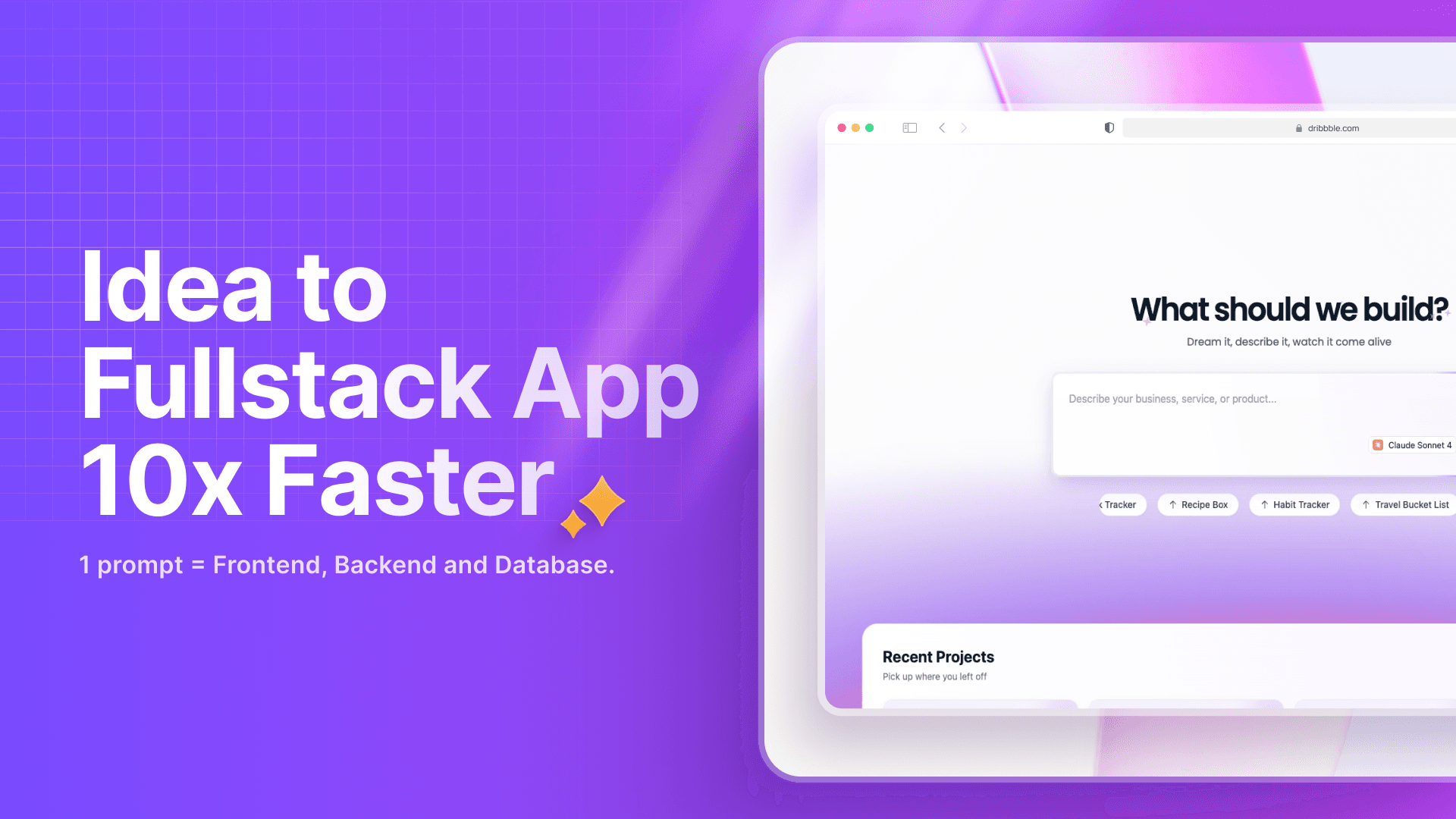
Stunning is an AI-powered web application builder designed to accelerate full-stack app development by a factor of ten. Users can simply describe their desired application, and the AI will bring it to life. The platform is praised by its community for its ease of use, smooth design, and ability to produce impressive results without requiring any coding. It supports the creation of various web applications and websites, making it suitable for individuals and businesses looking to quickly establish an online presence or build functional tools. Stunning emphasizes a rapid development cycle, allowing users to build projects efficiently and effectively.
Yikes
Yikes is a specialized security scanner designed for Next.js and Supabase applications, focusing on vulnerabilities commonly exploited by hackers. It identifies critical issues such as exposed `NEXT_PUBLIC_` secrets, Supabase Row Level Security (RLS) misconfigurations, API routes missing authentication checks, SQL injection, and XSS vulnerabilities. The tool provides clear, plain English explanations for each finding, along with exact copy-and-paste code fixes tailored to the user's codebase. Yikes offers a free tier for public GitHub repositories and paid plans that include private repository scanning, deeper checks, and personalized code reviews with pull requests for fixes.
voltaML-fast-stable-diffusion
voltaML-fast-stable-diffusion offers a user-friendly web interface and API for generating images with Stable Diffusion. This tool is designed for ease of installation, particularly with Docker, and supports both PyTorch and AITemplate for efficient inference. It is compatible with Windows and Linux operating systems, making it accessible to a broad range of users. The project emphasizes speed and a clean, simple user experience, providing a documented API for developers. It is built with a tech stack including Python FastAPI, PyTorch, AITemplate, and a Vue.js frontend, ensuring a robust and responsive application.
Uizard
Uizard is an AI-powered design tool that simplifies UI/UX design for apps, websites, and desktop software. It allows users to visualize, communicate, and iterate on wireframes and prototypes in minutes, empowering product teams with AI. Key features include Autodesigner 2.0 for generating projects, screens, and themes from text, a Screenshot Scanner to turn images into editable mockups, and a Wireframe Scanner to digitize hand-drawn sketches. Uizard also offers real-time collaboration, allowing entire product teams to contribute. It's designed for product managers, designers, marketers, startup founders, consultants, agencies, and developers to quickly bring product ideas to life, create MVPs, and iterate on designs at speed.
XNNPACK
XNNPACK is an open-source library developed by Google, offering highly optimized floating-point neural network inference operators. It is designed to accelerate machine learning frameworks such as TensorFlow Lite, TensorFlow.js, PyTorch, ONNX Runtime, ExecuTorch, and MediaPipe across a wide range of platforms including ARM, x86, WebAssembly, and RISC-V. While not intended for direct use by deep learning practitioners, it serves as a foundational component for developers building high-performance AI applications. XNNPACK supports a comprehensive set of neural network operators, including various convolutions, pooling types, and element-wise operations, with optimizations for different architectures and channel dimensions. It provides significant performance improvements for mobile and embedded devices, as demonstrated by benchmarks on MobileNet models across different Pixel phones and Raspberry Pi boards.
Xpolyglot
Xpolyglot is a macOS application designed to simplify and automate the localization of Xcode projects for developers. It leverages artificial intelligence to translate string catalogs, specifically targeting the Magic.xcstrings format, and offers significant cost savings compared to traditional translation services. The tool also assists with global metadata management, ensuring App Store Connect descriptions and keywords are accurately translated and optimized for various languages and markets. Key features include easy project import from Xcode, delta updates to translate only changed strings, and version management for app updates, allowing developers to keep users informed in their native language. Xpolyglot requires a separate OpenAI API key for its AI functionalities.

LINQ Me Up
LINQ Me Up is an AI-powered tool designed to significantly enhance .Net developer productivity by streamlining the process of LINQ code generation and conversion. It offers robust capabilities to convert SQL queries into LINQ code and vice versa, supporting both C# and Visual Basic, as well as Method and Query syntax. Beyond conversion, the tool can generate tailored LINQ queries from diverse datasets, including XML, JSON, and POCOs. Its AI-powered analysis ensures optimized results, making it more versatile and powerful than traditional rule-based or syntax conversions. LINQ Me Up aims to save developers substantial time and cost by reducing the effort spent on query conversion, allowing them to focus on more critical coding tasks.
Chat2DB Local
Chat2DB is an AI-powered SQL client designed to simplify database management by converting natural language into optimized SQL queries. It supports a wide array of relational and non-relational databases, including MySQL, PostgreSQL, Oracle, MongoDB, and Redis, allowing users to manage all their data sources from a single platform. Key features include an AI SQL editor, code generation from schema, context-aware AI chatbot, and one-click SQL error fixes. It also offers GUI-based database management with visual tools like ER diagrams, data migration capabilities, and AI-driven data analysis with auto-generated BI dashboards. Chat2DB emphasizes data security, processing queries locally and never uploading schema to the cloud, making it a robust solution for developers, data engineers, and business managers.
whispering
Whispering Tiger is a free and open-source tool designed for live transcription and translation of audio streams or in-game images. It leverages models like OpenAI's Whisper, Meta's Seamless M4T, and Microsoft's Speech T5 to support a wide range of languages for speech recognition, translation, and transcription. The tool integrates with applications such as VRChat and various streaming platforms (OBS, vMix, XSplit) via OSC and Websocket support, allowing for real-time text output as overlays. Beyond core transcription, it offers features like Optical Character Recognition (OCR) for in-game text, Text-to-Speech (TTS) for reading out translations, Voice Activity Detection (VAD), and even Retrieval-based Voice Conversion (RVC). It runs 100% locally after initial model downloads, ensuring privacy and offline functionality.

Continuum Industries
Continuum Industries offers Optioneer, an AI-powered option assessment platform designed for utilities and developers in the energy and water industries. It automates the generation and evaluation of options for network upgrades and expansion, leveraging thousands of GIS layers to identify optimal routes. The platform helps estimate project costs earlier, identify risks quicker, and facilitates collaboration across multiple disciplines within a geospatial planning environment. Optioneer supports various linear infrastructure projects including electricity transmission, renewables, hydrogen, CO2 networks, and water networks. It offers two main products: Optioneer for Screening, for early-stage go/no-go decisions, and Optioneer for Development, for in-depth analysis from concept to permit application, significantly reducing project timelines and risks.