
Coding & Development
Browsing page 196 of AI tools for Coding & Development. Sorted by confidence score — our independent quality rating.
Product Science
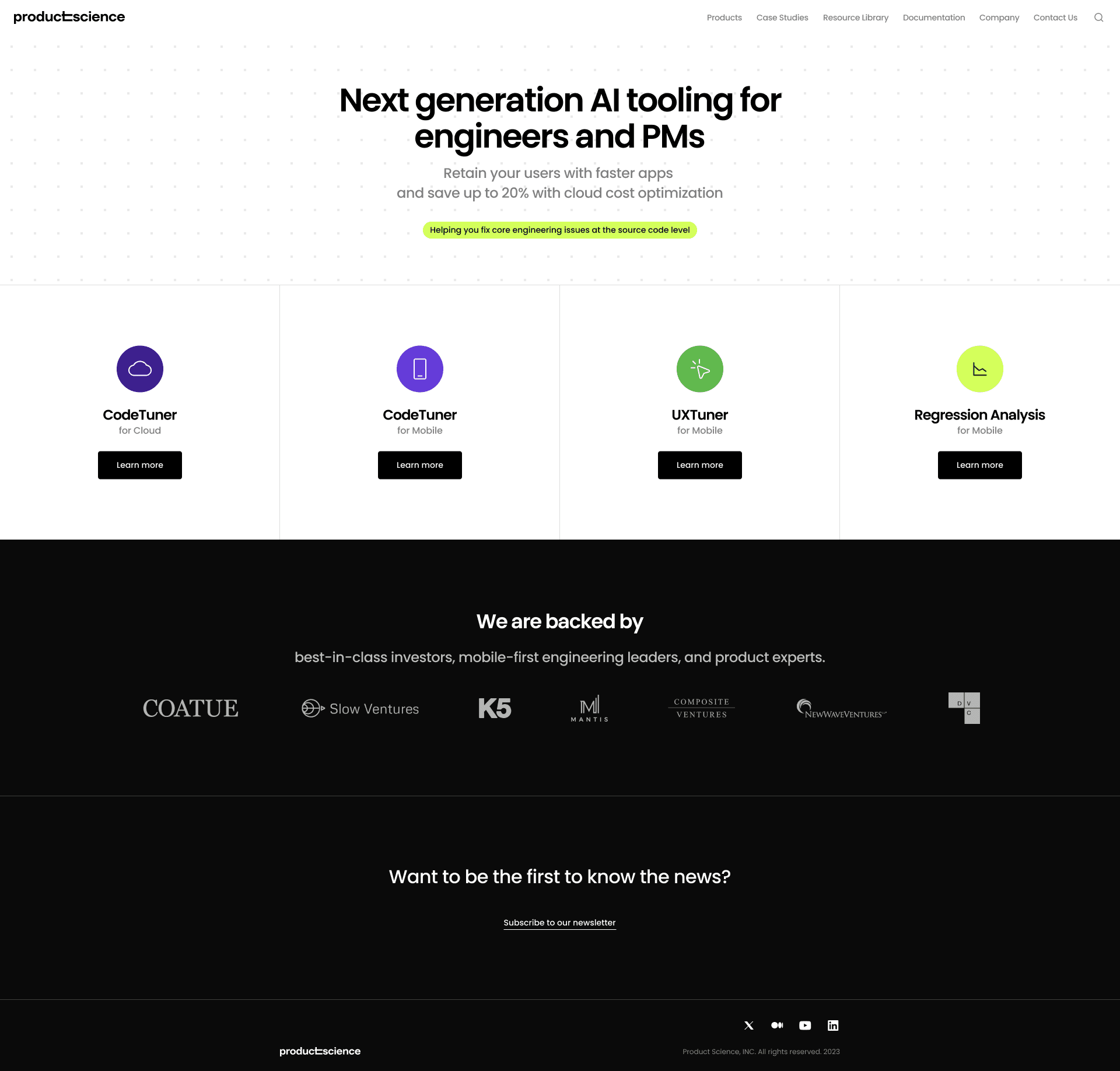
Product Science provides an end-to-end orchestration platform for decentralized foundation model training. It offers a hardware-agnostic approach, allowing enterprises, research labs, and public institutions to train specialized AI models across fragmented and geo-distributed resources, from general-purpose GPUs to specialized ASICs. The platform emphasizes configurable data sovereignty and aims to overcome the barriers of centralized data centers and the scarcity of NVIDIA chips. By unifying fragmented hardware globally, Product Science unlocks elastic capacity and creates a permissionless, resilient environment for frontier-scale AI training, evolving beyond traditional GPU clusters into high-efficiency, trustless, and permissionless training environments. They previously incubated Gonka, a decentralized network for AI training and inference.

OORT | The Data Cloud for Decentralized AI
OORT offers a decentralized data cloud specifically designed for AI, leveraging Web3 technology to provide secure and efficient data management solutions. The platform supports enterprise-grade AI data collection, processing, and monetization. Key features include AION, a multi-AI agent system for marketing, high-precision AI model alignment through human feedback, and large-scale multimodal data sourcing. OORT also provides a Project Launchpad for scaling projects, premium off-the-shelf datasets, and infrastructure for running nodes with OORT Edge and building on the Olympus protocol. Users can earn rewards by contributing to data collection and validation through the OORT DataHub mobile app.

Vibe Code: Codex & Claude AI
Vicoa (Vibe Code Anywhere) is a versatile platform designed for developers to interact with AI coding agents such as Claude Code, Codex, and OpenCode from any device. It facilitates a seamless workflow, allowing users to start coding sessions on a laptop and continue effortlessly on a phone or tablet. Key features include a clean visual interface for managing agents, real-time synchronization across devices, and instant push notifications when an AI agent requires input. Vicoa supports various platforms including iOS, Android, web browsers, and CLI on macOS, Linux, and Windows, ensuring developers can stay productive and responsive to their AI agents from anywhere. It also offers features like fuzzy file search, slash commands, permission modes, and the ability to view code diffs directly within the app.

alloy-voice-assistant
alloy-voice-assistant is an open-source project available on GitHub designed for developers to create and experiment with AI voice assistants. The project provides a foundational framework for building a sample AI assistant, requiring both an OPENAI_API_KEY and a GOOGLE_API_KEY for its functionality. Users can store these keys in a .env file or set them as environment variables. The repository includes clear instructions for setting up a virtual environment, installing necessary packages, and running the assistant, with specific guidance for Apple Silicon users. This tool is ideal for those looking to understand the mechanics of AI voice assistants and build custom applications.
Daft
Daft is a high-performance data engine specifically designed for AI and multimodal workloads, enabling the processing of images, audio, video, and structured data at any scale. It features native multimodal processing, allowing users to handle various data types within a single framework. The tool also includes built-in AI operations, facilitating tasks like LLM prompts, embedding generation, and data classification using models such as OpenAI, Transformers, or custom solutions. Built with Python at its core and Rust under the hood, Daft offers blazing performance without the complexity of JVM. It supports seamless scaling from local environments to distributed clusters on Ray and Kubernetes, and provides universal connectivity to data sources like S3, GCS, Iceberg, Delta Lake, Hugging Face, and Unity Catalog. Daft ensures out-of-box reliability through intelligent memory management and sensible defaults.
daily_stock_analysis
Daily Stock Analysis is an open-source, LLM-powered system designed for intelligent analysis of A-shares, H-shares, and US stock markets. It integrates multiple data sources for market trends, real-time news, and social sentiment, feeding into an AI decision dashboard that provides core conclusions, scores, buy/sell points, risk alerts, and operational checklists. The system supports various market strategies, including A-share review, US stock regimes, moving averages, and Elliott Wave theory. Users can manage portfolios, view historical reports, and backtest AI analysis. It offers multi-channel notifications via platforms like WeChat, Telegram, and email, and can be scheduled to run automatically using GitHub Actions or Docker, providing a zero-cost solution for daily stock insights.
DiffusionKit
DiffusionKit is an open-source project designed for on-device image generation using diffusion models on Apple Silicon. It offers both Python and Swift packages, facilitating the conversion of PyTorch models to the Core ML format and enabling efficient inference with MLX. Developers can leverage DiffusionKit to run models like Stable Diffusion 3 and FLUX.1-dev directly on Apple devices, optimizing performance and reducing reliance on cloud resources. The tool supports various functionalities including text-to-image generation, image-to-image transformations, and fine-grained control over generation parameters such as seed, height, and width. Its architecture is built to support both Core ML and MLX backends, providing flexibility for integration into different application environments.
DeepAA
DeepAA is an open-source project that leverages convolutional neural networks to generate ASCII art from images. While still under development, it provides a functional framework for transforming visual inputs into text-based artistic representations. The project was accepted by the NIPS 2017 Workshop on Machine Learning for Creativity and Design, highlighting its innovative approach to AI-driven art generation. Users can convert grayscale line images into ASCII art by running a Python script, with options to select a light model for faster processing. The repository includes requirements for TensorFlow, Keras, NumPy, and other libraries, along with instructions for setting up and using the model.

Writemyprd
Writemyprd is an AI-powered tool designed to streamline the creation of Product Requirements Documents (PRDs). Leveraging ChatGPT technology, it transforms the often complex and time-consuming PRD drafting process into a simple and efficient experience. Users can easily generate comprehensive PRDs for any product by inputting key information such as the product name, feature list, and user feedback. The platform aims to enhance productivity and clarity in project planning, providing all necessary resources to help users get started quickly. Writemyprd is ideal for product managers and startup founders looking to rapidly document product requirements.
deeplearning4j
Deeplearning4j is a comprehensive ecosystem designed for deploying and training deep learning models within the Java Virtual Machine (JVM) environment. It offers a high-level API for building MultiLayerNetworks and ComputationGraphs, supporting various layers including custom ones. A key feature is its ability to import models from popular frameworks like Keras, TensorFlow, ONNX, and PyTorch. The suite includes ND4J, a general-purpose linear algebra library with over 500 operations, and SameDiff, an automatic differentiation/deep learning framework similar to TensorFlow's graph mode. DataVec provides ETL capabilities for machine learning data, handling diverse formats and sources. The underlying C++ library, LibND4J, ensures high performance with CPU and GPU acceleration. Deeplearning4j supports Windows, Linux, and macOS, with broad hardware compatibility.

Union.ai
Union.ai is an AI development platform designed to help organizations move from AI experimentation to production faster. It provides a unified infrastructure for orchestrating, training, and serving AI, machine learning, and agentic systems. Powered by Flyte, an open-source standard for pipeline orchestration, Union.ai enables users to build self-healing workflows with automatic failure recovery, caching, and versioning. The platform supports dynamic AI orchestration, real-time inference, and infra-awareness, allowing for high-velocity workflows. It emphasizes enterprise compliance, data lineage, and observability, ensuring secure and scalable AI operations. Union.ai allows development in pure Python and offers flexible deployment options, including running in users' own cloud environments.
Devlop Ai
Devlop.AI is an AI-powered embedded IDE specifically designed for STM32 microcontrollers, offering a comprehensive solution for embedded software engineers. The platform focuses on secure, hardware-aware code generation, optimizing firmware for ARM Cortex-M series, including STM32 M4 and M7. Key features include hardware visualization with CubeMX integration, allowing direct import of .ioc files and visual configuration of pin layouts. Its AI-driven pin configuration eliminates the need to manually sift through extensive datasheets by suggesting optimal pin assignments and alternatives. Devlop.AI also boasts a one-click compile and flash capability, streamlining the deployment process directly from the IDE. Users can generate firmware skeletons from simple prompts, add configurations via .ioc files or the IDE, and even upload datasheets for maximum accuracy in code generation, ensuring decisions are grounded in real electrical and timing constraints.
LeFlow
LeFlow is an open-source tool-flow designed to bridge the gap between TensorFlow deep neural networks and synthesizable hardware, specifically FPGAs. It achieves this by integrating Google's XLA compiler with the LegUp high-level synthesis tool, enabling the automatic generation of Verilog code from TensorFlow specifications. This facilitates the deployment of deep neural networks on FPGAs, offering a flexible approach to hardware acceleration. The tool includes a testing framework with 15 building blocks to verify installation and functionality, ensuring that generated circuits match original TensorFlow results. It also provides examples ranging from simple tests to more complex applications, making it a comprehensive solution for hardware synthesis of AI models.
mistral.rs
mistral.rs is an open-source, high-performance framework designed for fast and flexible Large Language Model (LLM) inference. It boasts zero-configuration support for any Hugging Face model, automatically detecting architecture, quantization format, and chat template. The tool offers true multimodality, handling text, vision, video, audio input, speech generation, image generation, and embeddings within a single engine. Key features include comprehensive quantization control (ISQ, GGUF, GPTQ, AWQ, HQQ, FP8, BNB), hardware-aware tuning for optimal performance, and flexible SDKs for both Python and Rust. It also provides advanced agentic features like integrated tool calling, server-side agentic loops, web search integration, and an MCP client for external tool connections. A built-in web UI simplifies interaction, making it a versatile solution for developers building AI applications.
ml-agents
The Unity Machine Learning Agents Toolkit (ML-Agents) is an open-source project designed to transform games and simulations into dynamic environments for training intelligent agents. It leverages deep reinforcement learning and imitation learning, offering PyTorch-based implementations for easy integration. The toolkit supports various training scenarios, including single-agent, multi-agent cooperative, and competitive setups, using algorithms like PPO, SAC, MA-POCA, and self-play. It also facilitates learning from demonstrations with BC and GAIL algorithms. ML-Agents provides a flexible Unity SDK, allowing developers to integrate it into custom scenes and add their own training algorithms. It's ideal for controlling NPC behavior, automated game testing, and evaluating game design decisions.
neptune-client
neptune-client is a Python client designed for the Neptune app, serving as an experiment tracker specifically for foundation model training. It enables data scientists and developers to monitor, log, and manage their machine learning experiments effectively. The tool supports various ML frameworks including TensorFlow, Keras, PyTorch, XGBoost, LightGBM, and Optuna, making it versatile for different project needs. It offers features for experiment versioning, comparison, and visualization, which are crucial for iterating on models and understanding performance. This client is essential for MLOps workflows, providing a centralized system for tracking metrics, parameters, and artifacts.
WISERLI
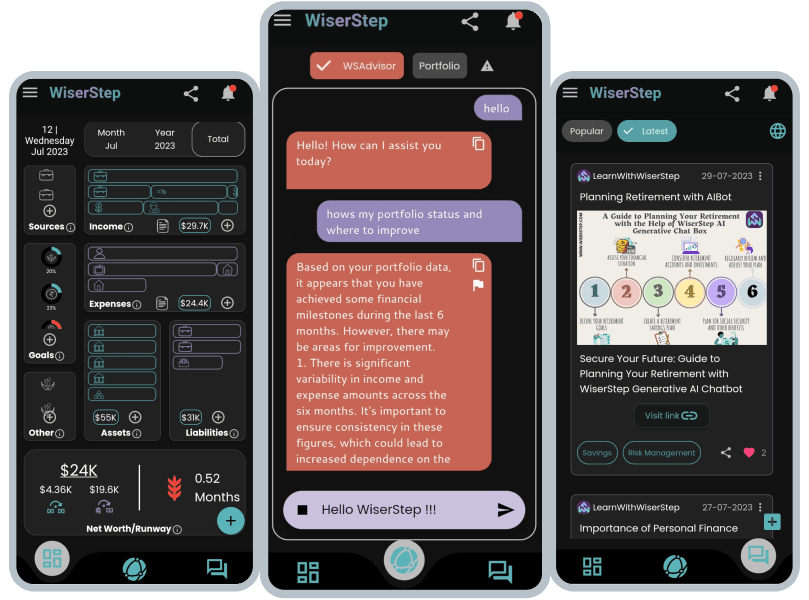
WISERLI is an AI software partner dedicated to providing AI-powered solutions and products, with a strong focus on ensuring AI systems are free from biases. Their services encompass a wide range of offerings, including financial technology, web and mobile application development, and the creation of advanced AI-based algorithms. They emphasize strategic software products and solutions, catering to various domains such as e-commerce and online media development. WISERLI aims to help businesses leverage AI effectively, offering tools like WiserStep for personal finance management, WiserBoard for project management, and a computer vision app for custom model deployment.
recommenders-addons
TensorFlow Recommenders Addons (TFRA) is an open-source collection of projects designed to enhance TensorFlow's capabilities for building large-scale recommendation systems. It primarily introduces Dynamic Embedding Technology, which allows for trainable key-value data structures within TensorFlow, leading to better recommendation effects compared to static embedding mechanisms by avoiding hash conflicts. TFRA is compatible with native TensorFlow optimizers, initializers, CheckPoint, and SavedModel formats. It fully supports training and inference of recommender models on GPUs, including integration with TF Serving and Triton Inference Server. The project also offers support for various Key-Value implementations as dynamic embedding storage, such as cuckoohash_map and HierarchicalKV, and supports both half-synchronous and asynchronous training methods.
sweep
Sweep is an AI coding assistant specifically designed for the JetBrains integrated development environment (IDE). It functions as a plugin, offering developers AI-powered support to streamline their coding workflows. The tool aims to enhance productivity and facilitate code creation within the JetBrains ecosystem. As an open-source project, Sweep encourages community contributions and provides a flexible platform for developers looking to integrate AI assistance directly into their daily coding routines. Its primary focus is on providing intelligent coding suggestions and automation to help developers write better code more efficiently.

Tres Astronautas
Tres Astronautas is a custom software development company that partners with businesses to transform ideas into profitable projects, leveraging bespoke AI and software solutions. They offer a comprehensive suite of services including AI and emerging technologies, custom software development, digital transformation, IT specialized services, and staff augmentation. Their approach focuses on understanding business value, key performance indicators (KPIs), and creating strategic plans to ensure expected return on investment (ROI). With proven experience, they boast a high project completion rate on time and budget, and a strong Net Promoter Score (NPS). They cater to various industries such as logistics, energy & oil, financial services, and insurance, providing tailored solutions that drive business results and operational efficiency.
Phoenix Arize
Phoenix Arize is an open-source platform designed for tracing and evaluating Large Language Models (LLMs) and AI applications. It enables developers and data scientists to seamlessly instrument, experiment with, and optimize their AI products in real time. The platform leverages OpenTelemetry (OTEL) for easy setup, full transparency, and to avoid vendor lock-in, allowing users to start, scale, or move without restrictions. Key features include application tracing for total visibility, an interactive prompt playground for iteration, streamlined evaluations with pre-built templates and human feedback, and dataset clustering for identifying performance issues. Phoenix Arize is fully open source and self-hostable, offering flexibility and control over AI observability.
VibeSec
VibeSec is an advanced AI-powered security scanning tool designed to secure code within GitHub repositories. It leverages a combination of AI security intelligence and Semgrep to identify real security issues, secrets, insecure patterns, and known vulnerabilities. The platform provides instant, actionable reports for every scan, detailing what is wrong, why it matters, and how to fix it. VibeSec supports both public and private GitHub repositories securely using token authentication, requiring no agents or SDKs. Built for developers, it integrates security early into the development lifecycle, allowing users to scan repos, gain insights, and ship confidently without needing a dedicated security team. It also offers lightning-fast scans and an upcoming API for CI integration.
Hadrix
Hadrix is an open-source, AI-powered security scanner designed to audit codebases for vulnerabilities. It operates locally on your machine, ensuring no data is stored by the tool, which enhances privacy and security. Hadrix combines static analysis with AI scanning to identify a wide range of issues, including injection, access control, authentication, secrets, logic issues, dependency risks, and misconfigurations. It supports JavaScript/TypeScript codebases and integrates with OpenAI and Anthropic models. The tool provides a detailed summary of findings, categorized by severity, and offers prioritized remediation suggestions, making it easier for developers to address critical security flaws.
chatgpt-plugin
chatgpt-plugin is a robust plugin designed for Miao-Yunzai / Yunzai-Bot, leveraging the Chaite core to provide advanced intelligent chat capabilities. It supports multiple model channels, tools, processors, triggers, RAG (Retrieval Augmented Generation), and a management panel. The plugin facilitates high-concurrency conversations, knowledge base retrieval, simulated human chat, and memory management locally, with an option to connect to Chaite Cloud for online channels and tools. Key features include multi-channel support with load balancing, advanced message adaptation for various input types, group context management, and a pseudo-human mode for more natural interactions. It also offers both visual and command-line control, along with automatic updates.