
Coding & Development
Browsing page 199 of AI tools for Coding & Development. Sorted by confidence score — our independent quality rating.

SimpleMem
SimpleMem is an advanced memory framework designed for LLM agents, offering efficient lifelong memory capabilities for both text and multimodal data. It employs semantic lossless compression to store, compress, and retrieve long-term memories, ensuring high information density and token utilization. The system features a three-stage pipeline: Semantic Structured Compression, Online Semantic Synthesis, and Intent-Aware Retrieval Planning. Omni-SimpleMem extends these capabilities to include image, audio, and video, achieving state-of-the-art performance on benchmarks like LoCoMo and Mem-Gallery. It supports cross-session memory, allowing agents to recall context and learnings across conversations, and integrates with platforms like Claude, Cursor, and LM Studio via MCP or Python.

Spawned
Spawned is a vibe coding platform designed for builders to turn ideas into real products using AI. Users can describe their app idea in plain English, and the AI-powered builder generates a complete, production-ready website or application in minutes, requiring no coding experience. The platform supports building various applications, including SaaS dashboards, landing pages, e-commerce stores, portfolios, and games. Projects can be launched to a community of users for discovery, upvotes, and support. Spawned provides 100 free AI prompts to start, along with free hosting and instant deployment for every project. It also offers a selection of 60+ templates to build from scratch or customize.
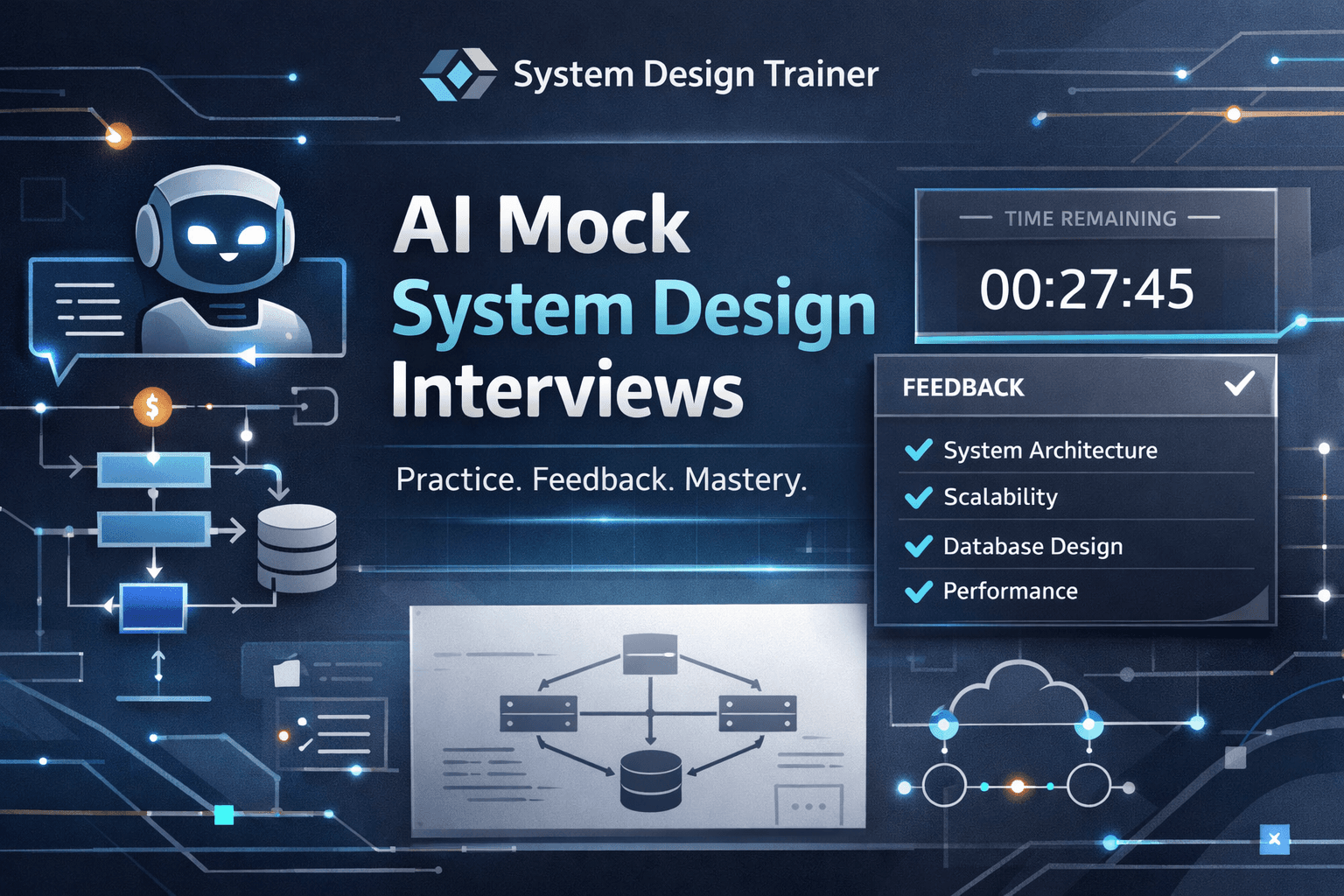
AI Mock System Design Interview
AI Mock System Design Interview is an AI-powered platform designed to help engineers master system design interviews. It offers realistic mock interviews with an AI interviewer that challenges and provides real-time feedback on architecture decisions. The platform tracks key signals like requirement coverage, scalability discussions, API proposals, and trade-offs. Users receive detailed performance breakdowns and actionable feedback to identify areas for improvement. It includes multiple practice cases based on real FAANG interviews, a whiteboard integration for diagramming, and a dashboard to track progress. This tool is ideal for serious interview preparation, offering timed sessions and a variety of pricing plans including a free interview.
HelloAgents
HelloAgents is a production-grade multi-agent framework built on OpenAI's native API, designed to simplify the development of complex intelligent agent applications. It offers 16 core capabilities, including a robust tool response protocol (ToolResponse), advanced context engineering with HistoryManager and TokenCounter, and reliable session persistence (SessionStore). The framework also features sub-agent mechanisms (TaskTool), optimistic locking for file editing, and a circuit breaker for fault tolerance. Developers benefit from externalized knowledge through Skills, progress management with TodoWrite, decision logging via DevLog, streaming output (SSE), asynchronous lifecycles, and observability with TraceLogger. HelloAgents supports various LLM providers through OpenAI-compatible, Anthropic, and Gemini adapters, automatically detecting the appropriate provider based on the base URL.
PyChatGPT
PyChatGPT is a Python client designed to interact with the ChatGPT API, providing features like conversation tracking, proxy support, and automatic login with token regeneration. It bypasses the need for a browser or manual access token retrieval by mimicking a real user login process using a TLS client. The tool enables developers to save and resume conversations, customize chat sessions with various options, and integrate a web demo via Huggingface Spaces. Although currently not maintained, it was developed to offer a robust way to programmatically access ChatGPT, addressing challenges like API changes and bot detection.
pyvideotrans
pyVideoTrans is a powerful open-source tool designed for comprehensive video translation, audio transcription, AI dubbing, and subtitle translation. It streamlines the process of localizing video content by offering a fully automatic workflow that includes speech recognition (ASR), subtitle translation, speech synthesis (TTS), and video synthesis. The tool supports both local offline deployment and integration with various mainstream online APIs for enhanced flexibility. Key features include multi-role AI dubbing, voice cloning with models like F5-TTS and GPT-SoVITS, and interactive editing at each stage to ensure accuracy. It also provides a utility toolkit for vocal separation, video/subtitle merging, and audio-video alignment, making it suitable for a wide range of video localization tasks.
qkeras
QKeras is an open-source quantization extension for TensorFlow Keras, designed to simplify the creation of deep quantized neural networks. It offers drop-in replacements for standard Keras layers, particularly those involved in parameter creation and arithmetic operations, allowing users to easily convert existing models to quantized versions. The library emphasizes user-friendliness, modularity, and extensibility, aligning with Keras's design principles while being minimally intrusive. Key features include quantized versions of common layers like QDense, QConv2D, and QActivation, along with various activation functions such as `quantized_relu` and `quantized_tanh`. QKeras also includes QTools for data type map generation and energy consumption estimation, and AutoQKeras for automated quantization and rebalancing through hyperparameter search.
AI-RAN Alliance
The AI-RAN Alliance is a collaborative initiative dedicated to transforming telecommunications by integrating Artificial Intelligence with Radio Access Networks (RAN). This alliance unites industry leaders and academic institutions to drive innovation, enhance efficiency, and unlock new economic opportunities within the telecom ecosystem. Its core focus is on advancing mobile network performance through cutting-edge AI innovation, shaping the future of AI-native networks. The alliance explores research, publishes findings, and offers membership opportunities for organizations interested in contributing to this evolving field.
AppMaster
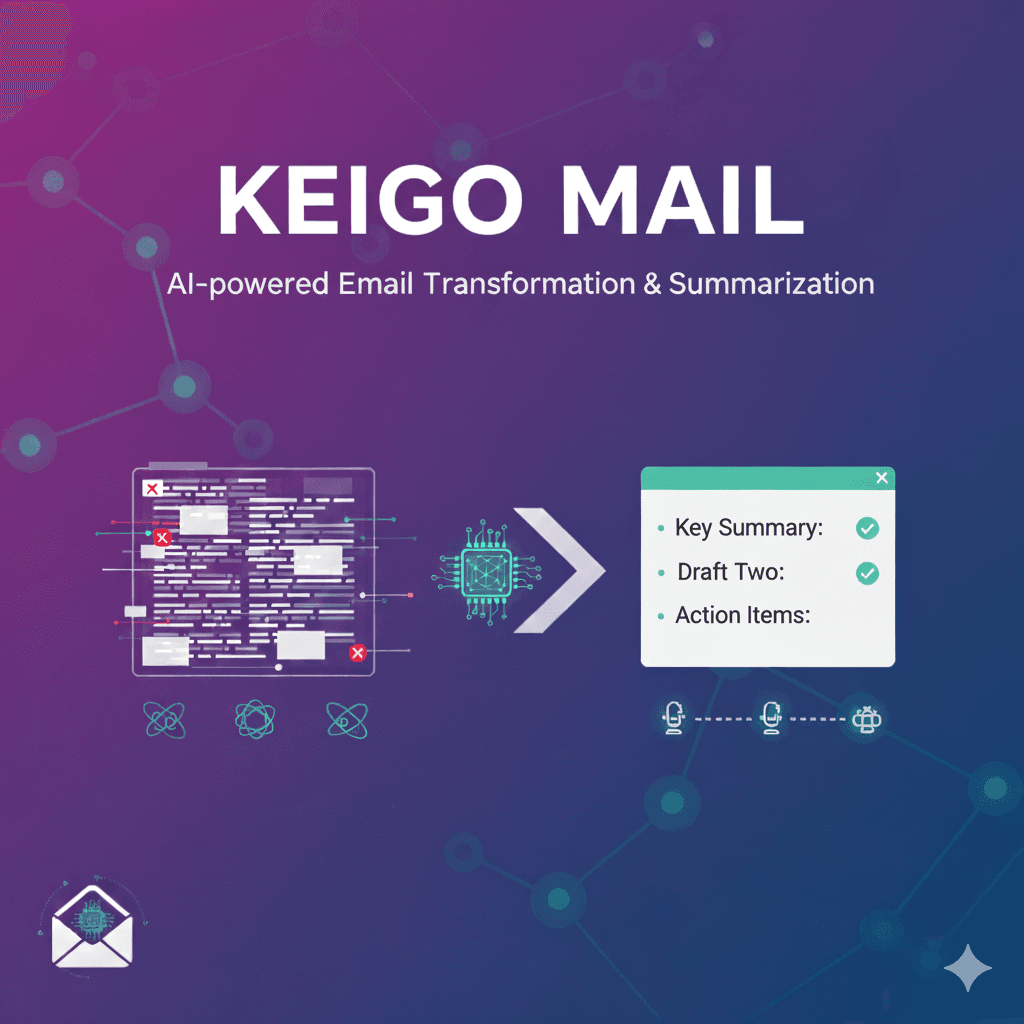
Keigo Mail is an AI-powered service designed to assist users in generating and refining Japanese business emails. It focuses on creating accurate and natural-sounding professional correspondence, which is crucial in Japanese business culture. The tool offers features for both generating new emails from scratch and correcting existing drafts, ensuring proper keigo (honorific language) usage and overall politeness. It aims to streamline the process of writing formal Japanese emails, making it easier for users to communicate effectively and appropriately in business settings.
CrevCLI
CrevCLI is a command-line interface tool designed to enhance code quality and efficiency through AI-powered code reviews. It allows developers to receive comprehensive feedback on their code's quality, performance, and security without leaving their terminal. A key feature is the ability to bundle an entire codebase and directory structure into a single file, simplifying its sharing with AI models for review. Written in Golang, CrevCLI is fast, efficient, and cross-platform, supporting Windows, Mac, and Linux. This tool aims to help software engineers become better at their craft by providing instant, expert AI feedback to catch bugs and improve overall code health.
LangTale
Langtail is an LLMOps platform designed to accelerate the development and streamline the deployment of AI-powered applications. It provides a comprehensive suite of tools for managing the entire lifecycle of language models, from experimentation and testing to deployment and monitoring. Key features include collaborative prompt development with a user-friendly playground, performance testing to evaluate prompt and LLM parameter changes, and seamless deployment of prompts as API endpoints. Langtail also offers real-time monitoring and insights into user inputs, model responses, latency, and cost, alongside an AI Firewall for security against prompt injections and DoS attacks. It supports all major LLM providers and offers self-hosting options for maximum security.
ASReview
ASReview is an open-source AI-powered tool designed to significantly accelerate the process of systematic reviews. Coordinated at Utrecht University, it leverages active learning to screen abstracts and titles, reducing the workload by up to 95%. The platform offers features like AI Screen for seamless screening, Simulate for testing and comparing model performance, and Crowdscreen for parallel screening with multiple experts. ASReview is fully open-source, ensuring transparency and user control over data, and is compliant with GDPR and AI regulations. It is trusted by universities, governments, and institutions worldwide, providing continuous security updates and no tracking cookies.
Spooky AI
Spooky AI is the world's first AI to human API platform, designed to facilitate seamless interaction between AI agents and human users. It enables AI agents to ask questions or seek confirmation directly from humans, enhancing the decision-making and operational capabilities of AI systems. The platform offers a simple open-source Python library and integrates with the Langchain API, making it accessible for developers to incorporate human interaction into their AI applications. Currently, Spooky AI is available in a free beta, inviting developers to explore its capabilities and contribute to its evolution.
Announcify
Announcify is a self-hosted changelog widget designed to streamline product update announcements and boost user retention. It integrates directly with GitHub, allowing teams to automatically transform commit messages into formatted product announcements. Users can add a simple tag like `[log]` to their commits, and Announcify uses AI to rewrite technical details into user-friendly updates for an in-app widget or a dedicated public changelog page. The tool offers real-time metrics, user reactions, and brand customization. It's offered as a lifetime deal, providing unlimited projects and posts, advanced analytics, and team collaboration features without recurring monthly fees.

Cubyts
Cubyts offers an AI control plane specifically designed for the Software Development Life Cycle (SDLC). It enables organizations to build and deliver software efficiently by leveraging AI agents with a comprehensive understanding of the system context. The platform aims to align intent, code, and execution, providing visibility and control over the development process. Cubyts is engineered to detect drifts, surface potential risks, and facilitate timely course correction without disrupting existing workflows. This integration of AI into the SDLC stack helps enterprises manage their software development more effectively and securely.

Flixjini
Flixjini is an AI-enabled API platform designed to enhance content discovery, engagement, and retention for OTT apps, aggregators, hospitality TVs, and TV/STB OS. It offers an API-first technology that powers personalization and multi-device deployment for streaming platforms. Key features include AI-enriched metadata with deep behavioral signals, a Tag Composer for scaling content curation with over 25,000 pre-built categories, and a Semantic Search engine that understands natural language context and intent. The platform also provides a Recommendation Engine to increase watch time and reduce churn, a Listicle Generator for auto-generating engaging web stories and blog posts, and an Engagement Engine to reactivate dormant users with intelligent targeting. Additionally, Flixjini offers a CMS Engine for complete platform management with integrated AI intelligence and cross-platform app deployment.
RETFound
RETFound is an open-source vision foundation model project hosted on GitHub, dedicated to medical AI applications, particularly for retinal image analysis. It provides a series of foundation models, including its namesake RETFound, as well as integrations with DINOv2 and DINOv3 from Meta. The project emphasizes self-supervised learning, having been pre-trained on 1.6 million retinal images, and has demonstrated effectiveness in various disease detection tasks. Key features include its ability to be efficiently adapted to customized tasks and its generalizability for disease detection. The repository offers detailed instructions for environment setup, fine-tuning with pre-trained weights available on HuggingFace, and evaluation procedures, making it a valuable resource for researchers and developers in medical imaging AI.
get-shit-done
get-shit-done (GSD) is a lightweight yet powerful system designed for meta-prompting, context engineering, and spec-driven development across multiple AI code models like Claude Code, OpenCode, Gemini CLI, and Codex. It directly addresses 'context rot,' a common issue where the quality of AI-generated code degrades as the context window fills up. GSD streamlines the development process by allowing users to describe their desired outcome, then the system extracts necessary information and orchestrates AI agents to build and verify the code. It includes features like spiking and sketching for focused experiments, agent size-budget enforcement, and shared boilerplate extraction, making AI code generation more reliable and consistent for solo developers and small teams.

Magic ID Agents
Magic ID Agents offers an AI agent platform designed for mid-market organizations and communities like trade unions. It transforms an organization's commercial knowledge, often held by a few key individuals, into a governed operation run by AI agents on the user's own infrastructure. The platform features identity-gated access, ensuring data security and controlled information flow. For organizations, it can manage CRM, outbound campaigns, product intelligence, and voice call intelligence. For communities, it provides a governed knowledge base, three-tier identity enforcement, and purchase attribution. Magic emphasizes data sovereignty and operational efficiency, allowing teams to focus on core tasks rather than administration.
prompty
Prompty is an open-source tool developed by Microsoft, designed to streamline the creation, management, debugging, and evaluation of Large Language Model (LLM) prompts for AI applications. It introduces a `.prompty` markdown file format, serving as an asset class for LLM prompts, which significantly enhances observability, understandability, and portability for developers. The tool supports various runtimes including Python and TypeScript, allowing users to write a prompt once and execute it across different environments. Key features include live preview, connections management for various LLM providers like OpenAI and Anthropic, chat mode with tool calling, and detailed tracing of prompt execution. Prompty aims to accelerate the developer workflow by providing a structured and observable approach to prompt engineering.
semantic-kernel
Semantic Kernel is an open-source SDK designed for building intelligent AI agents and multi-agent systems. It provides a flexible framework for integrating large language models (LLMs) into applications, enabling developers to create sophisticated AI-powered solutions. The tool is model-agnostic, meaning it can work with various LLMs, and is enterprise-ready, supporting automated workflows and collaborative development. It empowers developers to build AI applications that can understand, reason, and interact with users and other systems, making it suitable for a wide range of AI development projects.
small-text
small-text is a Python library designed for active learning in text classification, enabling efficient labeling of training data for supervised learning, especially when labeled data is scarce. It provides unified interfaces for active learning, allowing users to easily combine various query strategies with classifiers from popular libraries like sklearn, PyTorch, and transformers. The tool supports GPU-based PyTorch models and integrates with transformers for state-of-the-art text classification. It includes multiple scientifically evaluated components such as query strategies, initialization strategies, and stopping criteria, which can be mixed and matched for building active learning experiments or applications. The library is open-source and requires Python 3.9 or newer.
skrl
skrl is an open-source, modular Reinforcement Learning (RL) library implemented in Python, supporting PyTorch, JAX, and NVIDIA Warp. It is designed with a focus on modularity, readability, simplicity, and transparency of algorithm implementation, making it suitable for both research and development. The library supports a wide range of environment interfaces, including OpenAI Gym, Farama Gymnasium, PettingZoo, and ManiSkill. Additionally, it allows for loading and configuring NVIDIA Isaac Lab and MuJoCo Playground environments, enabling simultaneous training of agents by scopes within the same run. skrl is under active continuous development, with the latest updates available on its develop branch.
Plexe
Plexe functions as an AI Data Scientist, enabling users to build and deploy custom machine learning models directly from natural language prompts. The platform simplifies the process of turning raw data into engineered AI solutions, offering features like instant data insights, custom model creation, and transparent performance metrics. Users can connect their data, and Plexe will check quality, identify patterns, and build production-ready models for specific business challenges such as fraud detection, churn prediction, or product recommendations. It provides full transparency with clear performance metrics, training details, and explanations for model predictions. Plexe supports various industries including Finance & Banking, E-commerce, Logistics, and Cybersecurity, offering tailored ML solutions.