
Coding & Development
Browsing page 13 of AI tools for Open Source & Models in Coding & Development. Sorted by confidence score — our independent quality rating.

Saigon A.I.
Saigon A.I. is a leading advisory company specializing in providing Artificial Intelligence solutions to help organizations foster innovation. Their expertise spans advanced data science, including large and small language model fine-tuning and integration. They also offer services in data engineering, MLOps, and dashboard development using tools like Tableau, Quicksight, and Power BI. Saigon A.I. aims to empower businesses with tailored AI strategies and implementations to drive growth and efficiency.
TileMaker
TileMaker is an innovative AI tool designed for generating custom tile designs. Leveraging Material Diffusion technology, it provides users with the ability to create unique and personalized tile patterns. The tool is built with developer integration in mind, allowing for seamless integration with platforms like Replicate and Vercel. This makes it a versatile solution for both casual users looking to design their own tiles and developers interested in cloning the tool to build their own AI-powered applications. Its user-friendly interface ensures accessibility for a broad audience, making advanced AI design capabilities available to everyone.
Wow Labz
Wow Labz is an AI development company offering custom AI solutions and turnkey product development for businesses. They partner with organizations to fundamentally redesign how they think, build, and operate in an AI-first world. With over 15 years of experience, Wow Labz applies engineering discipline, product rigor, and strategic clarity to help companies transition from AI curiosity to AI-native execution. Their services range from AI-native strategy and roadmapping to building AI-first products, enterprise copilots, and scalable engineering systems. They also offer expertise in blockchain and secure digital ecosystems, as well as research into frontier innovations like Quantum and XR.
cloudcli.ai
CloudCLI offers persistent cloud development environments specifically designed for AI coding agents like Claude Code, Cursor CLI, OpenAI Codex, and Gemini CLI. These environments keep running even when you close your laptop, ensuring session continuity across devices. Developers can initiate sessions from their phone, browser, or via API, and seamlessly continue in VS Code or Cursor over SSH. The platform is open-source (based on ClaudeCodeUI with over 8,500 GitHub stars) and supports self-hosting. It also includes team features for sharing configurations and context files, eliminating setup inconsistencies and speeding up developer onboarding. CloudCLI requires users to bring their own AI API keys, providing flexibility across different AI providers.
Ecosnap
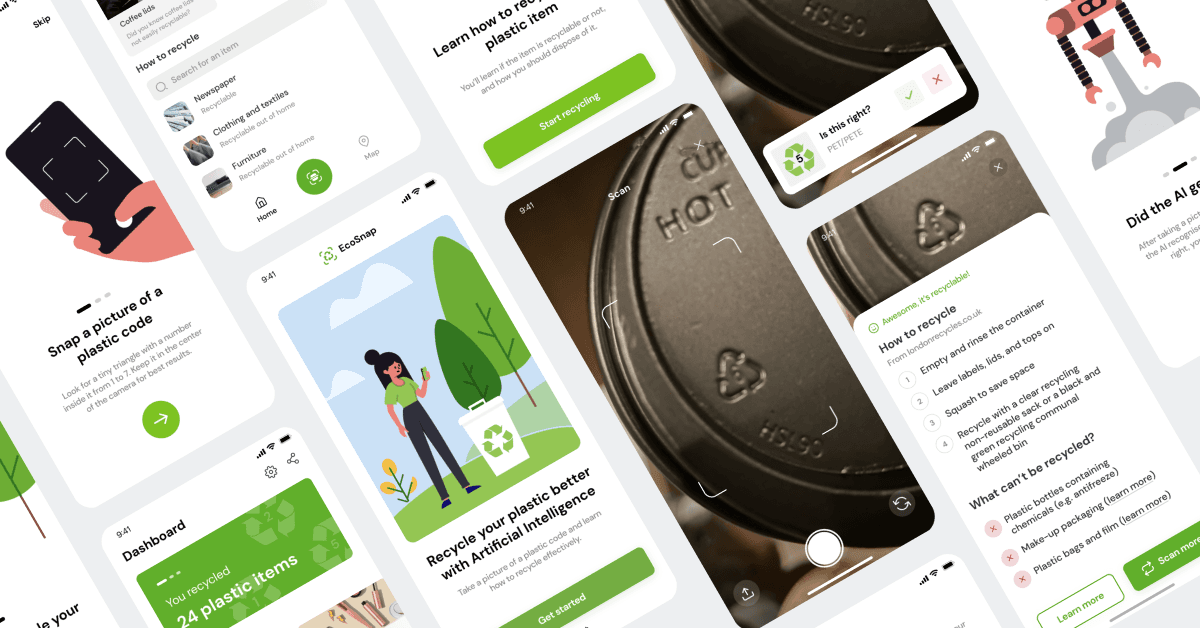
EcoSnap is an Artificial Intelligence powered app designed to enhance plastic recycling efforts. By simply taking a picture of a plastic item, the app uses AI to identify the type of plastic, provide instructions on how to recycle it, and suggest where to recycle it effectively. This tool aims to simplify the recycling process for individuals, making it easier to make informed decisions about plastic waste. Developed by Leo & Alyssa, EcoSnap is also an open-source project, with its code available on GitHub, promoting transparency and community contribution to sustainable practices.
n8n-ai-automations
n8n-ai-automations is a comprehensive collection of n8n workflows, templates, and AI agents, specifically curated for AI automation. This open-source resource is developed for The Recap AI YouTube channel and the AI Automation Mastery community, fostering collaboration among AI builders. It provides ready-to-use solutions for various applications, including AI voice agents for marketing teams, WhatsApp chatbots for hospitality, and specialized Gmail agents for auto repair shops. The collection also features advanced workflows for generating sales decks, scraping web content, creating SEO-optimized articles, and repurposing content for different platforms, making it a versatile toolkit for automating complex AI-driven tasks.

Griptape
Griptape provides a comprehensive platform for building, deploying, and scaling AI solutions, catering to both creative professionals and developers. Its Griptape Nodes offers a visual, drag-and-drop interface for creating AI workflows without code, ideal for artists, filmmakers, and designers. For developers, the Griptape AI Framework allows building Gen AI Agents, Systems of Agents, Pipelines, Workflows, and RAG implementations using Python, emphasizing predictability and control. Additionally, Griptape AI Cloud offers enterprise-grade deployment, handling infrastructure management, data processing, and serverless application runtimes, enabling secure and scalable AI app deployment. The platform aims to make advanced AI accessible and flexible for various users.
RAGFlow
RAGFlow is a leading open-source Retrieval-Augmented Generation (RAG) engine that integrates cutting-edge RAG with Agent capabilities to create a superior context layer for Large Language Models (LLMs). It offers a streamlined RAG workflow adaptable for enterprises of any scale, powered by a converged context engine and pre-built agent templates. RAGFlow enables developers to transform complex data into high-fidelity, production-ready AI systems with exceptional efficiency and precision. Key features include deep document understanding, template-based chunking, grounded citations with reduced hallucinations, compatibility with heterogeneous data sources, and an automated RAG workflow. It supports various LLMs and embedding models, multiple recall, and fused re-ranking.
refact
Refact is an open-source AI Agent designed to streamline software development by handling engineering tasks end-to-end. It deeply understands codebases and integrates seamlessly with existing developer tools like GitHub, GitLab, PostgreSQL, MySQL, Pdb, and Docker. The agent plans, executes, and iterates on tasks, mimicking a developer's workflow to achieve successful results. Key features include unlimited, context-aware auto-completion powered by Qwen2.5-Coder-1.5B with RAG, integrated in-IDE chat, and support for over 25 programming languages. Developers can deploy Refact on-premise for maximum security and access state-of-the-art models like GPT-5, Claude 4.5, and Gemini 3.0, or bring their own API keys for various LLMs. It assists with code generation, refactoring, explanation, debugging, unit test generation, code review, and documentation.
textbook_quality
textbook_quality is an open-source project designed to generate high-quality synthetic pretraining data for large language models (LLMs). It offers robust capabilities for creating extensive datasets, exemplified by its ability to produce 70M token examples. The tool supports parallel generations, allowing users to leverage OpenAI or their own custom APIs for data creation. A key feature is its use of retrieval mechanisms, such as Serply or SerpAPI, to significantly improve the quality of the generated content. Users can either generate topics from scratch based on a subject and desired iterations or augment existing seed topics semantically. The core architecture is extensible, enabling developers to integrate new LLM adaptors, retrieval methods, and tasks, making it a flexible solution for advanced LLM data generation.
vlite
vlite is a simple and blazing fast vector database built entirely in NumPy, eliminating the need for complex database setups or running servers. It's specifically designed for Retrieval-Augmented Generation (RAG) applications, offering exceptionally fast vector retrieval using binary embeddings. A key innovation is its CTX file format, which acts like a browser cookie for user embeddings, ensuring efficient storage, retrieval, portability, and user context. vlite supports ingesting various data types including text, PDF, CSV, PPTX, and webpages, with features like chunking, metadata filtering, and PDF OCR for scanned documents. Benchmarks show it to be significantly faster than alternatives like Chroma on indexing and retrieval, while also consuming less disk space. It is available as a Python package and integrates seamlessly with LangChain.
CyberSanctus
CyberSanctus provides comprehensive cybersecurity solutions, specializing in threat-driven penetration testing, vulnerability assessments, and red teaming. Their approach goes beyond simple checkbox compliance, focusing on simulating real-world attacks to identify critical vulnerabilities that truly put businesses at risk. A key offering is CodeHound, an upcoming AI-powered smart contract auditing agent. CodeHound integrates seamlessly with development workflows, leveraging GPT-4o to provide instant feedback and security analysis for Solidity files and entire Hardhat or Truffle projects. It works in conjunction with static and dynamic scanners, offering continuous updates to its vulnerability detectors and GitHub integration for scanning latest commits and tracking risks.
ZeroTwo
ZeroTwo is a premium multi-provider AI platform designed to consolidate access to leading AI models, including ChatGPT-4, Claude, Gemini, Grok, and over 30 others, into a single, unified hub. This platform aims to reduce the financial burden and management complexity associated with maintaining multiple AI subscriptions. Users can compare responses from different AI models for various tasks, ensuring they select the most suitable AI for their specific needs. ZeroTwo offers a free plan with access to multiple AI models, making it accessible for individuals to explore its capabilities, while Pro plans are available for unlimited usage.
MaskmyPrompt
MaskmyPrompt is a privacy-focused tool designed to anonymize sensitive information within prompts before they are submitted to large language models like ChatGPT. It automatically detects and replaces confidential data, such as names of individuals, organizations, and locations, with fabricated alternatives. A key differentiator is that all processing occurs locally within the user's browser, ensuring that no data is stored on external servers or transmitted, thereby guaranteeing maximum privacy and control over sensitive information. This makes it an ideal solution for users who need to leverage AI tools without compromising data confidentiality.
ai-chatbot-framework
AI Chatbot Framework is an open-source, self-hosted platform built in Python for developing chatbots with Natural Language Understanding (NLU) and Artificial Intelligence. It enables users to create conversational scenarios with minimal to no coding, thanks to its intuitive UI for conversation creation and training. The framework supports multi-turn conversations, API request fulfillment (tool calling), persistent memory, and context management. Advanced NLU features include Spacy Word Embeddings, Intent Recognition, Entity Extraction, and Zero-shot NLU using Large Language Models (LLMs). It also offers channel integrations for web via REST API/Chat Snippet, Facebook Messenger, and upcoming support for Slack and WhatsApp via Twilio. This project is ideal for those looking to build AI-powered chatbots quickly and efficiently.
ART
ART (Agent Reinforcement Trainer) is an open-source framework designed to improve agent reliability by enabling Large Language Models (LLMs) to learn from experience. It provides an ergonomic harness for integrating GRPO (Generalized Reinforcement Policy Optimization) into any Python application, allowing users to train multi-step agents for real-world tasks. ART features a serverless RL training service that manages infrastructure automatically, promising lower costs and faster training cycles. It supports a wide range of vLLM/HuggingFace-transformers compatible causal language models, including Qwen3.5, GPT-OSS, and Llama. The tool offers flexible observability and simplified debugging through integrations with platforms like W&B, Langfuse, and OpenPipe, and is customizable with intelligent defaults for training parameters and inference engine configurations.
AdaLab.ai
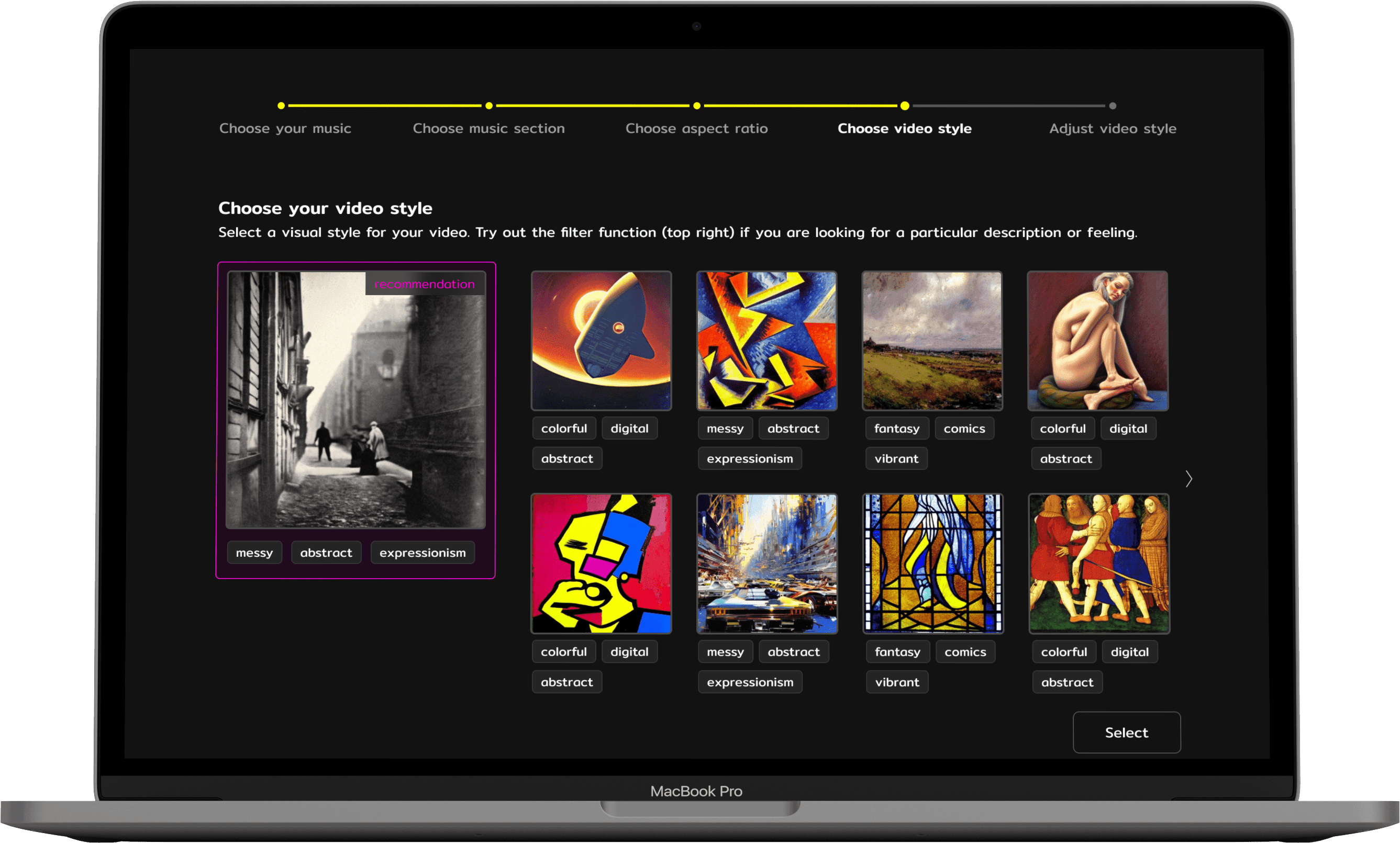
AdaLab.ai is an AI research and product studio based in Hamburg, specializing in building and shipping machine learning products. They offer custom ML solutions for enterprise clients, tackling complex problems and putting the latest research into production. A notable product from their studio is Plazmapunk, an AI-powered music visualizer that transforms any track into a music video without requiring editing skills. Plazmapunk features AI-powered visuals that move to the beat, an intuitive interface, and real-time preview capabilities, allowing users to tweak and iterate quickly. AdaLab.ai emphasizes a practical approach, focusing on delivering working AI products rather than just concepts.
better-chatbot
better-chatbot is a robust open-source AI chatbot platform designed for individuals and teams, drawing inspiration from leading AI services like ChatGPT, Claude, Grok, and Gemini. It features multi-AI support, integrating major LLMs such as OpenAI, Anthropic, Google, xAI, and Ollama. The platform provides powerful tools including the MCP protocol, web search, JavaScript/Python code execution, and data visualization capabilities. Users can also generate and edit images with AI models, automate tasks with custom agents and visual workflows, and collaborate by sharing configurations. A real-time voice assistant with full MCP tool integration and an intuitive UX with @mention functionality further enhance its utility. It can be deployed quickly and freely with Vercel.

BloombergGPT | GPT-3 Demo
BloombergGPT is a 50-billion parameter large language model developed by Bloomberg, specifically designed for the financial industry. It has been trained from scratch on a vast dataset of financial data to support a diverse range of natural language processing (NLP) tasks. This model demonstrates superior performance on financial tasks compared to other open models of similar size, while also maintaining or exceeding their performance on general NLP benchmarks. Its specialized training makes it highly effective for applications within finance, offering advanced capabilities for analyzing and interpreting complex financial information.
calculate-flops.pytorch
calflops is a Python-based tool designed to accurately calculate the theoretical amount of Floating-Point Operations (FLOPs), Multiply-Add Operations (MACs), and Parameters within a wide range of neural networks. It supports common architectures like Linear, CNN, RNN, and GCN, as well as advanced Transformer models, including large language models such as Bert and LlaMA. The tool is built on PyTorch and can analyze any custom models implemented using `torch.nn.function.*`. A key feature is its ability to print FLOPs, Parameter values, and their proportions for each submodule, offering detailed insights into model performance consumption. It also provides a convenient way to calculate FLOPs for Hugging Face models online without downloading full weights, making it particularly useful for LLM analysis.
chat.js
chat.js offers a comprehensive, production-ready foundation for building AI chat applications, allowing developers to bypass the need to rebuild common AI chat infrastructure. It supports over 120 AI models, including Claude, GPT, Gemini, and Grok, all accessible via a unified API. Key features include robust authentication options (GitHub, Google, anonymous), support for various attachments like images and PDFs, and resumable streams for continuous generation. The platform also enables conversation branching, public sharing of chats, real-time web search integration, and AI-powered image generation. Developers can also leverage code execution in a sandbox, Model Context Protocol (MCP) support, and even package their applications as native desktop apps using Electron. The stack is built on Next.js, TypeScript, AI SDK, and other modern technologies, providing a full-featured environment for creating unique AI chat experiences.
chatbox
Chatbox is a powerful, open-source AI client designed for desktop use, supporting a wide array of large language models including OpenAI (ChatGPT), Azure OpenAI, Claude, Google Gemini Pro, and Ollama for local models. It provides advanced prompting features, image generation with DALL-E-3, and local data storage to ensure user privacy. The tool is available as a desktop application for Windows, macOS, and Linux, with no-deployment installation packages for quick setup. Additionally, Chatbox offers a web version and native iOS/Android mobile apps, ensuring accessibility across various platforms. Key features include an ergonomic UI with a dark theme, keyboard shortcuts, streaming replies, and comprehensive content formatting with Markdown, Latex, and code highlighting. It also includes a prompt library, message quoting, and team collaboration features for sharing OpenAI API resources. With multilingual support, Chatbox caters to a global audience, making it a versatile AI copilot for diverse users.
cognita
Cognita is an open-source RAG (Retrieval Augmented Generation) framework designed to streamline the development and deployment of modular, scalable, and extensible AI applications. While leveraging Langchain/LlamaIndex, Cognita addresses the challenges of moving RAG systems from experimentation to production by offering an organized codebase where each RAG component is API-driven. It supports various features like multiple document retrievers, incremental indexing, and integration with open-source LLMs and embedding models. Cognita also includes a no-code UI for easier configuration and experimentation, making it suitable for both local development and production environments, with optional support for Truefoundry components for enhanced scalability.
ctransformers
ctransformers is a Python library designed to provide efficient bindings for Transformer models, leveraging C/C++ implementations and the GGML library. This allows for optimized local execution of various large language models, including GPT-2, LLaMA, Falcon, and more. The library offers a unified interface for model loading and generation, supporting both local files and Hugging Face Hub repositories. It integrates seamlessly with popular AI frameworks like Hugging Face Transformers and LangChain, making it versatile for different development workflows. ctransformers also provides GPU acceleration for compatible models, with support for CUDA, Metal, and ROCm, and includes experimental GPTQ quantization support for LLaMA models, enhancing performance and reducing memory footprint.