
Coding & Development
Browsing page 17 of AI tools for Open Source & Models in Coding & Development. Sorted by confidence score — our independent quality rating.

Bitgrit
Bitgrit provides a comprehensive platform for organizations to develop, deploy, and scale AI. It features an Enterprise solution for secure, in-house AI agents trained on internal knowledge, offering full access control and zero data exposure. The platform also hosts AI Competitions, allowing businesses to crowdsource solutions from a global network of over 40,000 developers. Bitgrit's ModelHub acts as an 'App Store for AI,' providing access to production-ready models that can be fine-tuned securely with GritBox. GritBox itself is a secure AI engine for building models on proprietary data without exposure, ensuring compliance with GDPR, HIPAA, and CCPA. The platform supports secure data access, team collaboration, and offers a usage-based pricing model for its AI models.

qlora
qlora is an open-source project designed to democratize access to LLM research by providing an efficient finetuning approach for quantized large language models. It integrates with Hugging Face's PEFT and transformers libraries and utilizes bitsandbytes for quantization. Key innovations include 4-bit NormalFloat (NF4) data type, Double Quantization to reduce memory footprint, and Paged Optimizers to manage memory spikes. This allows for finetuning large models, such as a 65B parameter model, on a single 48GB GPU while preserving full 16-bit finetuning task performance. The project also releases the Guanaco model family, which outperforms previous openly released models on the Vicuna benchmark.
GPT Guard
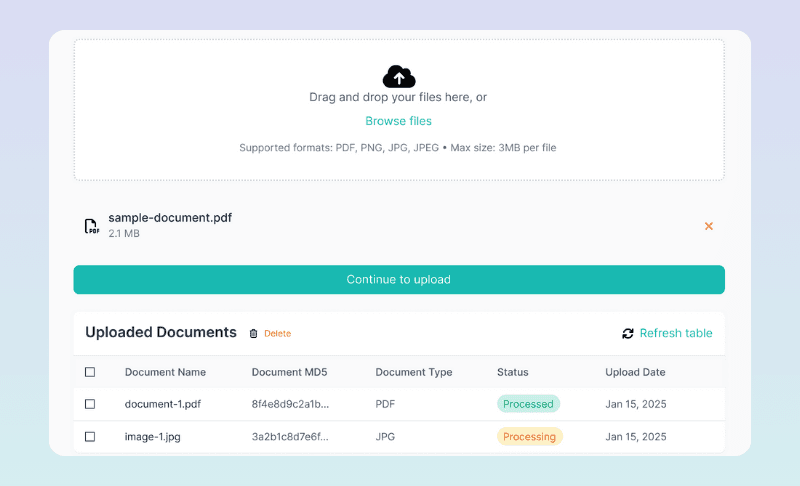
GPT Guard is an enterprise-grade data loss prevention (DLP) tool designed to facilitate secure interactions with large language models (LLMs). It allows businesses to use their internal documents to chat with any AI without risking sensitive data or AI accuracy. The tool employs a unique context-preserving masking technique that identifies and masks sensitive PII and PHI data, ensuring privacy while maintaining the integrity of AI responses. GPT Guard supports unlimited file uploads, offers highly accurate AI responses through advanced RAG search, and provides context-preserving analysis for sensitive data like customer surveys and support tickets. It also includes OCR for image-to-text functionality, supports multiple LLM models, and ensures compliance with regulations such as HIPAA, GDPR, and Middle East data protection laws. Deployment options include on-premises or SaaS, making it scalable and adaptable for various enterprise needs.
General Analysis
General Analysis delivers comprehensive security solutions for agentic AI systems, focusing on context-aware red teaming and vulnerability forecasting. The platform automates adversarial testing across toolchains, identifying multi-step exploits before releases. It also provides runtime guardrails and observability, applying controls derived from red-team findings and monitoring for poisoning and drift. Key features include AI security asset management, inventorying models, knowledge bases, and agent pipelines while scanning for prompt injections and data leaks. General Analysis is designed to address the unique security challenges posed by AI agents that execute code, call APIs, and make autonomous decisions, offering blueprints for various copilots across industries like healthcare, legal, and marketing.
kohya-colab
kohya-colab offers accessible Google Colab notebooks designed for Stable Diffusion Lora training, building upon the foundational work of kohya-ss and Linaqruf. This tool provides notebooks for both dataset creation and Lora model training, including specialized versions for Stable Diffusion XL. Key features include the ability to scrape images, detect duplicates, and curate datasets using a FiftyOne interface. Users can also generate tags with Waifu Diffusion 1.4 Tagger and captions with the BLIP model, along with dynamic text file editing. The Lora trainers support various Colab configurations, including T4 and A100, and integrate seamlessly with Google Drive for efficient workflow.
Code-LMs
Code-LMs offers a comprehensive guide for leveraging pre-trained large language models (LLMs) specifically designed for source code. It details how to use models such as PolyCoder, which are available on the Huggingface Hub, for tasks like code generation. The guide covers setup instructions, model retrieval from public Zenodo repositories, and methods for running models either via Docker or from source using a modified GPT NeoX toolkit. It also provides information on datasets used for training, evaluation methodologies including perplexity and HumanEval benchmarks, and important caveats regarding model limitations and whitespace sensitivity. This resource is ideal for developers and researchers looking to integrate or experiment with code-specific LLMs.

Lemony
Lemony builds cascadeflow, an intelligent AI optimization platform designed to significantly reduce large language model (LLM) costs by up to 90%. This is achieved through smart cascading pipelines and domain optimization, ensuring efficient resource utilization. The platform features domain-aware detection and automated quality validation, making it a robust solution for managing AI infrastructure. Lemony offers both an open-source version and an Enterprise Studio, which provides premium analytics and self-learning optimizations. It aims to help developers and organizations harness AI capabilities while maintaining predictable costs and optimizing performance.
AI Factory
JA Welt AI Factory is an AI execution partner specializing in building AI-powered MVPs, marketing systems, and sales automation for founders and SMEs. They offer structured AI product sprints, delivering production-ready products in 4 or 12 weeks. The service includes full IP ownership transfer, production-ready code, and documentation. They integrate with leading AI models like GPT-4o, Claude, and Gemini, and offer solutions for marketing automation, sales pipeline automation, and lead qualification. JA Welt AI Factory aims to provide a faster and more cost-effective alternative to traditional agencies, with transparent, one-time project fees starting from €5,000.

Dnsfilter
Dnsfilter offers advanced DNS filtering services designed to enhance network security with protective DNS. Leveraging AI, it effectively blocks malware, phishing attempts, and unwanted content, often stopping attacks days earlier than traditional methods. The platform provides comprehensive features like Anycast Network for speed and stability, CyberSight for user behavior analytics, and Malicious Domain Protection powered by next-gen machine learning. It supports various use cases including content filtering, cyber defense, and protective DNS for public Wi-Fi, catering to industries from education and enterprise to MSPs and small businesses. With intuitive insights reporting and easy deployment, Dnsfilter ensures robust protection across all devices, on and off the network.
gemini-chatbot
Gemini-chatbot is an open-source AI chatbot template designed for developers to build their own generative UI chatbots. It is built with Next.js and the Vercel AI SDK, and integrates with Google Gemini models by default. The template utilizes advanced features like Next.js App Router for seamless navigation, React Server Components (RSCs), and Server Actions for enhanced server-side rendering and performance. It supports various LLM providers including Google, OpenAI, Anthropic, and Cohere through the AI SDK. For data persistence, it uses Vercel Postgres powered by Neon for chat history and user data, and Vercel Blob for efficient object storage. NextAuth.js is included for simple and secure authentication, making it a comprehensive starting point for AI chatbot development.

Devot AI
Devot AI specializes in providing AI-powered solutions and automation to businesses, focusing on transforming complex business problems into clear, actionable requirements and AI-ready specifications. Their process involves a 3-step approach: an initial call to understand the client's needs, an in-depth exploration of challenges, and finally, the delivery of a practical execution roadmap. This ensures that the AI solutions developed are not just fast, but also precisely aligned with business outcomes. Devot AI emphasizes building the 'right thing' before AI development begins, helping companies generate insights, improve efficiency, and foster innovation. They also highlight that clients retain 100% ownership of the intellectual property and the defined roadmap.
classifai
ClassifAI is an open-source WordPress plugin designed to enhance content workflows and audience engagement using artificial intelligence. It integrates with major cloud-based AI services such as OpenAI, Microsoft Azure AI, Google Gemini, IBM Watson, and xAI's Grok, along with local LLM options like Ollama and Stable Diffusion. The plugin offers a wide range of features including generating summaries, key takeaways, and titles, expanding or condensing text, drafting full articles, and creating new images. It also provides functionalities for audio transcription, comment moderation, text-to-speech conversion, content classification, smart 404 pages, and image processing like alt text generation and smart cropping. ClassifAI aims to lighten workloads and eliminate tedious tasks for WordPress users.
Sand.ai
Sand.ai specializes in advancing AI technology through its Magi-1.1 autoregressive video model, designed to produce high-quality video output. The platform offers an API for developers, allowing them to integrate Magi-1.1's capabilities into their own projects. Users can create API keys, manage accounts, and purchase credits separately for the API platform and Magi accounts. Sand.ai focuses on providing advanced AI solutions for video generation and aims to benefit a wide range of users by making its powerful video model accessible.
Llama2 by Meta
Llama2 by Meta offers a suite of industry-leading, open-source AI models, including Llama 4 (Maverick and Scout) and Llama 3 (3.1, 3.2, 3.3). These models are designed for easy deployment, cost efficiency, and scalable performance, supporting billions of users. Llama 4 models feature native multimodality, advanced reasoning, and extensive context windows, enabling both text and image understanding. Llama 3 models are open-source and can be fine-tuned, distilled, and deployed across various platforms, with versions optimized for multilingual tasks, edge devices, and general-purpose applications like summarization and coding. The platform also provides comprehensive documentation and resources for prompt engineering, fine-tuning, vision capabilities, quantization, distillation, and model evaluations.
Scalovate Systems Solutions
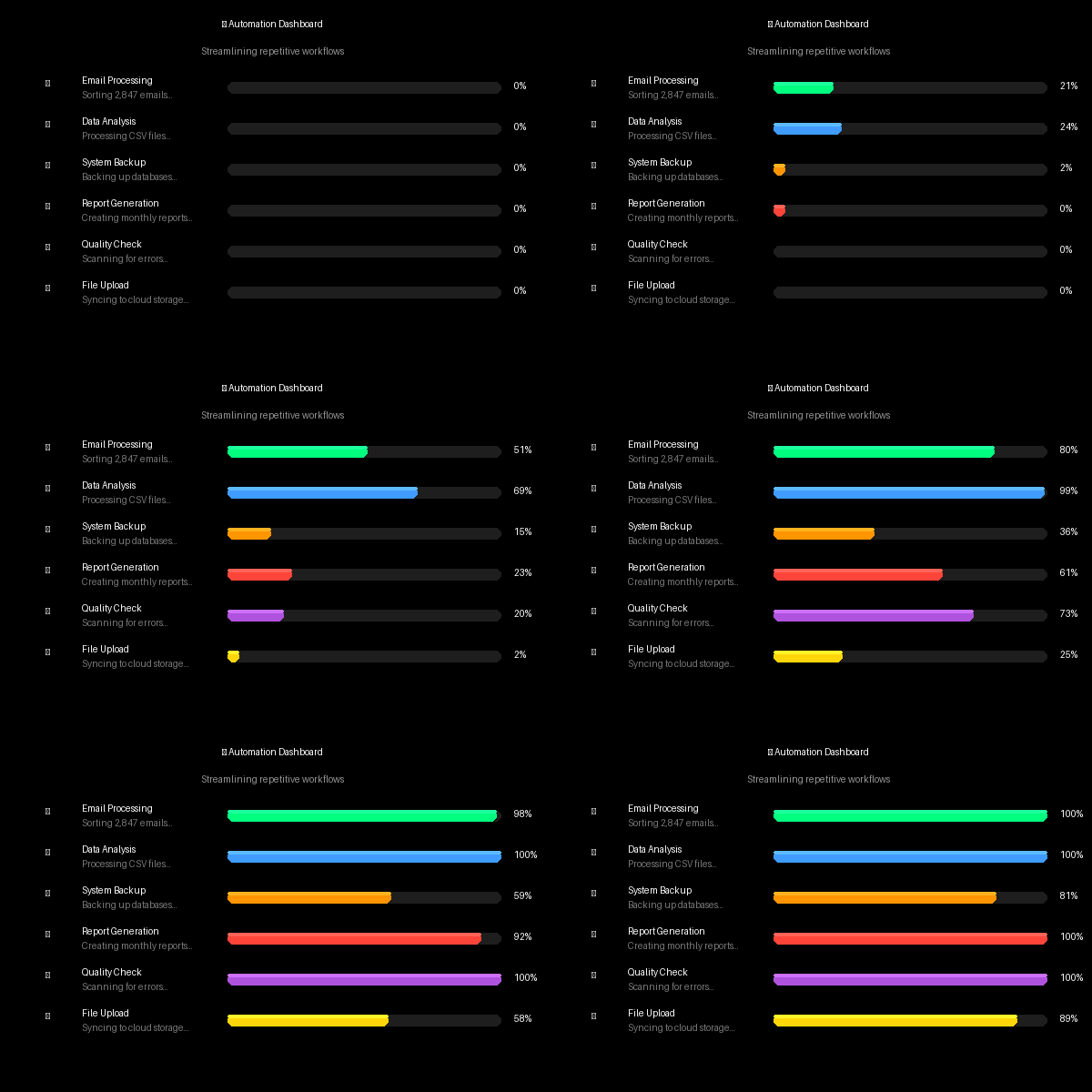
Scalovate Systems Solutions is a Qatar-based AI firm specializing in private, open-source AI development and consulting for enterprises in the Gulf region. They offer solutions like RAG systems, custom AI agents, and on-premise deployment, emphasizing no vendor lock-in. The company focuses on minimizing Total Cost of Ownership (TCO) and maximizing Return on Investment (ROI) by providing open-source stacks that allow businesses to internalize innovation and retain assets. Scalovate also provides AI use case identification, infrastructure sizing, and automation of repetitive tasks. Their offerings include both Private AI and Public AI stacks, supporting various technologies and cloud providers to deliver scalable and cost-effective solutions.

VarenyaZ
VarenyaZ specializes in enterprise-grade web application development and custom AI/ML solutions, offering secure, scalable digital products for businesses globally. They focus on building mission-critical AI and digital platforms with contractual SLAs, strong security controls, and enterprise-class reliability, adhering to standards like SOC2 Type II, GDPR, and ISO/IEC 27001. VarenyaZ provides custom AI and LLM integration, tailoring solutions to specific workflows and data, rather than off-the-shelf tools. Their services also include web and application development, UI/UX design, and product strategy, with a proven track record of reducing manual processing time and enhancing operational efficiency across various industries.
MindSearch
MindSearch is an open-source, LLM-based multi-agent framework designed for developing web search engines, similar to Perplexity.ai Pro and SearchGPT. It leverages a multi-agent architecture to mimic human search behavior, aiming to elicit deeper and more nuanced AI search capabilities. The tool provides a robust backend with support for various search engines like DuckDuckGo, Bing, Brave, Google, and Tencent, and offers flexible frontend options including React, Gradio, and Streamlit. Users can configure different language models, including InternLM2.5-7b-chat and GPT-4, and deploy asynchronous agents for enhanced performance. MindSearch is ideal for developers and researchers looking to build custom, intelligent search solutions with advanced agent-based functionalities.
DFT
DFT (Dynamic Fine-Tuning) is an open-source tool designed to enhance the generalization capabilities of Supervised Fine-Tuning (SFT) for Large Language Models (LLMs). Through mathematical analysis, DFT identifies and rectifies problematic reward structures implicitly encoded in standard SFT gradients. The core innovation lies in a single-line code modification that dynamically rescales the objective function with the token's probability, stabilizing gradient updates. This approach has demonstrated significant performance gains over standard SFT on various benchmarks, particularly in mathematical reasoning and code-focused tasks. DFT also shows competitive results in offline reinforcement learning settings, providing a simpler yet effective alternative. It is available on GitHub and integrates with popular frameworks like TRL, LLaMA-Factory, and ms-swift.
MidiTok
MidiTok is a Python package designed to tokenize MIDI and symbolic music files, making them suitable for deep learning models. Introduced at the ISMIR 2021 LBDs, it converts music into sequences of tokens for various AI tasks such as generation, transcription, and music information retrieval. The tool supports most known music tokenizations, including REMI, Compound Word, and Octuple, and is built to share common parameters and methods across them. MidiTok integrates with the Hugging Face Hub, allowing users to train tokenizers with Byte Pair Encoding (BPE), Unigram, and WordPiece, and offers data augmentation methods. It uses Symusic for reading and writing MIDI and abc files, and Hugging Face tokenizers for fast encoding.
distrifuser
Distrifuser is a training-free algorithm designed to significantly accelerate diffusion model inference for high-resolution image generation by leveraging multiple GPUs. It addresses the fragmentation issue seen in naive parallel approaches by employing synchronous communication for initial patch interaction, followed by asynchronous communication to hide overhead. This method allows for substantial speedups, achieving up to 6.1x faster generation with 8 A100 GPUs for 3840x3840 images, without sacrificing visual fidelity. The tool is integrated with NVIDIA's TensorRT-LLM and supported by ColossalAI, offering a robust solution for developers and researchers working with large-scale generative AI models. It provides APIs similar to Hugging Face's Diffusers, making it accessible for those familiar with the ecosystem.
OpenDAN-Personal-AI-OS
OpenDAN (Open and Do Anything Now with AI) is an open-source Personal AI Operating System designed to revolutionize the AI landscape by consolidating diverse AI modules into one place for personal use. It ensures unmatched interoperability, empowering users to create powerful AI agents such as butlers, assistants, personal tutors, and digital companions, all while retaining control. These agents can collaborate on complex challenges, integrate with existing services, and command smart (IoT) devices. OpenDAN supports rapid installation via Docker, making it compatible with various hardware environments like PC, Mac, Raspberry Pi, and NAS. Key features include switchable large language models (supporting local LLaMa), built-in AI agents like Jarvis (Personal Assistant) and Mia (Information Assistant), and connectivity via Telegram/Email. It also enables building local private knowledge bases and implementing workflows for complex tasks.
Local-first documentation MCP for AI agents
Neuledge Context is an open-source tool that provides local-first documentation for AI coding assistants, ensuring accurate and version-specific information. It offers hundreds of pre-built documentation packages for popular frameworks like React, Django, and Spring Boot, which can be installed in seconds. The tool indexes documentation into portable SQLite files with FTS5 full-text search, allowing for sub-10ms queries. Designed for developers, it runs entirely on your machine, eliminating cloud calls, rate limits, and offline limitations. It's compatible with AI assistants like Claude, Cursor, and VS Code Copilot via the Model Context Protocol (MCP), and supports indexing private documentation without sending data to third parties, ensuring privacy and security.
finBERT
finBERT is a specialized Natural Language Processing (NLP) model designed for financial sentiment analysis. It enhances the standard BERT language model by further training it on a large financial corpus, making it highly effective for understanding the sentiment expressed in financial texts. This tool is particularly useful for analyzing documents like earnings call transcripts, financial news, and reports to extract sentiment. It provides capabilities for training the model on specific datasets, such as the Financial PhraseBank, and offers a script to quickly get sentiment predictions from text files, including softmax probabilities for positive, negative, and neutral labels, and a calculated sentiment score. Developed as an intern research project by the Prosus AI team, finBERT is available on Hugging Face and is open-source under an Apache-2.0 license.
patchwork
patchwork is an open-source agentic AI framework designed for enterprise workflow automation, streamlining development tasks such as pull request reviews, bug fixing, and security patching. It operates via a self-hosted CLI agent and integrates with various large language models, including OpenAI, Google's Gemini, Groq, and Hugging Face models. Key components include reusable 'Steps' for atomic actions, customizable 'Prompt Templates' optimized for specific chores, and 'Patchflows' which are LLM-assisted automations combining steps and prompts. Patchflows can run locally or within CI/CD pipelines, offering out-of-the-box solutions for generating docstrings, auto-fixing vulnerabilities, and resolving issues. The framework supports open-source models and allows for flexible configuration through CLI arguments or YAML files, making it adaptable to diverse development environments.