
Coding & Development
Browsing page 332 of AI tools for Coding & Development. Sorted by confidence score — our independent quality rating.

lit-llama
Lit-LLaMA offers an independent and open-source implementation of the LLaMA language model, building upon nanoGPT. It is designed to be simple, numerically correct, optimized for various hardware, and fully open-source under the Apache 2.0 license. The tool supports advanced features like flash attention, Int8 and GPTQ 4bit quantization for efficient memory usage, and LoRA and LLaMA-Adapter fine-tuning for adapting models to specific datasets. While this repository is no longer actively maintained, it serves as a foundational project, with its successor being the Lit-GPT project. It enables users to generate text, finetune models on custom data, and even venture into pre-training on large datasets like RedPajama.
infiniteGPT
infiniteGPT is a Python script designed to streamline interactions with the OpenAI API, enabling users to process texts of unlimited size. This tool eliminates the common frustration of repeatedly copying and pasting large chunks of text into AI models like GPT-3.5-turbo or GPT-4. By leveraging multithreading, infiniteGPT ensures efficient handling of extensive inputs, making it ideal for tasks requiring comprehensive text analysis or generation without manual intervention. It requires users to bring their own OpenAI API keys and is a single Python script, emphasizing ease of use for developers and technical users looking to integrate advanced AI capabilities into their workflows.
safety-gymnasium
Safety-Gymnasium is an open-source library designed for Safe Reinforcement Learning (SafeRL), offering a highly scalable and customizable platform for benchmarking and developing safe AI algorithms. It provides a standardized set of environments, including safe navigation, velocity, vision, multi-agent, and Isaac Gym tasks, all compatible with the new Gym API. The library explicitly expresses costs, returning six items including cost in its step method, and offers convenience wrappers for converting between Safety-Gymnasium and standard Gymnasium APIs. It aims to facilitate research by providing an elegant code framework and well-designed environments, allowing users to explore new insights in SafeRL. The platform is built on MuJoCo 2.3.0+ and addresses previous limitations of similar libraries, such as dependency issues and lack of vectorized environments.
rq-vae-transformer
rq-vae-transformer is the official open-source implementation of "Autoregressive Image Generation using Residual Quantization" (CVPR 2022). This framework, consisting of RQ-VAE and RQ-Transformer, is designed for autoregressive modeling of high-resolution images. It precisely approximates feature maps and represents images as stacks of discrete codes, facilitating the generation of high-quality images. The tool supports image generation using both class and text conditions, with pretrained checkpoints available for various datasets including FFHQ, LSUN, ImageNet, and CC-3M. It also includes a large-scale RQ-Transformer for text-to-image generation, trained on millions of text-image pairs. The repository provides code for training and evaluation pipelines, as well as Jupyter notebooks for easy text-to-image generation.
Debugcode
Debugcode.ai is a premium domain name currently listed for sale on Unstoppable Domains for $50,000. The platform facilitates secure purchases with guaranteed transfers and flexible payment options. Unstoppable Domains, an ICANN Accredited organization, ensures a money-back guarantee and fast, easy transfers for the buyer. This listing indicates that Debugcode.ai is not an active AI tool but rather an investment opportunity for those looking to acquire a relevant domain name in the technology or AI debugging space.
guess
Guess.js is an open-source library offering tools and libraries to enable data-driven user experiences on the web, primarily focusing on predictive prefetching and bundling. It leverages data from sources like Google Analytics to predict user navigation patterns, allowing for prefetching of likely next pages or associated bundles. This approach aims to significantly improve perceived page load performance and user satisfaction. The library offers a Webpack plugin for automated setup for Webpack users, and provides modules for fetching Google Analytics data, JavaScript framework parsing, and configuring predictive fetching. For non-Webpack users, it outlines a workflow for integrating predictive fetching using the Google Analytics API and a client-side script.
DI-drive
DI-drive is an open-source Decision Intelligence Platform specifically designed for Autonomous Driving simulation. It provides a unified entry point to apply Decision Intelligence across various driving simulation suits, supporting different simulators, datasets, and cases. The platform is built on DI-engine, a Reinforcement Learning platform, and currently integrates with popular simulators like Carla and MetaDrive. DI-drive enables users to run Imitation Learning, Reinforcement Learning, and GAIL experiments, offering a comprehensive environment for developing and evaluating autonomous driving policies. It includes a Model Zoo with pre-trained models and a Casezoo for scenario-based training and testing, making it a robust tool for advanced research and development in autonomous driving.
nilearn
Nilearn is an open-source Python library designed for machine learning in neuroimaging, offering approachable and versatile analyses of brain volumes and surfaces. It provides a comprehensive suite of statistical and machine-learning tools, accompanied by instructive documentation and a supportive community. The library facilitates general linear model (GLM) based analysis and integrates with the scikit-learn Python toolbox for advanced multivariate statistics. This enables applications such as predictive modeling, classification, decoding, and connectivity analysis within neuroimaging research. Nilearn is ideal for researchers and data scientists working with brain imaging data, providing the necessary tools to implement complex analytical workflows.
xoul.ai
xoul.ai is an innovative entertainment and storytelling platform powered by AI, designed for users to create, explore, and share AI characters (Xouls) and scenarios. The platform emphasizes freedom of expression and unfettered creativity, aiming to provide intentional and meaningful experiences rather than an endless stream of content. Users can chat with AI characters, generate images and voice messages, and even create entire worlds. It offers various subscription plans with different energy allowances, cell allocations for premium features, and enhanced streak rewards. The platform supports community engagement through Discord and Reddit, and offers referral bonuses for new sign-ups.
Open SaaS
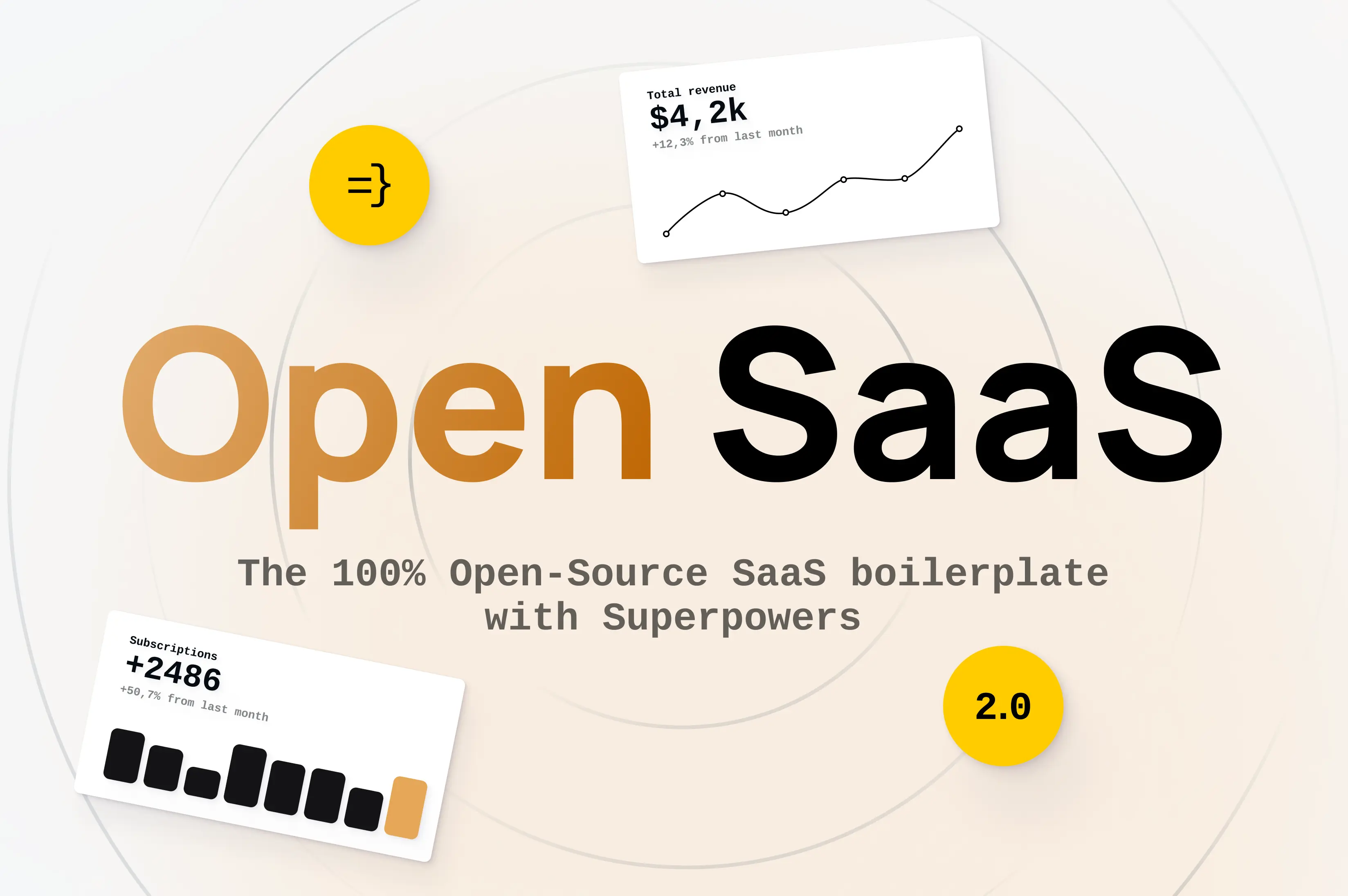
Open SaaS offers a free, open-source starter kit designed to accelerate the development and launch of SaaS applications. Built with React and Node.js, it provides a comprehensive boilerplate that includes essential features such as user authentication, payment processing integrations, and an administrative dashboard for managing the application. The kit also features an AI example application, demonstrating how to integrate artificial intelligence functionalities. By handling common boilerplate tasks, Open SaaS allows developers to focus on core product innovation, significantly reducing development time and effort for new SaaS ventures.
ROK Solution
ROK Solution is a comprehensive hyperautomation platform designed to revolutionize business processes by combining workflow, BPM, RPA, AI, and no-code capabilities. It enables organizations to automate processes without extensive coding, accelerating application creation and streamlining operations. The platform emphasizes balancing agility with governance and cybersecurity, offering features like automated org chart generation, Identity Governance & Administration (IGA) for secure access, and built-in Generative AI for application creation. ROK Solution aims to reduce operational costs, improve customer satisfaction, and enhance security, making it suitable for digital transformation in both business and governmental organizations that require stringent security and compliance.
stepsize.com
Stepsize AI is a powerful tool designed to streamline product development reporting for engineering teams using Jira and Linear. It generates stunning reports, actionable metrics, and charts with accurate AI-generated commentary, eliminating the need for manual setup. The platform provides project-level AI insights, identifies themes among tasks, and surfaces intelligent delivery risks with practical suggestions. Stepsize AI also offers solutions for tracking and fixing technical debt, aligning teams with daily standups and team syncs, and generating comprehensive sprint and Kanban reports. It ensures data security by not using user data to train AI models and employs robust 256-bit encryption.
StabilityMatrix
StabilityMatrix is a multi-platform package manager and inference UI designed to simplify the use of Stable Diffusion. It provides one-click installation and updates for popular Stable Diffusion Web UIs like Automatic1111, ComfyUI, and Fooocus. The tool features an embedded Git and Python, eliminating the need for global installations, and is fully portable. StabilityMatrix includes a powerful inference UI with auto-completion and syntax highlighting, a checkpoint manager for shared models, and a model browser to import from CivitAI and HuggingFace with pause/resume download capabilities. It also supports managing plugins/extensions and offers a configurable launcher with a syntax-highlighted terminal.
GraphWaveletNeuralNetwork
GraphWaveletNeuralNetwork is an open-source PyTorch implementation of the "Graph Wavelet Neural Network" (GWNN) as presented at ICLR 2019. This novel graph convolutional neural network addresses limitations of previous spectral graph CNN methods by utilizing graph wavelet transform, which avoids computationally expensive matrix eigendecomposition. The graph wavelets are sparse and localized, enhancing efficiency and interpretability for graph convolution tasks. The tool is designed for researchers and machine learning engineers working with graph-based semi-supervised classification, demonstrating superior performance on benchmark datasets like Cora, Citeseer, and Pubmed. It includes command-line arguments for easy configuration of training parameters and model options.
Doczilla
Doczilla offers a high-performance API designed for efficient PDF and screenshot creation, ensuring scalable and reliable document delivery for developers and businesses. The platform simplifies document generation by allowing users to create, save, and manage templates using a robust HTML editor and a Handlebars-based templating system. This streamlines workflows, enabling the definition of templates once and rendering them repeatedly. Doczilla supports various image formats like PNG, JPEG, and WebP for screenshots and can convert password-protected web pages to PDFs using basic authentication. It prioritizes security, never storing data longer than necessary, and offers flexible API responses, including immediate direct responses or structured webhook callbacks. The service is designed to scale effortlessly, handling everything from hundreds to millions of documents.

Goless extension automation
Goless is a powerful browser automation tool designed to streamline web-based tasks without requiring any coding knowledge. Users can create custom workflows using a Chrome extension with a drag-and-drop interface, or leverage a marketplace of pre-built workflows. It enables a wide range of automations, including filling out forms, navigating websites, extracting data to CSV or Google Sheets, and even integrating with ChatGPT for generating responses. Goless also features anti-CAPTCHA capabilities, triggers for scheduled automations, and the ability to share workflows with team members. It's ideal for optimizing data collection, automating data entry, testing websites, and managing social media interactions efficiently.
antigravity-agent
antigravity-agent is an open-source tool designed for the effortless management of multiple Antigravity accounts. It allows users to quickly switch between accounts with a single click, eliminating the need for repetitive logins. The software automatically identifies and saves current account data, and offers secure backup functionality through password-encrypted export of account configurations, facilitating cross-device migration. A VSCode extension is also available, enabling users to switch accounts and view model quotas directly within their editor. The tool emphasizes security, distributing only through official GitHub Releases to protect sensitive account information.

Altra
Altra offers radically powerful AI-driven tools for cloud and digital transformation, specifically tailored for system integrators and service providers. Its product suite includes Dr Migrate, which performs deep, rapid AI assessments for cloud migration, provides application treatment recommendations, and optimizes cloud resource allocation for cost efficiency. SensorMine, another key product, enables the creation and deployment of IoT solutions with rapid time-to-value, leveraging a SaaS architecture and pre-built industry solution kits. Altra also provides rugged 'Nexus' sensors and advanced analytics with AI-driven data visualization for intelligent monitoring. The platform focuses on automation, real-time insights, active guidance, and cost optimization to unlock opportunities and empower fearless transformation.
GitStart
GitStart is a platform designed to accelerate software development by providing elastic engineering capacity through a hybrid model of AI and human developers. It features Ticket Studio, which transforms vague tickets into quality specifications with clear context, integrating with tools like Figma, Jira, Linear, and GitHub. The Accelerate component then delivers merge-ready pull requests, combining coding agents with human developer oversight through a five-stage quality process. GitStart supports over 15 languages and frameworks, including React, Node.js, and Python, and can be used for frontend development, testing, bug fixes, and new feature development. It aims to make software development more accessible globally, offering a dedicated team of developers that learns your codebase over time.
paper2gui
Paper2GUI is an open-source project designed to democratize access to cutting-edge artificial intelligence technology by converting complex AI research papers into intuitive graphical user interface (GUI) applications. This tool allows users to easily leverage a wide array of AI models without the need for installation, offering immediate usability across Windows, Mac, and Linux operating systems. It currently supports over 50 AI models, covering diverse applications such as AI painting, advanced voice synthesis, video frame interpolation, video super-resolution, background music separation, subtitle translation, and OCR recognition. The project also offers a more comprehensive 'Xiaobaitu AI' aggregated version for professional users, which includes additional features like AI painting, video matting, and face animation, with some features permanently free.

CloudSoul
CloudSoul is a comprehensive full-stack platform designed to help European mid-market companies achieve NIS2 security and compliance without needing to build a dedicated security team. It integrates security operations and compliance automation into a single, turn-key solution. Key features include automated vulnerability management with prioritised risks and remediation tracking mapped to NIS2 Article 21, and SIEM with real-time alerting and built-in NIS2 incident reporting. The platform ensures EU-sovereign infrastructure, aligning with GDPR, Schrems II, and NIS2 data residency requirements. CloudSoul also offers continuous compliance evidence mapping to NIS2 and ISO 27001, providing audit-ready reports and dashboards for boards and regulators. It supports integrations with major cloud providers like Amazon, Google, and Microsoft.
tlm
tlm functions as a local command-line interface (CLI) copilot, leveraging the power of Ollama to provide AI-driven code assistance. It is designed to be a workstation companion, allowing developers to utilize various open-source models such as Llama 3, Phi4, DeepSeek-R1, and Qwen within their local environment. This setup ensures that code assistance is available directly from the command line, offering a private and secure way to enhance coding workflows without relying on external cloud services. The tool is particularly beneficial for those who prioritize data privacy and wish to keep their code and AI interactions within their local infrastructure.
automagica
Automagica is an open-source project that began in 2018, aiming to make Robotic Process Automation (RPA) technologies accessible. It provides a comprehensive suite of tools for building and managing automated tasks, including Automagica Bot for runtime execution, Automagica Flow for visual automation design with Python support, and Automagica Wand for AI-powered UI element picking. The platform also features Automagica Lab, a Jupyter Notebook-based environment for automation development, and Automagica Portal for managing bots, credentials, and logs. While initially open-source, the project was acquired by Netcall plc in 2020, with existing services transitioning to commercial offerings. It supports a wide range of activities from cryptography and random data generation to browser automation, credential management, keyboard/mouse control, image processing, file operations, and integrations with applications like Word, Excel, and Outlook.
gaidme
gaidme is an AI-powered command-line interface (CLI) tool designed to simplify terminal interactions. It generates relevant terminal commands by understanding user questions and leveraging command history, significantly reducing the need to memorize complex syntax. This tool aims to enhance productivity for developers and technical users by providing instant access to necessary commands, making command-line operations more intuitive and efficient. By streamlining workflows, gaidme helps users execute tasks faster and with greater accuracy, minimizing errors often associated with manual command entry.