
Coding & Development
Browsing page 391 of AI tools for Coding & Development. Sorted by confidence score — our independent quality rating.

BadgeCraft
BadgeCraft is a web badge generator available on Hugging Face Spaces, designed to help users create custom badges for their projects. It offers a user-friendly interface where you can customize various aspects of your badges, including labels, messages, colors, and logos. The tool provides a live preview feature, allowing you to see your badge design in real-time as you make changes. Once satisfied, you can easily obtain the HTML code to embed the badge into your websites or projects. BadgeCraft is licensed under the MIT license, making it a flexible and accessible option for developers and designers looking to enhance their projects with visually appealing and informative badges.
molmo
Molmo is an open-source repository from AllenAI designed for training and utilizing advanced multimodal open language models (VLMs). Based on the OLMo codebase, Molmo enhances its capabilities with vision encoding and generative evaluations. The platform offers various models, including MolmoE-1B, Molmo-7B-O, Molmo-7B-D, and Molmo-72B, catering to different scales and performance needs. It also introduces PixMo, a collection of diverse datasets for pre-training and fine-tuning VLMs, covering tasks like dense captioning, instruction-tuning, and grounding. Molmo provides detailed installation guides, data downloading scripts, and evaluation tools, making it a comprehensive resource for researchers and developers working with multimodal AI.
APISCRAPY
APISCRAPY is an AI-driven web scraping and automation cloud platform designed to convert any web data into ready-to-use data APIs. The platform streamlines processes by extracting, processing, and integrating data from various websites and mobile/TV apps. It offers key features such as managed data acquisition, AI-driven data labeling and annotation, synthetic data access, and pre-classified data for AI model building. APISCRAPY also provides AI-driven price scraping for real-time monitoring and analytics, and API-KART, a data API hub for accessing and integrating large volumes of data. The platform emphasizes no-code solutions, automation-based processes, and flexible data delivery formats.
dissecting-reinforcement-learning
dissecting-reinforcement-learning is an open-source repository offering Python code, PDFs, and supplementary resources for a series of blog posts on Reinforcement Learning. It serves as a comprehensive guide for practitioners and students, covering fundamental concepts like Markov chains, Bellman Equation, Monte Carlo methods, and Temporal Difference Learning. The repository also delves into advanced topics such as Actor-Critic methods, Evolutionary Algorithms, and various function approximation techniques including neural networks. It provides standalone Python environments for classic RL problems like the Inverted Pendulum, Mountain Car, and Multi-Armed Bandit, which do not require external installations like OpenAI Gym. This makes it an accessible resource for hands-on learning and experimentation.
Gemini2.5 Pro
Gemini2.5 Pro is an AI code assistant designed to help users get detailed explanations from Gemini AI based on their prompts. The tool focuses on providing well-formatted responses, making it easier for users to understand complex information or code. While the specific functionalities beyond detailed explanations are not explicitly stated, its core purpose is to leverage Gemini AI for comprehensive and structured output. The tool is currently paused, and users are directed to the community tab to request its restart.
InfoSecList - Security Tools & Services
InfoSecList.com is a curated directory designed to help CISOs, CTOs, and security teams find the right cybersecurity tools and services. It provides a vetted list of penetration testing tools, vulnerability scanners, and security assessment services, ensuring every listing is practitioner-vetted for capabilities, pricing transparency, and real deployment experience. Users can compare solutions side-by-side with standardized criteria, filter by stack, compliance needs, team size, and budget. The platform also surfaces real pricing tiers and free trials, eliminating the need for sales calls to get initial cost estimates. InfoSecList aims to streamline the security solution selection process by offering comprehensive information without gated content.

Hypercubic
Hypercubic is an advanced AI platform specifically designed for mainframe modernization, trusted by leading enterprises and governments. It leverages agentic AI to preserve institutional knowledge, understand complex legacy systems, and safely transform them into modern applications. The platform offers an end-to-end ecosystem including HyperLoop for high-velocity modernization, Hopper for natural language interaction with mainframes, HyperDocs for transforming COBOL codebases into searchable documentation, and HyperTwin for capturing and sharing expert engineering knowledge. Hypercubic aims to future-proof mainframe expertise and accelerate delivery for mission-critical systems.
v2ray-SSR-Clash-Verge-Shadowrocke
v2ray-SSR-Clash-Verge-Shadowrocke is an open-source repository offering free, high-speed server nodes for popular protocols like v2ray, SS, sing-box, Clash, Verge, SSR, and Shadowrocket. This tool is designed to help users bypass internet restrictions and access geo-blocked content on platforms such as YouTube, Netflix, TikTok, ChatGPT, and bilibili. It provides comprehensive subscription guides for setting up these nodes across a wide range of devices, including Windows, Mac, Linux, iOS, Android, and routers. The repository also includes VPN reviews and is compatible with various client applications like Clash, V2ray, and sing-box, making it a versatile solution for scientific internet access.
Arabic Tokenizers Leaderboard
The Arabic Tokenizers Leaderboard is a valuable AI tool hosted on Hugging Face Spaces, designed to evaluate and compare the performance of various Arabic tokenizers. It provides a clear overview of each tokenizer's capabilities by showcasing key metrics such as their performance scores, the size of their vocabulary, and whether they preserve diacritics in the tokenization process. Users can interact with the leaderboard by entering the name of a Hugging Face model, which then gets added to the comparison, enabling researchers and developers to assess new models against existing benchmarks. This tool is particularly useful for those involved in NLP research, model development, and performance evaluation for Arabic language processing tasks, offering a transparent way to understand the strengths and weaknesses of different tokenization approaches.
matsim-libs
matsim-libs is an open-source library designed for multi-agent transport simulations, offering a comprehensive toolbox for various aspects of transportation planning and analysis. It includes modules for demand-modeling, agent-based mobility simulation (traffic flow), and re-planning. The platform also features a controller for iteratively running simulations and methods for analyzing generated output. Developers and researchers can combine or use these modules stand-alone, or replace them with custom implementations to test specific aspects of their work. The project provides resources like an issue tracker, build instructions, and example projects to facilitate development and integration.
magic
Magic is an open-source, enterprise-grade AI agent platform designed to address the challenges of deploying AI at scale within organizations. It offers a comprehensive suite of tools including a generalist AI agent, a robust workflow engine, integrated instant messaging, and an online collaborative office system. Magic focuses on security, control, and direct business outcomes, enabling autonomous 24/7 operation. It tackles issues like data fragmentation, unpredictable API costs, data security risks, and the need for human approval for high-risk actions. The platform allows for the creation of digital employees by encapsulating internal systems and domain expertise, transforming AI output into finished deliverables like PPTs, dashboards, and Excel files. Magic is built to scale from solo founders to large enterprises, providing granular cost control, human-in-the-loop oversight, and team-wide collaboration features, all while being compatible with Anthropic and OpenClaw Skills ecosystems.
N-BEATS
N-BEATS is a neural-network based model designed for univariate time series forecasting, open-sourced by ServiceNow Research and originally developed at Element AI. This repository provides a PyTorch implementation of the N-BEATS algorithm, allowing users to reproduce the experimental results detailed in the associated research paper. It includes model architecture, dataset loaders for various datasets used in the paper, and experimental configurations for both generic and interpretable models. The project emphasizes reproducibility and provides instructions for setting up the environment using Docker, running experiments on CPU or GPU, and analyzing results via Jupyter notebooks. It's a valuable resource for researchers and data scientists working with time series forecasting.
Deep-Learning-with-PyTorch-Chinese
Deep-Learning-with-PyTorch-Chinese is an open-source project that offers a Chinese translation of the official PyTorch book, "Deep Learning with PyTorch" (essential excerpt version). This repository aims to make learning PyTorch and deep learning accessible to Chinese-speaking individuals, especially those new to the field. It includes the translated text in markdown format and corresponding runnable Jupyter Notebook code examples for each chapter. The project is deployed as a web document on GitHub Pages, making it easy to access the translated content online. It's designed for quick immersion into PyTorch, requiring only basic math and Python programming knowledge.
Attention Heat Maps
Attention Heat Maps is a tool designed for visualizing the attention mechanisms within AI models. It provides a way for AI researchers and machine learning engineers to gain insights into how their models are processing information and where they are focusing their attention. This visualization can be crucial for understanding model behavior, identifying potential biases, and debugging performance issues. By offering a clear representation of attention, the tool aids in the iterative process of improving and refining AI models, making complex internal workings more interpretable for development and academic research purposes. The tool is hosted on Hugging Face Spaces, indicating its likely use within the machine learning community for experimentation and sharing.
Function Calling Datasets Explorer
Function Calling Datasets Explorer is a web-based tool hosted on Hugging Face Spaces, designed to facilitate the exploration and viewing of datasets within a specified Hugging Face collection. Users can easily browse through various datasets using 'Previous' and 'Next' buttons, making it straightforward to discover and analyze data relevant to function calling in AI applications. This tool is particularly useful for researchers, developers, and data scientists who work with machine learning models and require quick access to diverse datasets for training, testing, or understanding function calling mechanisms. While the tool itself is free to use, it operates within the Hugging Face ecosystem, which offers various paid tiers for enhanced storage, compute, and advanced features.
model-optimization
The TensorFlow Model Optimization Toolkit is a comprehensive suite of tools designed to optimize machine learning models for efficient deployment and execution. It supports popular frameworks like Keras and TensorFlow, offering techniques such as quantization and pruning for sparse weights. This toolkit is suitable for both novice and advanced users looking to improve model performance and reduce resource consumption. It provides stable Python APIs and extensive documentation, including tutorials and API references, available on the TensorFlow website. The project encourages community contributions and adheres to TensorFlow's code of conduct, with dedicated maintainers for subpackages like clustering, quantization, and sparsity.

PinGuard
PinGuard is a smart anti-theft and intruder alert application designed to secure Android devices. It offers real-time monitoring for unauthorized access attempts, capturing high-resolution photos of intruders, recording audio, and pinpointing the device's location automatically. The app instantly sends comprehensive security reports, including evidence, to the user's email, facilitating quick recovery of stolen phones or identification of snoopers. Key features include detection of failed unlock attempts, break-in activity tracking, simultaneous front and back camera capture, and a Fake Homescreen feature to misdirect thieves while evidence is collected. PinGuard aims to provide peace of mind by offering robust protection against theft and unauthorized access.
StoorAI
StoorAI is an AI-powered tool designed to significantly reduce the time Product Owners spend writing user stories. By simply providing a title, the AI generates comprehensive user stories, eliminating the need for lengthy meetings and manual writing. This efficiency allows Product Owners to focus on product development rather than documentation. StoorAI aims to ensure clarity in user stories, fostering better team understanding and collaboration. It's presented as a solution to incomplete user stories that often lead to wasted meeting time and confusion within development teams, ultimately helping teams work smarter and build products faster.
RnPsoft
RnPsoft is a pioneering technology company dedicated to building tomorrow’s solutions today. They are at the forefront of the technology world, delivering top-tier software and applications that redefine how businesses and individuals operate. RnPsoft offers a comprehensive suite of services including MI/A.I solutions, app development, software development, blockchain solutions, and real-time solutions. Their team of expert developers and engineers are committed to turning client visions into reality, whether it's robust software to streamline business processes or intuitive applications to engage customers. They also provide educational services and focus on empowering visions through innovative and tailored solutions.
sniffly
Sniffly is an open-source Claude Code analytics dashboard designed to help developers better understand and optimize their use of Claude Code. It offers detailed usage statistics, error analysis to pinpoint common mistakes, and a comprehensive message history analysis for reviewing past interactions. The tool runs entirely on your local machine, ensuring privacy with no telemetry and all data processing occurring locally. Users can easily share project statistics and instructions with colleagues through sharable dashboards, with options for private or public visibility. Sniffly is straightforward to set up with Python and offers configurable settings for port, host, and browser behavior, making it a flexible solution for individual developers and teams.
Python-Machine-Learning-Second-Edition
Python-Machine-Learning-Second-Edition is a comprehensive code repository accompanying the second edition of the book published by Packt. This resource is designed to support readers in their journey to learn and implement machine learning models. It includes all the necessary project files, allowing users to follow along with the book's examples and exercises. The content specifically focuses on practical applications of machine learning using popular libraries such as TensorFlow and scikit-learn, making it an invaluable asset for those looking to gain hands-on experience in the field. It serves as a practical companion for understanding and applying machine learning concepts.

Lola Vision Systems
Lola Vision Systems offers a full-stack Edge AI platform specifically designed for defense and mission-critical applications. This platform excels in constrained and contested environments, providing capabilities such as sensor fusion, secure communications, and real-time inference. It supports deployment on today's hardware with an SDK and is developing purpose-built silicon (LVS-250) for future enhancements. The system is built with deterministic AI compute, real-time edge inference, and PQC secure by design principles, ensuring ITAR-ready and CMMC 2.0 compliance. Key features include multi-spectral sensor fusion, real-time object detection, pattern-of-life analysis, and automated target recognition, making it ideal for ISR, C-UAS, and autonomous systems.
Kairos
Kairos is a US nonprofit dedicated to accelerating talent in the fields of AI safety and policy. The organization offers several programs, including SPAR, a part-time remote research fellowship that matches aspiring AI safety researchers with experts for impactful projects. Pathfinder provides funding, mentorship, and resources to organizers of AI safety student groups at universities worldwide. The Generator Residency is a three-month program for highly agentic executors to build infrastructure for the AI safety ecosystem. Additionally, Kairos hosts intensive three-day workshops through the Global Challenges Project, focusing on critical thinking about AI safety and biosecurity. Kairos aims to build a robust ecosystem of researchers, policymakers, and technical professionals to navigate the challenges of transformative AI.
DePINed
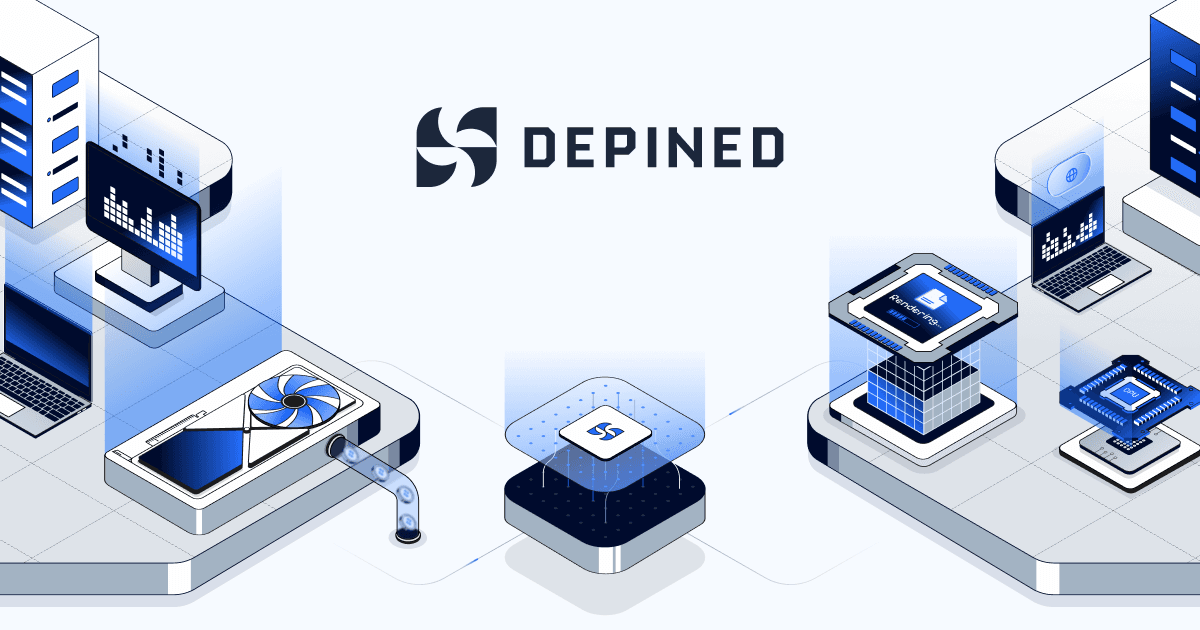
DePINed is an AI and rendering supercloud that enables individuals and enterprises to monetize their idle computing resources, including internet bandwidth, GPUs, and servers. By connecting these resources into a unified network, DePINed facilitates the allocation, pricing, and payment for AI services, rendering jobs, and API calls. Providers earn yield by supplying unused compute, while startups and enterprises gain access to affordable, scalable compute without the need for extensive DevOps or contracts. The platform utilizes $DEPIN and $dUSD tokens for transactions and staking, with $dUSD being a compute-backed stablecoin tied to real-world enterprise contracts. DePINed also offers specialized products like AI-Github for startups, AI-Hivemind for brands, and AI-Studio for creators, all powered by its decentralized supercloud network.