
Coding & Development
Browsing page 382 of AI tools for Coding & Development. Sorted by confidence score — our independent quality rating.

StableGen
StableGen is an open-source Blender addon that integrates generative AI into the 3D texturing workflow. It enables users to create fully textured 3D meshes from a single image or text prompt using TRELLIS.2, and then texture and refine them with models like SDXL, FLUX.1-dev, or Qwen Image Edit through a flexible ComfyUI backend. Key features include scene-wide multi-mesh texturing, multi-view consistency, advanced camera placement strategies, and precise geometric control with ControlNet. It also offers local editing, style guidance with IPAdapter, and integrated workflow tools like camera setup and texture baking, making it a comprehensive solution for 3D artists.
SWE-Issue
SWE-Issue is a specialized tool designed for monitoring and analyzing the performance of software engineering assistants by tracking their GitHub issue statistics. It offers a sortable leaderboard that provides insights into the total number of issues, discussions, and resolution rates for various assistants. Users can leverage this platform to compare different AI tools, understand their efficiency in handling software development tasks, and identify top performers. The tool also allows for the submission of new assistants, expanding its database and utility for the software engineering community. Hosted on Hugging Face Spaces, SWE-Issue serves as a valuable resource for developers and researchers interested in the practical application and performance metrics of AI in software engineering.
W2NER
W2NER offers the source code for a novel approach to Unified Named Entity Recognition (NER), as presented in an AAAI 2022 paper. Unlike traditional methods that study flat, overlapped, and discontinuous NER individually, W2NER unifies these tasks by modeling them as word-word relation classification. The architecture effectively captures neighboring relations between entity words using Next-Neighboring-Word (NNW) and Tail-Head-Word-* (THW-*) relations. It employs a neural framework that treats unified NER as a 2D grid of word pairs, enhanced by multi-granularity 2D convolutions for refining grid representations. A co-predictor then reasons about word-word relations. The model has demonstrated state-of-the-art performance across 14 benchmark datasets, including both English and Chinese, for all three types of NER.
xplique
Xplique is a comprehensive Python toolkit designed to bring clarity to complex neural network models through state-of-the-art Explainable AI (XAI) techniques. Originally developed for TensorFlow models, it also offers partial compatibility with PyTorch. The library features modules for Attribution Methods, allowing users to compute explanations like Grad-CAM and Integrated Gradients across various tasks such as classification, regression, object detection, and semantic segmentation. It also includes Feature Visualization to understand how networks build their understanding, Concept Extraction to identify human concepts, and Metrics to evaluate the faithfulness and robustness of explanations. Xplique supports diverse data types including images, time series, and tabular data, making it a versatile tool for AI model analysis and debugging.
.jpg&w=3840&q=75)
Smart Steel Technologies
Smart Steel Technologies offers a suite of AI-based software products designed to optimize various stages of the steel manufacturing process. These solutions include automated production planning, short-term and long product scheduling, mid-term planning, and material allocation to enhance productivity, stability, and efficiency. The platform also provides AI-based surface inspection for accurate cross-process quality control and AI-based temperature control to improve stability, energy efficiency, and reduce CO2 emissions. By leveraging AI, Smart Steel Technologies helps steel manufacturers transform their planning, optimize yield, throughput, and inventory, and erase uncertainties through scenario simulation and forecasting.
wer_are_we
wer_are_we is an open-source project dedicated to tracking the state-of-the-art and recent research results in speech recognition. It functions as a dynamic bibliography, compiling and presenting performance metrics (such as Word Error Rate or WER) for various models across different datasets like LibriSpeech, WSJ, Hub5'00, TED-LIUM, and CHiME. The project details the architectures, training methodologies, and published papers associated with each result, offering a valuable resource for researchers and practitioners to compare and understand advancements in the field. Users are encouraged to contribute corrections and updates, fostering a collaborative environment for maintaining an accurate and up-to-date overview of speech recognition progress.
ReAgent
ReAgent is an open-source, end-to-end platform developed by Facebook for applied reinforcement learning (RL). Built with Python and PyTorch, it facilitates the development of reasoning systems, including reinforcement learning and contextual bandits. The platform offers workflows for training popular deep RL algorithms, encompassing data preprocessing, feature transformation, distributed training, counterfactual policy evaluation, and optimized model serving. It supports classic off-policy algorithms like DQN, TD3, and SAC, as well as RL for recommender systems and multi-arm bandits. ReAgent is designed for large-scale, distributed recommendation/optimization tasks where offline training and counterfactual policy evaluation are crucial. Note: ReAgent is officially archived and no longer maintained; Meta's Pearl library is recommended for production-ready reinforcement learning.
Indie Panel
Indie Panel offers a centralized dashboard for indie developers to manage all their projects. It provides seamless integration with various databases, including Neon, Supabase, and PostgreSQL, allowing users to track essential metrics such as total users, paid conversions, and growth trends. The tool delivers real-time data with automatic caching and daily snapshots, ensuring up-to-date insights. Security is prioritized with AES-256-GCM encryption for all connection strings. Indie Panel simplifies project management by consolidating user metrics and growth monitoring into one intuitive interface, helping developers make informed decisions about their applications.

PRISMAL
PRISMAL is a remote design studio specializing in crafting bold brands, websites, and 3D experiences tailored for Web3 and technology companies. They assist startups in articulating their narrative, engaging their target audience, and establishing a premium brand presence to attract more clients. Their services encompass comprehensive branding, including brand identity, guidelines, and logo design. They also develop high-impact websites and product designs, focusing on MVP and Webflow solutions. Additionally, PRISMAL offers immersive 3D spatial experiences, leveraging technologies like Spatial.io and Unity for product sales and event hosting. They are an official partner of PEACHWEB 3D GSAP.
ydata-synthetic
ydata-synthetic is an open-source Python package designed for generating synthetic tabular and time-series data. It incorporates state-of-the-art generative models, including various GAN architectures like CTGAN, WGAN, and TimeGAN, as well as Gaussian Mixture models. The tool provides a low-code experience for quick data generation and features a Streamlit-based UI for an intuitive workflow, from training models to generating and profiling synthetic data samples. It supports diverse applications such as privacy compliance, bias removal, dataset balancing, and augmentation, making it a versatile solution for data scientists and developers working with sensitive or limited datasets.
KVPress Leaderboard
KVPress Leaderboard is a specialized AI tool designed for benchmarking KV Cache compression methods. Hosted on Hugging Face Spaces by NVIDIA, it offers a platform for users to evaluate and compare different compression techniques. The web application allows for the selection of various models and compression methods, presenting detailed information and interactive visualizations to aid in analysis. This tool is particularly useful for AI researchers and machine learning engineers who need to understand the performance and efficiency of different KV Cache compression strategies in their work. It serves as a valuable resource for optimizing AI model performance.
react-native-masonry
react-native-masonry is a pure JavaScript component designed for React Native applications, enabling developers to easily implement masonry-style layouts for images. This component offers several key features, including dynamic column rendering, which automatically adjusts based on available space, and progressive item loading for a smoother user experience. It also supports device rotation, ensuring layouts adapt correctly across different orientations. Developers can integrate on-press handlers for interactive images and add custom headers or captions. The component is optimized for rendering large lists and supports third-party image components, providing flexibility for various project needs. Installation is straightforward via npm, and usage involves importing the component and passing an array of image bricks with optional properties.

Based
Based is a platform centered around digital collectibles and generative art. It features 'based/punks' as collectible characters and 'based/toadz' as amphibious creatures. Additionally, 'based/glyphs' are described as generative, tokenized artifacts, suggesting a focus on unique, programmatically generated digital assets. The platform also provides functionality to 'bridge your ETH to Base', indicating integration with the Base blockchain. Users can stay updated via '@based' and engage with the community through 'based/chat' for vibes and alpha.
Latent vs. Quantized
Latent vs. Quantized is an AI tool hosted on Hugging Face Spaces, designed for comparing latent and quantized machine learning models. It provides a platform for users, particularly those in research and education, to analyze the distinctions and performance characteristics between these two fundamental types of models. While the live website indicates a runtime error, the tool's intent is to facilitate understanding and comparison of model quantization techniques, which are crucial for optimizing model size and inference speed. This makes it valuable for developers and data scientists working on model deployment and efficiency.
SparkAI
SparkAI offers a unique solution for resolving AI edge cases, false positives, and other exceptions encountered live in production environments. By combining human mission specialists with ML-powered rapid decision tools, SparkAI delivers real-time resolutions directly to AI products via API. This allows companies to launch and scale automation products faster, even with imperfect AI, by ensuring confident decisions in uncertain situations. The platform handles all operational aspects, including hiring, training, and managing the human workforce, and offers infinite scalability to ramp up or down as needed. SparkAI integrates easily via REST API or Python SDK, providing a complete solution for managing edge cases and deriving deeper real-world insights.
Awesome-Simultaneous-Translation
Awesome-Simultaneous-Translation is a comprehensive repository dedicated to the research field of simultaneous and streaming translation. It provides a curated list of academic papers, organized by publication year and categories, covering both text-to-text machine translation and speech-to-text translation. The repository also features essential toolkits like Fairseq for sequence modeling and SimulEval for evaluation, alongside various conventional and simultaneous interpretation datasets such as IWSLT15, WMT15, MuST-C, and BSTC. This resource is continuously updated, making it an invaluable reference for researchers, academics, and students working on advancements in real-time translation technologies.
SwarmOne
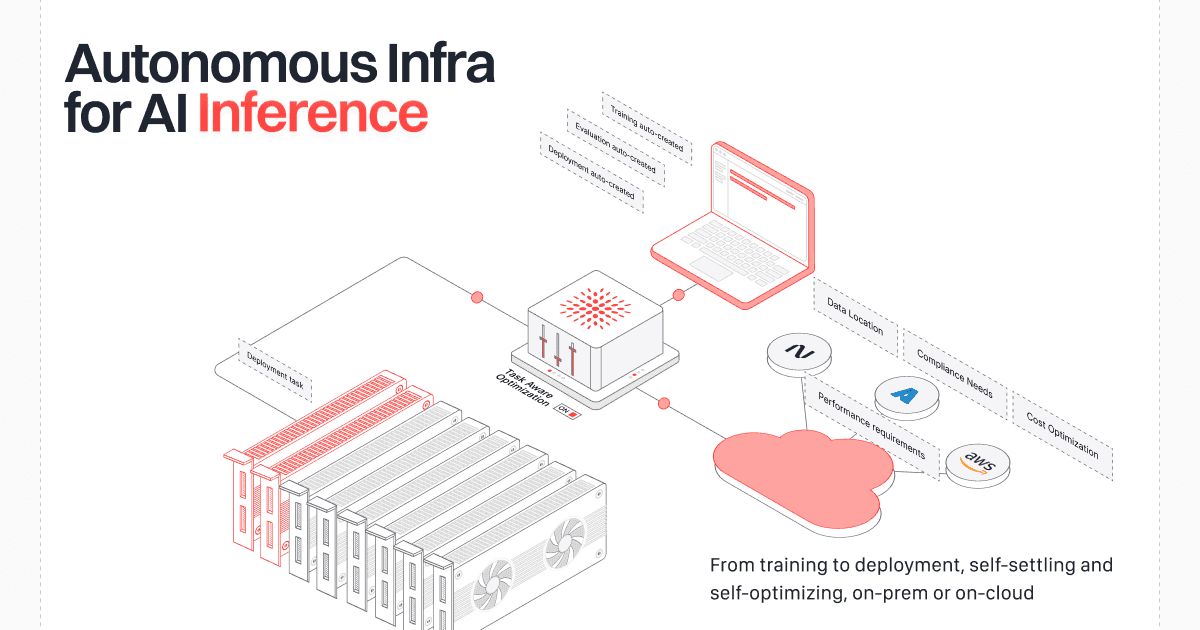
SwarmOne is an autonomous infrastructure platform designed for AI inference, training, and evaluation workloads. It offers a unique scheduler that dynamically disaggregates prefill and decode, orchestrates heterogeneous GPU clusters (NVIDIA, AMD, Intel, Groq, and more), and rebalances in real time to achieve over 90% utilization. The platform features SLO-driven autoscaling, enforcing defined latency, throughput, or cost targets by instantly provisioning GPUs when latency drifts and scaling compute to zero when traffic drops. SwarmOne aims to reduce costs by up to 80% through dynamic disaggregation, multi-node orchestration, and multi-cloud arbitrage, routing to the cheapest capable hardware. It supports a full AI lifecycle from training to deployment with zero DevOps/MLOps required, making it ideal for engineering teams at global enterprises.
Goast.ai
Goast.ai is an AI assistant designed to automate bug fixing and error resolution for engineering teams. It integrates with popular error monitoring platforms like Sentry, Datadog, BugSnag, and Google Cloud to automatically analyze issues as they arise. Goast can perform root cause analysis, generate step-by-step solution plans, create context-aware code, and push fixes as pull requests directly to your git provider. This significantly reduces the time-to-resolution for bugs, with users reporting 10x faster fixes and an 83% merge rate for AI-generated pull requests. It supports major frameworks and languages including React, Flutter, TypeScript, Go, JavaScript, and Python, making it a versatile tool for various development environments. Teams can interact with Goast via Slack, GitHub, or its web app, and even iterate on PRs by commenting feedback.
Push Model From Web
Push Model From Web is a convenient tool hosted on Hugging Face that streamlines the process of uploading machine learning models to the Hugging Face Hub. Users can easily share and integrate their AI models by providing an access token and a repository name. The tool automatically creates a new repository and uploads the specified model files, along with a model card, ensuring proper documentation and discoverability. This simplifies model deployment and collaboration for developers and researchers working with AI models, making it easier to contribute to and leverage the Hugging Face ecosystem.
Xano
Xano is a scalable no-code backend platform designed for building powerful and robust backends and APIs. It uniquely integrates AI-generated logic with a visual validation layer, allowing teams to audit and trust what's running from development to production. The platform eliminates the need for extensive coding and infrastructure setup, offering features like managed PostgreSQL databases, instant REST APIs, and built-in authentication. Xano supports both no-code and AI-assisted building, providing a governed environment where AI-generated code is structured, visible, and auditable. It caters to developers, AI agents, and no-code builders, ensuring scalability from small applications to enterprise-level systems with compliance standards like SOC 2, HIPAA, and GDPR.

FullProduct.dev - Universal App Kit
FullProduct.dev is a universal app kit designed to significantly accelerate development across web, iOS, and Android platforms from a single codebase. It enables developers to ship apps faster than traditional methods, offering features like automatic documentation generation from Zod schemas and a reusable architecture for easy feature portability across projects. The kit is built on a GREEN stack (GraphQL, Zod, React-Query, React-Native, Nativewind, Expo, Next.js) and includes a CLI for quick project setup and expansion with human-made git plugins. It helps teams avoid tech debt, maximize flexibility, and attract top talent by leveraging modern, evergreen technologies. FullProduct.dev aims to help freelancers, agencies, and startups deliver high-quality, cross-platform applications efficiently.

OSR Enterprises AG
OSR Enterprises AG positions itself as a new-age Tier1 supplier to the automotive industry, offering a speedboat for development teams at car manufacturers. The core of their offering is the EVOLVER platform, described as a multi-domain AI brain specifically designed for cars. This platform aims to provide the foundational technology for smart, autonomous, and securely connected vehicles, processing data collected from these vehicles. While the website emphasizes their role in automotive innovation and cybersecurity, specific features of the EVOLVER platform beyond its general description as an "AI brain" are not detailed on the publicly accessible pages.
ZenCtrl
ZenCtrl is a powerful framework designed for generating multi-view images without the need for specialized training or LoRA models. Users can upload an initial image and provide a text prompt to produce diverse perspectives and scenes of the subject. The tool offers customizable parameters such as generation steps, strength, and output size, giving users control over the final image quality and style. Developed by Fotographer.ai, ZenCtrl aims to simplify the process of creating complex visual assets, making it accessible for various creative applications. Although currently paused on Hugging Face Spaces, its core capability lies in transforming a single input into a rich set of multi-angle visuals.
awesome-image-classification
awesome-image-classification is a curated list of deep learning image classification papers and their corresponding code implementations, primarily focusing on advancements since 2014. Inspired by other 'awesome' lists in computer vision, this repository aims to serve as a valuable resource for individuals delving into image classification, especially beginners. It features a performance table detailing top-1 and top-5 accuracy on ImageNet for various convolutional networks, along with publication details. The collection includes seminal works like VGG, GoogleNet, ResNet, and more recent architectures such as EfficientNet and ViT, providing direct links to their PDF papers and code repositories (official and unofficial implementations across different frameworks like PyTorch, Keras, and TensorFlow).