
Coding & Development
Browsing page 386 of AI tools for Coding & Development. Sorted by confidence score — our independent quality rating.

Pixelvise
Pixelvise specializes in designing and building websites, brand identities, and comprehensive digital experiences for growing businesses. Their core services include web design and development, with expertise in platforms like WordPress, Shopify, and Webflow, ensuring sites are easy to manage and built for longevity. They also offer branding and visual identity services, graphic design for marketing materials, and social media content support. Beyond core offerings, Pixelvise provides extended capabilities such as custom web applications, integrations, automation, mobile application development, and reliable hosting and maintenance. They cater to a diverse range of industries, from professional services and technology startups to healthcare and e-commerce, helping clients establish a clear and confident digital presence.

Deep-Learning-Approach-for-Surface-Defect-Detection
Deep-Learning-Approach-for-Surface-Defect-Detection is an open-source project offering a Tensorflow implementation of a segmentation-based deep learning approach for surface defect detection. This tool is designed for automated visual inspection and quality control, particularly relevant in manufacturing processes. It allows users to train a deep learning model on datasets like KolektorSDD to identify and classify surface imperfections. The implementation supports independent training of segmentation and decision networks, providing flexibility for model optimization. It includes scripts for testing, training, and visualization of results, making it a practical resource for researchers and developers working on computer vision applications for industrial quality assurance.
slime
slime is an advanced post-training framework designed for Reinforcement Learning (RL) scaling, specifically tailored for large language models. It achieves high-performance training by seamlessly integrating Megatron with SGLang, enabling efficient and scalable operations. The framework supports flexible data generation through custom data workflows, allowing users to adapt to various training requirements. slime facilitates efficient training across different modes, making it a versatile solution for developers and researchers working with large language models and RL applications. Its focus on performance and flexibility makes it suitable for complex AI development tasks.
artyom.js
artyom.js is a robust and constantly updated open-source JavaScript library that wraps the webkitSpeechRecognition and speechSynthesis APIs. It enables developers to integrate voice control, voice commands, speech recognition, and speech synthesis into their web applications. Key features include quick recognition of voice commands, easy addition of dynamic commands, smart commands with wildcards and regular expressions, and the ability to convert voice to text. The library supports synthesizing large blocks of text and works on both desktop browsers and mobile devices. It offers support for multiple languages and provides options for continuous listening, soundex algorithm for accuracy, and a remote command processor. Developers can create custom voice assistants similar to Siri, Google Now, or Cortana within their websites.

Home
Devvys LLC is a custom software, web, and app development company based in Downers Grove, Illinois, dedicated to empowering businesses with innovative digital solutions. They offer a comprehensive suite of services including custom web development, mobile app development for both iOS and Android, and advanced AI solutions to automate tasks and boost business performance. Their expertise also extends to UI/UX design and eCommerce solutions, ensuring intuitive and engaging user experiences. Devvys follows a structured process from strategy and design to development, rigorous testing, launch, and ongoing support, ensuring robust, scalable, and bug-free applications tailored to unique business needs.
Visometry GmbH
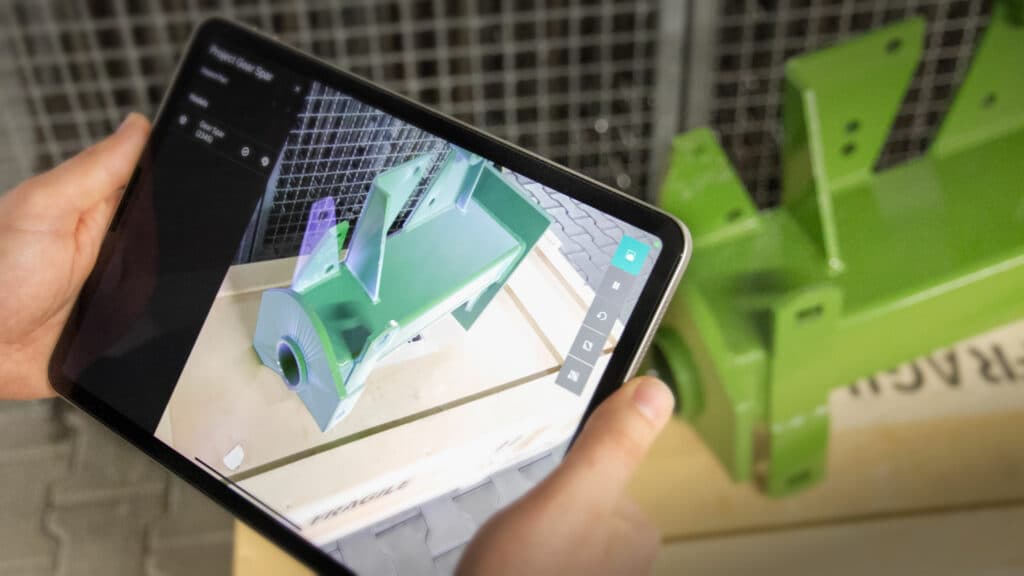
Visometry GmbH specializes in industrial augmented reality (AR) solutions, providing advanced computer vision technologies for manufacturing. Their flagship products include VisionLib, an object tracking SDK for enterprise AR applications, and Twyn, a software platform designed for visual quality control using AR and digital twins. These solutions help businesses achieve digital transformation, optimize processes, and reduce costs by enabling precise augmentation of physical objects with digital information. Visometry's technology is globally recognized, assisting companies in enhancing efficiency and accuracy in industrial settings.

Creatotech
Creatotech is a web design and development agency offering custom website solutions and AI model development. Their team of engineers focuses on creating visually stunning and highly functional websites that perform flawlessly across all devices. They provide services such as website builds and rebuilds, hosting, maintenance, and Generative Engine Optimization (GEO) to improve website visibility in an AI-driven world. Creatotech also assists companies in leveraging technology to its fullest, including custom AI models, and offers financing options like SBA loans for projects. They emphasize helping businesses grow through SEO, mobile optimization, e-commerce solutions, ongoing support, security, and analytics.
named_entity_recognition
named_entity_recognition is an open-source project dedicated to Chinese named entity recognition (NER), offering practical implementations of several prominent models. It includes Hidden Markov Model (HMM), Conditional Random Field (CRF), Bi-directional Long Short-Term Memory (BiLSTM), and a hybrid BiLSTM+CRF model. The project utilizes a resume dataset for training and evaluation, providing detailed accuracy, recall, and F1 scores for each model. It serves as a valuable resource for researchers and developers interested in NLP, particularly in the context of Chinese NER, allowing for direct comparison and understanding of different algorithmic approaches.
Clockworks
Clockworks is an AI development company with over a decade of experience in applied AI, dedicated to delivering practical and effective AI solutions. They focus on transforming cumbersome, manual, time-consuming, and error-prone business processes into efficient and enjoyable workflows. Clockworks emphasizes user-friendliness, building solutions that adapt to human behavior and changing situations. Their custom-built AI solutions are designed for accuracy, consistently outperforming existing processes, and are scalable to handle varying data and traffic loads. Utilizing their proprietary Clockworks OS, they aim to build solutions quickly and efficiently while managing cloud costs, making AI accessible and affordable for businesses.

magier
Magier is a creative subscription service offering graphic design and Webflow development. Trusted by over 100 brands, it provides fast, reliable, and scalable design solutions with a 48-hour delivery time for most tasks. Users can submit unlimited design requests, which are handled one at a time, with revisions and drafts delivered quickly. Magier caters to various clients and industries, including SaaS, Fintech, Ecommerce, and Agencies, offering services from brand design and ad creatives to Webflow migrations and maintenance. The service also supports one-time projects for larger needs like branding or web design, and allows multiple team members to collaborate.

Voicee AI
Voicee AI is a comprehensive platform designed to empower domain-first professionals and organizations with practical AI fluency. It offers three core components: the AI Academy, providing practical AI capability for real work without coding; the AI Education Forum, a cross-sector network for connecting with the AI ecosystem and driving adoption; and the AI Buildathon, a platform for showcasing practical AI skills and connecting talent with opportunities. Voicee AI focuses on responsible AI use, practical application in workflows, and is built for non-coders and non-IT teams. It aims to help organizations surface talent, accelerate AI adoption, and hire for the AI economy.
Ubdroid AI
Ubdroid AI is an AI-powered platform designed to centralize, automate, and secure IT infrastructure. It provides comprehensive features for efficient IT management, enabling real-time data analysis and ensuring compliance with industry standards. The tool aims to streamline IT operations and enhance security through advanced automation and centralized control mechanisms. Beyond its core infrastructure management capabilities, Ubdroid AI also offers custom AI development and end-to-end delivery services, catering to specific organizational needs and helping businesses leverage AI for various operational improvements.
kubernetes-for-ml-engineers
kubernetes-for-ml-engineers offers a comprehensive, step-by-step guide for Machine Learning engineers to understand and implement basic Kubernetes concepts. The repository details how to install essential tools like Docker, Kind, and kubectl, and then walks users through creating a local Kubernetes cluster. It covers writing business logic for a simple FastAPI application, containerizing it with Docker, and subsequently building, running, and pushing the Docker image to the local Kubernetes cluster. Finally, the guide explains how to deploy the application as a Kubernetes service and test its functionality, making it an invaluable resource for those looking to deploy ML applications in a containerized environment.
aerosolve
aerosolve is a machine learning library developed by Airbnb, designed with a strong emphasis on human interpretability and user-friendliness. It stands out from other ML libraries through its unique thrift-based feature representation, which supports pairwise ranking loss and single-context multiple-item representation. The library also features a powerful feature transform language, allowing users extensive control over feature engineering and rapid iteration. It is particularly well-suited for sparse, interpretable features commonly found in search or pricing applications, rather than dense, non-interpretable data like raw pixels. aerosolve includes debuggable models such as linear and spline models, facilitating insight into model behavior and feature relationships.
Deep-Learning-with-PyTorch-Chinese
Deep-Learning-with-PyTorch-Chinese is an open-source project that offers a Chinese translation of the official PyTorch book, "Deep Learning with PyTorch" (essential excerpt version). This repository aims to make learning PyTorch and deep learning accessible to Chinese-speaking individuals, especially those new to the field. It includes the translated text in markdown format and corresponding runnable Jupyter Notebook code examples for each chapter. The project is deployed as a web document on GitHub Pages, making it easy to access the translated content online. It's designed for quick immersion into PyTorch, requiring only basic math and Python programming knowledge.

New.Website
New.Website is an AI-powered website builder designed to simplify website creation and management through a conversational interface. Users can leverage artificial intelligence to build and maintain their online presence without extensive coding knowledge. The platform includes features such as form creation, enabling users to easily gather information from their visitors, and an integrated Content Management System (CMS) for efficient content organization and updates. Additionally, it provides automated notifications to keep users informed. However, it is important to note that New.Website is currently not accepting new customers, indicating a potential shift in its operational status or business model.
driveblocks
driveblocks specializes in developing advanced perception and autonomy software and AI models for off-road vehicles across agriculture, construction, and defense sectors. Unlike systems designed for highways, driveblocks' technology is purpose-built to operate reliably under harsh conditions, including dust, snow, fog, dense vegetation, and complex hilly terrain. The platform processes multi-modal sensor data through AI algorithms, applies sensor-fusion strategies to generate real-time 3D world models, and enables local behavior decisions like evasion and terrain-aware navigation. Its Physical AI models are trained and validated in challenging environments, ensuring efficient operation on production hardware with industrial-grade sensors and various AI accelerators. driveblocks integrates seamlessly with existing system architectures, supporting different sensor choices and compute units.
tf-gnn-samples
tf-gnn-samples is a GitHub repository offering TensorFlow implementations of various Graph Neural Network (GNN) architectures. It serves as the code release for an article introducing GNNs with feature-wise linear modulation (GNN-FiLM). The repository includes implementations for Gated Graph Neural Networks (GGNN), Relational Graph Convolutional Networks (RGCN), Relational Graph Attention Networks (RGAT), Relational Graph Isomorphism Networks (RGIN), GNN-Edge-MLP, and Relational Graph Dynamic Convolution Networks (RGDCN). It provides scripts for training and evaluating models on tasks such as citation networks (Cora, Pubmed, Citeseer), protein-protein interaction (PPI), quantum chemistry prediction (QM9), and variable misuse detection (VarMisuse). The code allows users to reproduce experimental results presented in the accompanying research paper, making it a valuable resource for researchers and developers working with GNNs.
devops-ai-guidelines
devops-ai-guidelines is a comprehensive resource designed to guide DevOps engineers through their AI journey, from initial AI tool usage to becoming an AI Infrastructure Architect. The repository offers structured learning paths, practical tips, and enterprise guidelines for implementing AI safely and effectively within teams and organizations. It covers a wide range of topics including building MCP servers with Golang and Kubernetes, creating AI agents with LangChain, and leveraging AI for AWS infrastructure management and project management. The resource also includes strategies for career acceleration, interview preparation, and daily productivity tips, making it a valuable asset for individuals and teams looking to integrate AI into their DevOps practices.
MobiLlama
MobiLlama is an open-source small language model (SLM) specifically designed for efficient deployment on edge devices. It addresses the limitations of larger LLMs by focusing on reduced memory footprint, energy efficiency, and faster response times, making it ideal for privacy-sensitive and resource-constrained environments. MobiLlama offers models ranging from 0.5 billion to 1.2 billion parameters, demonstrating superior performance compared to other SLMs in its class. The project provides fully transparent training and evaluation scripts, pre-trained models, and even an Android APK for mobile integration, making it accessible for developers and researchers working on on-device AI applications.
node-tensorflow
node-tensorflow is an open-source project offering a NodeJS API for Google's powerful machine learning library, TensorFlow. This initiative focuses on making TensorFlow's capabilities readily accessible to JavaScript developers within the NodeJS environment, prioritizing both performance and stability. Currently in its early design stages, the project actively seeks contributions, particularly from individuals with C++ knowledge, to accelerate its development. It leverages SWIG for interfacing the C++ core API with Node.js bindings, with a roadmap that includes integrating Python API features like Optimizers and Tensor Transformations. The goal is to evolve into a robust Node.js API for end-users, enabling them to build and control TensorFlow computation graphs directly from Node.js.
Volinga
Volinga Suite is an advanced tool designed for creators to effortlessly create and render Radiance Fields in real-time using Unreal Engine. The suite comprises three key components: Volinga Renderer, Volinga Exporter, and Volinga Creator. Volinga Renderer allows real-time rendering of Volumetric Radiance Field data, powered by the NVOL file format, and integrates as a plugin for Unreal Engine. The Volinga Exporter converts .ckpt files from NeRFStudio and .ply files from 3D Gaussian Splatting into NVOL files. Volinga Creator offers a user-friendly interface to streamline the process of creating NeRF models from images or videos, with options for online or local training. It also supports integration with Disguise RenderStream, Pixotope, and Nuke Server for professional workflows.
SuperPrompt V1
SuperPrompt V1 is an AI tool designed to take a short user-provided prompt and expand it into a more detailed version. Hosted on Hugging Face Spaces, this tool allows users to customize various aspects of the output, including the desired length, the diversity of the generated text, and the level of randomness applied. This functionality is particularly useful for individuals looking to optimize their prompts for AI models, ensuring better and more specific outputs. It serves as a valuable resource for refining text-based prompts, making it easier to achieve desired results from AI applications.

Normal Computing
Normal Computing specializes in AI-accelerated co-design for silicon engineering teams, offering solutions for both EDA (Electronic Design Automation) and ASICs (Application-Specific Integrated Circuits). Their Normal EDA platform helps structure chip representations, intelligently plan verification, and generate stimulus for simulations, continuously learning from team feedback to optimize engineering artifacts. For hardware, Normal ASICs explores physics-based designs that relax traditional computing assumptions, enabling stochastic, stateful, and asynchronous computing for orders-of-magnitude more efficient compute. The company aims to converge software and silicon physics, transforming hardware development and enabling ultra-efficient ASICs for various workloads. Founded by former Google Brain and Google X members, Normal Computing focuses on solving the scale, complexity, and energy demands of modern AI models.